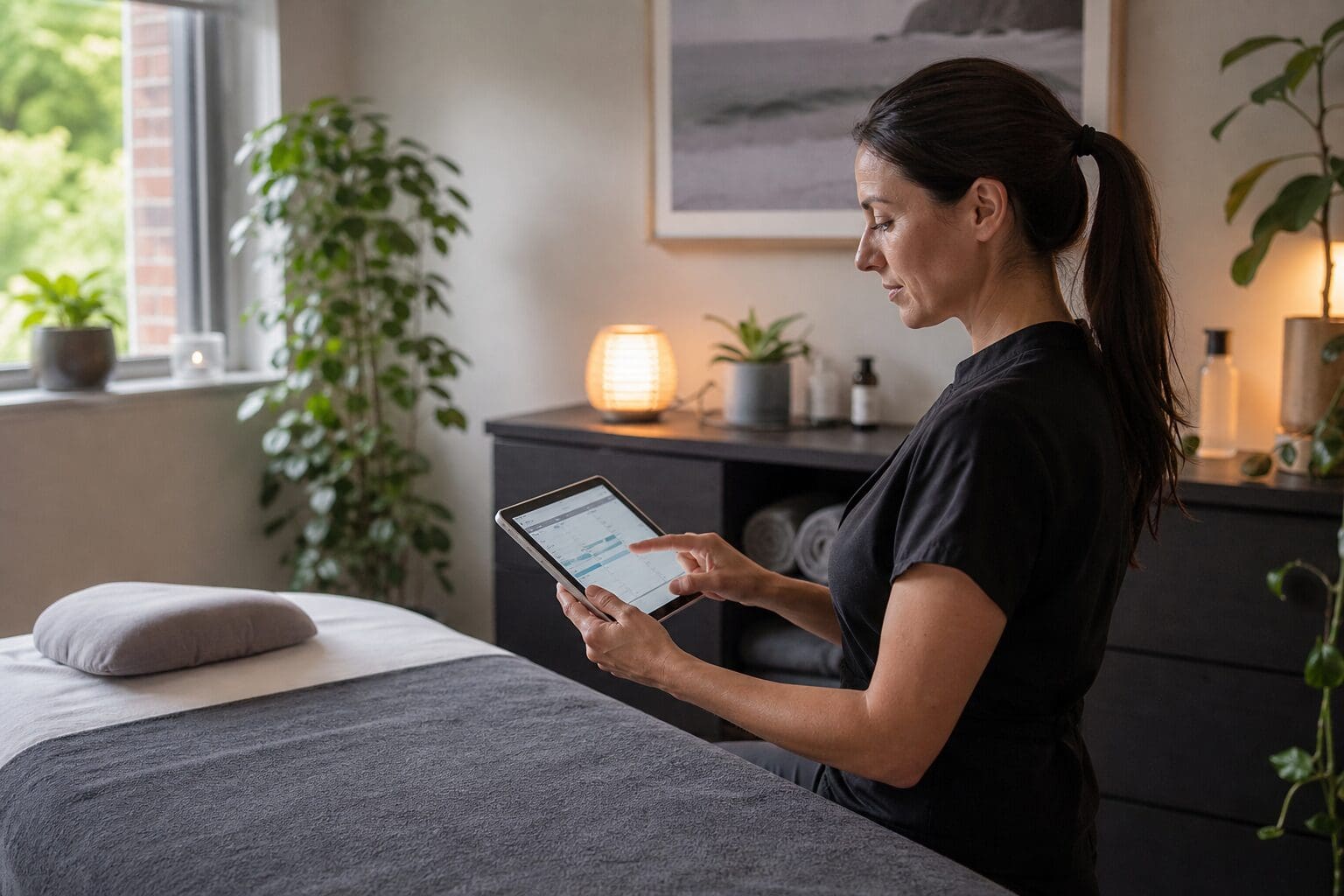

Running a massage practice is rewarding, but it is rarely simple. Alongside treatment time, there are appointments to manage, intake forms to collect, invoices to issue, reminders to send and client notes to keep up to date. Good software massage therapy practices can use brings these tasks into one organised workflow, helping therapists spend less time on administration and more time delivering consistent care.
Why efficiency matters in a massage practice
A smooth practice does not happen by accident. It depends on clear processes, reliable information and fewer avoidable interruptions during the working day. When a therapist moves between a paper diary, separate invoices, printed consent forms and manual reminders, small delays can quickly build up.
For a solo practitioner, this might mean staying late to update treatment records. For a clinic with several therapists, it can mean confusion over rooms, double bookings, missing forms or unclear client balances. These problems are not always dramatic, but they can affect the client experience and the team’s confidence.
Efficiency is not about rushing appointments. It is about making the background work easier to manage. When daily tasks are structured, therapists can focus more fully on each client, prepare properly for appointments and maintain accurate records without unnecessary duplication.
A well-run practice also feels more professional. Clients notice when bookings are clear, reminders arrive on time and follow-up is handled consistently.
Common admin challenges for massage therapists
Massage therapists often manage a wide range of tasks that are not visible during the treatment itself. These tasks support safe, organised and professional care, but they can take up a large part of the working week.
Typical challenges include:
- Keeping appointment availability accurate across busy days and multiple therapists
- Collecting intake forms and consent forms before treatment begins
- Recording SOAP notes clearly after each session
- Sending reminders to reduce missed appointments and late arrivals
- Managing invoices, client balances, packages and memberships
- Tracking which treatment rooms are available at different times
- Reviewing revenue, therapist activity and appointment patterns
When these tasks are handled across several systems, information can become fragmented. A booking might sit in one calendar, notes in another place and billing details somewhere else. This makes it harder to see the full picture of the client journey.
Manual systems can still work for very small practices, but they often become harder to maintain as bookings increase. Even a few extra clients each week can create more forms, notes, invoices and schedule changes.
How software massage therapy systems support a smoother workflow
A dedicated system can help bring daily practice management into one place. Instead of moving between different tools, therapists can manage bookings, client records, forms, billing and reporting from a single platform.
This is where software massage therapy practices use becomes especially valuable. The benefit is not only digital storage. It is the way connected tools support the full appointment process, from the moment a client books through to the treatment notes and final invoice.
Online booking and scheduling
Online booking can reduce the time spent answering messages about availability. Clients can choose suitable appointment times, while the therapist or practice keeps control over working hours, services and room availability.
For practices with several therapists, scheduling becomes even more important. A clear calendar helps prevent clashes and gives the team a shared view of the day. If treatment rooms are also managed in the same system, it is easier to match appointments with available space.
Automatic email and SMS reminders can also help keep the schedule organised. They reduce the need for manual reminder messages and support clients who may otherwise forget appointment times. This creates a more reliable rhythm for the practice.
Digital client records and SOAP notes
Accurate records are essential in a massage practice. Therapists need to understand client history, treatment goals, relevant health information and previous session notes. Paper records can be misplaced, hard to search or difficult to update quickly between appointments.
Digital SOAP notes make it easier to keep treatment information structured. Therapists can record subjective information, observations, assessment details and treatment plans in a consistent format. Custom templates can be particularly useful because different therapists may prefer different note structures depending on their style of practice.
Digital records also help when a client returns after a long gap. Instead of searching through paper files, the therapist can review previous notes and prepare for the session with more confidence.
Bringing forms, billing and reminders together
Many administrative tasks are connected. An intake form affects treatment planning. A booking creates a reminder. A completed appointment may lead to an invoice, a package update or a client balance change. When these elements sit in separate places, the practice has to join them together manually.
Customisable intake and consent forms can help standardise information gathering before treatment. Clients can provide important details in a clear format, and therapists can review the information before the appointment begins. This supports a calmer start to each session and reduces the chance of missing essential details.
Billing is another area where small inefficiencies can become frustrating. If invoices, packages, memberships and balances are managed separately, it can be difficult to track what has been paid and what is still outstanding. A central system gives the practice a clearer financial overview.
Useful connected features may include:
- Digital intake and consent forms linked to client records
- Invoices and balances visible from the client profile
- Package and membership management for repeat clients
- Automated reminders by email or SMS
- Reporting tools for appointments, revenue and therapist activity
When these tasks are connected, information flows more naturally through the practice. That can make the working day feel less scattered and reduce repeated data entry.
Choosing software that fits a massage practice
Not every practice needs the same setup. A self-employed massage therapist working from one room will have different needs from a clinic with several therapists, treatment rooms and membership options. The best system is one that supports the way the practice already works, while making routine tasks easier.
Cloud-based access is often helpful because schedules and client information are not tied to one specific computer. This can be useful for therapists who work across different locations or need to check their day from another device. It also avoids the need to install software locally on a single machine.
Security should also be part of the decision. Massage practices hold personal client information, health details and treatment records. Systems developed with healthcare practices in mind may include features such as encrypted data storage and role-based access controls. These features help ensure that the right people can access the right information.
Support during setup matters too. Moving from paper records or another system can feel time-consuming. Onboarding support and help transferring available client information can make the change easier to manage.
Using practice insights to make better decisions
Efficient practice management is not only about saving time. It is also about understanding what is happening across the business. Reporting tools can help therapists and practice owners see patterns that may be difficult to spot during a busy week.
Reports may provide insight into appointments, revenue and therapist activity. This can support practical decisions about working hours, service demand and diary structure. For a multi-therapist practice, reporting can also help managers understand how different schedules and rooms are being used.
Practice insights are most useful when they are easy to interpret. A therapist does not need endless data; they need clear information that supports better planning. For example, if certain appointment times are regularly booked, the practice may adjust availability. If packages or memberships are popular, the team can manage them more consistently.
A central system also reduces guesswork. Instead of relying on memory or separate spreadsheets, the practice can review information from the same place that manages appointments, billing and client records.
Frequently Asked Questions
What is the main benefit of massage practice software?
The main benefit is having core administrative tasks in one organised system. Scheduling, client records, forms, reminders and billing can be managed more consistently, reducing duplicated work and helping the practice maintain a clearer overview of daily operations.
Can software help a solo massage therapist?
Yes, software can be useful for solo therapists as well as larger practices. A single practitioner still needs to manage bookings, notes, forms, invoices and reminders, and a central system can reduce the time spent switching between separate tools.
Why are digital SOAP notes useful?
Digital SOAP notes help therapists keep treatment records structured, searchable and easier to update. Custom templates can support different treatment styles, while digital storage reduces reliance on paper files and makes previous session information easier to review.
Is cloud-based software useful for a massage clinic?
Cloud-based software can be useful because schedules and client information are not limited to one installed computer. This can support flexible working, multi-therapist practices and access from different devices, depending on permissions and security settings.
What should a practice consider before changing systems?
A practice should consider scheduling needs, client record management, forms, billing, reporting, security and setup support. It is also sensible to test how a platform fits existing workflows before making a longer-term decision.
Keep your massage practice organized in one system
Whether you work independently or manage several therapists, having one central system can make practice administration easier to manage. Ruana combines scheduling, client records, forms, invoicing and practice insights in a cloud-based platform. Therapists can customise important parts of the workflow while keeping client information accessible from different devices.
Ruana includes online booking, automatic email and SMS reminders, digital SOAP notes, intake and consent forms, billing tools, room management, client balances, invoices, packages, memberships and reporting features. It is designed for solo massage therapists and practices with multiple therapists.
The platform was developed with healthcare practices in mind and includes security features such as encrypted data storage and role-based access controls. New users can receive onboarding support and assistance when transferring available client information from another system. A free onboarding call is also available for practices that want help setting up their account or moving from another system.