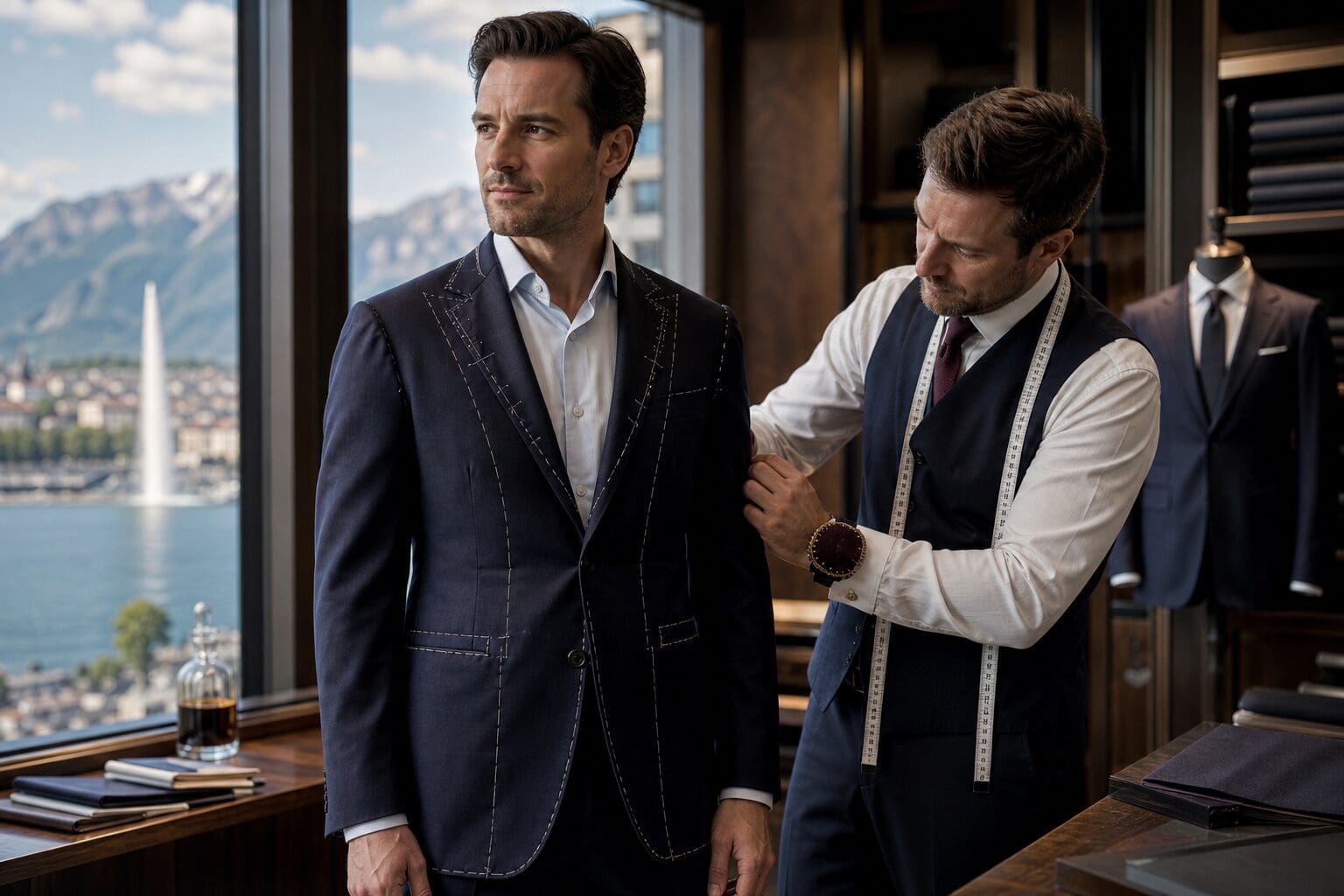

Working with a tailor in Geneva should feel measured, personal and practical. For business clients, the aim is not simply to buy a suit, but to create clothing that supports a professional image, fits comfortably and suits the way a person works, travels and presents themselves.
Bespoke tailoring is built around the individual rather than a standard clothing size. Measurements, posture, proportions and personal preferences all influence the final cut. The result is a garment shaped for one wearer, not adjusted from a general template.
Why bespoke tailoring matters in a business setting
Geneva is an international business city, where finance, diplomacy, law, luxury, technology and private client services often meet. In this environment, formal and professional clothing still has a clear role. A well-cut suit can help create the right impression without looking forced or overly styled.
For business-to-business clients, bespoke tailoring is often about consistency. Senior professionals may need clothing that works across meetings, conferences, travel days, formal dinners and client events. A bespoke suit can be designed around those needs from the beginning.
Unlike ready-to-wear clothing, bespoke tailoring considers how someone stands, sits and moves. A jacket can be shaped for sloping shoulders, a fuller chest, a narrow waist or a particular posture. Trousers can be cut for comfort during long working days, while still looking sharp.
The advantage is not only visual. Good tailoring reduces distraction. Sleeves sit correctly, collars remain clean against the neck, and trousers fall neatly over shoes. These small details help clothing feel natural rather than restrictive.
What to expect from a tailor in Geneva
A professional tailor in Geneva should offer more than fabric samples and basic measurements. The process should include advice, careful observation and enough fittings to refine the garment properly. Bespoke tailoring is a staged process, and each stage has a purpose.
The first consultation usually covers lifestyle, business requirements and the occasion for the garment. A suit for daily office use may need different cloth, construction and details from a wedding suit or tuxedo. For international professionals, travel and climate may also influence the choice.
A good tailor will explain options clearly without overwhelming the client. The discussion should include cut, cloth weight, lining, buttons, lapels, trouser style and shirt requirements where relevant. The best result comes from combining technical tailoring knowledge with the wearer’s own preferences.
Precise measurements and posture assessment
Measurements are central to bespoke tailoring, but they are only part of the process. The tailor also observes posture, shoulder balance, arm position and body proportions. Two people with similar chest and waist measurements may need very different garments.
This is where bespoke tailoring differs from made-to-measure. The garment is developed around the client’s individual shape. Adjustments can be made gradually during fittings, allowing the jacket and trousers to improve in balance and comfort before completion.
For business clients, posture matters because suits are often worn for long periods. A jacket that looks fine when standing still may pull when seated or speaking. A careful tailor considers these practical movements from the start.
Fabric, lining and finishing choices
Fabric has a major effect on comfort, durability and appearance. A heavier cloth may drape beautifully and hold its shape, while a lighter cloth may suit warmer months or regular travel. The right choice depends on the wearer’s schedule as much as personal taste.
Clients should expect to compare cloths by texture, weight, colour and pattern. Navy, charcoal and mid-grey remain popular for professional use, while subtle checks or textured weaves can add character without becoming too bold.
Details also shape the final garment. Lapel width, lining colour, buttons, pockets, trouser pleats and waistband options all influence the overall impression. In a business context, these choices should feel intentional and appropriate.
Useful points to discuss during fabric selection include:
- Whether the garment is for year-round wear, summer use or colder months.
- How often the suit will be worn and whether it must withstand frequent travel.
- Whether the setting is formal, creative, diplomatic, financial or celebratory.
- How the cloth works with existing shirts, shoes, ties and outerwear.
- Whether a separate waistcoat, additional trousers or tailored shirts are needed.
The fitting process and expected timeline
Several fittings are one of the clearest signs of a proper bespoke process. Each fitting gives the tailor a chance to refine the garment, improve balance and respond to how the wearer feels in it.
The first fitting may focus on the main structure. The tailor checks length, shoulders, chest, waist, sleeve position and trouser line. At this stage, the garment is still developing, so it may not yet look complete.
Later fittings refine the silhouette. Small changes to the jacket waist, collar, seat, sleeve pitch or trouser break can make a large difference. These adjustments help the garment move from technically correct to personally comfortable.
The Visiting Tailor brings British bespoke tailoring directly to clients across Geneva, with consultations and fittings taking place at a home, office or hotel. This mobile approach is particularly useful for busy professionals who cannot easily visit a traditional atelier several times.
Clients comparing a tailor in Geneva should look at how the fitting process is structured, not just the final delivery date. A faster process is not always better if it leaves too little room for careful adjustments and refinement.
With The Visiting Tailor, the process includes precise measurements and three fittings before the finished garment is delivered, usually within four to six weeks. This gives the suit, tuxedo, shirt or wedding suit time to take shape properly while still fitting into a professional schedule.
Cloth houses and garment options
Fabric selection is one of the pleasures of bespoke tailoring. It also requires guidance. Established textile houses offer cloths with different qualities, from crisp business worsteds to soft luxury fibres and elegant formalwear materials.
The Visiting Tailor offers more than 2,000 fabrics from recognised textile houses including Dormeuil, Loro Piana, Holland & Sherry, Alumo and Scabal. This range allows clients to choose cloth for business wear, formal occasions, weddings or regular international travel.
For companies and senior teams, consistency may also matter. Different individuals may need garments that reflect a shared standard without looking uniform. A skilled tailor can guide clients towards cloths and cuts that feel coherent while remaining personal.
Common bespoke options include:
- Business suits for regular meetings, presentations and client-facing roles.
- Tuxedos for formal dinners, black-tie events and evening occasions.
- Tailored shirts designed around collar preference, cuff style and body fit.
- Wedding suits for grooms, best men or formal guest requirements.
- Additional trousers to extend the practical life of a frequently worn suit.
The right garment should suit both the individual and the setting. A diplomatic reception, a board meeting and a wedding may all require tailoring, but not the same tailoring.
Service expectations for international professionals
Geneva attracts professionals who often work across borders. This makes convenience and reliability important. A tailoring service should respect time, privacy and schedule changes, particularly for clients staying in hotels or moving between offices.
Mobile tailoring can reduce the need for repeated showroom visits. For international clients, this is not a small benefit. Measurements, fittings and final adjustments can be arranged around working days, travel commitments and event deadlines.
However, convenience should not replace craftsmanship. The essential bespoke stages still matter: consultation, measurement, fabric selection, fittings and final delivery. A strong service combines flexibility with the discipline of traditional tailoring.
Communication should also be clear. Clients should understand what is included, how many fittings are planned and what the expected timing is. This helps avoid uncertainty, especially when a garment is needed for a fixed event.
Signs of a high-quality bespoke experience
A good bespoke experience feels collaborative. The tailor listens carefully, offers practical advice and explains why certain choices will work better than others. The client should not feel rushed into decisions or left to interpret technical options alone.
Quality is visible in small places. The collar should sit close to the neck. The shoulders should look natural. The jacket should close cleanly without strain. Trousers should hang evenly and feel comfortable when seated.
The finished garment should also reflect the wearer’s professional identity. Some clients prefer understated authority, while others want a little more distinction in lining, buttons or cloth texture. Bespoke tailoring allows those preferences to be included with control.
For B2B buyers, value often lies in longevity and suitability. A well-planned suit can serve many occasions, especially when the cloth, cut and details are selected with daily use in mind.
Bespoke tailoring brought to your address in Geneva
A truly bespoke garment takes shape over several stages, from the first measurements and fabric selection to the final adjustments. The Visiting Tailor brings each of these steps directly to a client’s preferred Geneva address, whether that is a home, office or hotel. With thousands of fabrics to choose from and three fittings included in the process, the service combines traditional British tailoring with the flexibility expected by modern professionals.
This approach suits Geneva’s international rhythm. It preserves the structure of bespoke tailoring while reducing unnecessary travel between appointments. For professionals with demanding diaries, that balance can make the process easier to manage without compromising the final garment.
Frequently Asked Questions
How is bespoke tailoring different from made-to-measure?
Bespoke tailoring is created around the individual from the beginning, considering measurements, posture, proportions and personal preferences.
How many fittings should I expect for a bespoke suit?
A proper bespoke process usually includes several fittings, allowing the tailor to refine shape, balance and comfort gradually.
Is bespoke tailoring suitable for business travel?
Yes, the cloth and cut can be selected for comfort, durability and smart appearance during frequent travel.
What garments can a bespoke tailor create?
A bespoke tailor may create business suits, tuxedos, tailored shirts, wedding suits and related formalwear pieces.
How long does the bespoke tailoring process take in Geneva?
With The Visiting Tailor, the finished garment is usually delivered within four to six weeks after measurements and fittings.