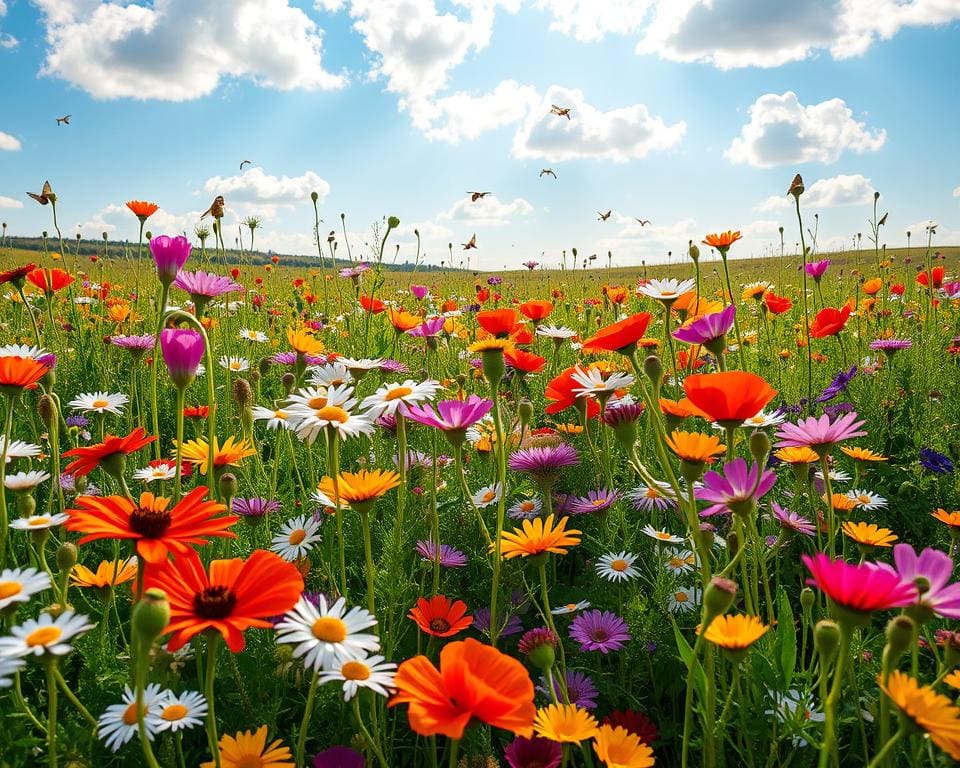

A wildflower garden can bring colour, texture and garden wildlife to almost any outdoor space. Whether you have a large lawn, a small urban plot, a balcony or a few containers, thoughtful wildflower planting can create a welcoming natural feature.
Wildflowers offer nectar, pollen, shelter and seeds for bees, butterflies, hoverflies, birds and other creatures. A varied mix is often more useful than one flower type, as different plants bloom across spring, summer and early autumn. You can find more ideas for flowers that attract bees and butterflies when planning your planting scheme.
A British wildflower garden can also replace part of a closely mown lawn or soften a formal border. It creates a colourful garden with changing shapes and tones, while supporting a pollinator-friendly garden and improving local biodiversity.
This style does not have to look untidy. Defined edges, simple paths, seating and carefully chosen plants can give your space a clear structure. With natural garden design, you can enjoy a relaxed look that still feels planned and easy to use.
Success starts with the site. Sunlight, soil type, drainage, moisture and fertility all affect germination and flowering. This guide will help you match plants to your conditions, prepare the ground, choose suitable seeds and decide between a wildflower lawn, border or container display.
How to create a wildflower garden in your outdoor space
Learning how to create a wildflower garden starts with the right site. Watch how sunlight, soil and moisture change across your garden before choosing seeds or plants. A simple plan will help your flowers thrive with less work.
Leave room for natural features, such as a shallow pond or log pile. A mini wildlife pond can provide water and shelter for frogs, bees and visiting birds.
Choose the best location, soil and growing conditions
Most meadow-style wildflowers need an open position with plenty of sunlight. Around six hours of direct sun each day suits many common species. Woodland plants and shade-tolerant flowers can suit darker corners.
Study the ground before planting. It may be clay, sandy, chalky or loamy. Check whether it feels damp or free-draining, and note if it is acidic or alkaline. Existing plants can reveal much about the site.
Damp ground may suit ragged-robin, meadowsweet and yellow flag. Dry, free-draining soil can support oxeye daisy, bird’s-foot trefoil and field scabious. Soil testing can show pH and fertility, though careful observation is useful too.
Many native meadow flowers prefer soil that is not too rich. Avoid manure and general-purpose fertiliser, since vigorous grasses and weeds may crowd out slower-growing flowers. Select British garden plants that suit your conditions instead of forcing unsuitable species to grow.
Select wildflower seeds suited to British gardens
Choose wildflower seeds UK suppliers offer for local growing conditions. Read the packet details and check the sowing time, soil preference and flowering height. Native mixes can provide food and shelter for insects suited to British gardens.
Look for a balanced mix of annuals and perennials. Cornflower and corn marigold can give colour in the first year, while oxeye daisy and field scabious return in later seasons. Avoid mixes with plants that may spread beyond your garden.
Prepare the ground and sow wildflower seeds successfully
Preparing soil for wildflowers starts with removing persistent perennial weeds. Clear couch grass, bindweed and docks before sowing. These tough plants can dominate fresh growth and become hard to remove once flowers are established.
Cut back existing growth, remove roots and rake the surface to create fine, open soil. Do not dig in rich compost unless a chosen plant needs it. Wildflower seed needs firm contact with the ground, not a thick covering.
Follow the packet rate when sowing wildflower seeds. Scatter them over damp soil on a calm day, rake lightly and water with care. Keep the area moist during dry spells while seedlings develop, without leaving the ground waterlogged.
Decide between a wildflower lawn, border or container garden
A wildflower lawn works well in a sunny area where you can reduce mowing. Cut paths through it for access and leave the main display to flower before cutting it back. Remove the clippings to keep soil fertility low.
A wildflower border gives you more control over height, colour and seasonal interest. Place taller flowers at the back and shorter species near paths. Add bulbs or grasses only when they suit the soil and do not overwhelm the flowers.
Wildflower containers suit patios, balconies and small gardens. Use peat-free compost with good drainage, then choose compact species for the pot size. Water containers during dry weather, since they lose moisture faster than open ground.
Wildflower garden ideas for colour, wildlife and year-round interest
A successful wildflower garden should offer food, shelter and interest across many months. Plan your planting around early, mid-season and late flowers, rather than placing all the colour in one short period. This approach supports insects and creates year-round garden colour.
Attract bees, butterflies and other pollinators
Pollinators need reliable supplies of nectar and pollen throughout their active season. Early choices include primrose, cowslip, dandelion and flowering willow, where local conditions allow. Summer flowers such as knapweed, oxeye daisy, red campion, viper’s bugloss and meadow cranesbill keep food available.
Common fleabane and devil’s-bit scabious can extend nectar supplies into late summer and autumn. Choose flowers with varied shapes. Open, daisy-like blooms suit many short-tongued insects, while tubular flowers can suit bees and butterflies with longer tongues.
Good pollinator planting includes more than nectar plants. Butterflies need food plants for their caterpillars, too. Nettle, bird’s-foot trefoil, holly and buckthorn can support particular species when the soil and light levels are suitable.
Avoid routine pesticide use, including insecticides that harm beneficial insects. A mix of plants, sheltered corners and undisturbed ground encourages natural pest control. Add shallow water, bare soil and small piles of leaves or stems. Keep water containers clean, with stones or twigs to give insects a safe landing place.
Combine annual and perennial wildflowers for lasting colour
Annuals bring quick colour in their first growing season. Perennials return each year and give the planting a stable structure. Pairing both types creates a changing display with food for insects across a longer period.
Use flower colour to shape the mood of your garden, yet look beyond appearance. Flower structure, flowering time, plant variety and chemical-free care have a greater effect on wildlife value. These details make your flowers for bees and butterflies more useful.
Add paths, seating and natural features to your garden design
Paths help you enjoy the planting without compacting the soil. A simple mown route through longer grass can lead to a bench, a sunny seat or a quiet reading spot. Leave some edges soft and informal to strengthen a natural garden design.
Logs, stones, hollow stems and leaf piles create shelter for insects and small garden animals. A shallow dish of water can sit near seating or beside a path. Choose materials that blend with the setting, such as local stone, untreated timber and reclaimed brick.
Choose native wildflowers for a more wildlife-friendly garden
Native wildflowers UK gardeners know can suit local soils, weather and wildlife. Oxeye daisy, red campion, knapweed and bird’s-foot trefoil are useful choices for many British gardens. Check each plant’s preferred conditions before sowing.
Use a mix of grasses and flowering plants to build a resilient wildlife garden. Leave some seed heads through winter and cut back selected areas in stages. This gives insects shelter and lets birds feed on natural seed. A varied planting plan can make even a small garden richer in wildlife.
How to care for your wildflower garden through the seasons
Good wildflower garden maintenance starts in spring. Check for emerging flowers and remove invasive weeds by hand. Water newly sown patches during long dry spells, but avoid disturbing nesting wildlife. Primroses, cowslips and dandelions offer early food for pollinators. For more seasonal planting ideas, explore plants to grow this month.
During late spring and summer, focus on caring for wildflowers without over-managing them. Water young plants, containers and new borders during drought, while established native plants usually cope with less water. Deadhead selected flowers to extend the display, but leave some blooms to produce seed. Encourage birds, ladybirds and hoverflies, and use neem oil only when a pest problem needs attention.
Careful mowing is central to wildflower meadow management. For a lawn-style patch, mow occasionally with the blade set high. Cut a meadow after its main flowering period and seed production, often from late summer to early autumn. Leave the cut material briefly so insects can escape, then remove it. This cut-and-clear method lowers fertility, limits vigorous grasses and gives wildflower seedlings more space.
Autumn and winter bring a gentler form of seasonal garden care. Leave some seed heads, hollow stems, leaf litter and dead wood for birds and insects, while removing diseased material and keeping paths clear. Raise containers on pot feet if they become waterlogged. Monitor self-seeding, thin crowded plants and reseed bare patches when conditions suit. This light-touch approach to mowing wildflower garden areas, watering wildflowers and wildlife-friendly gardening helps your planting stay colourful, healthy and useful year after year.