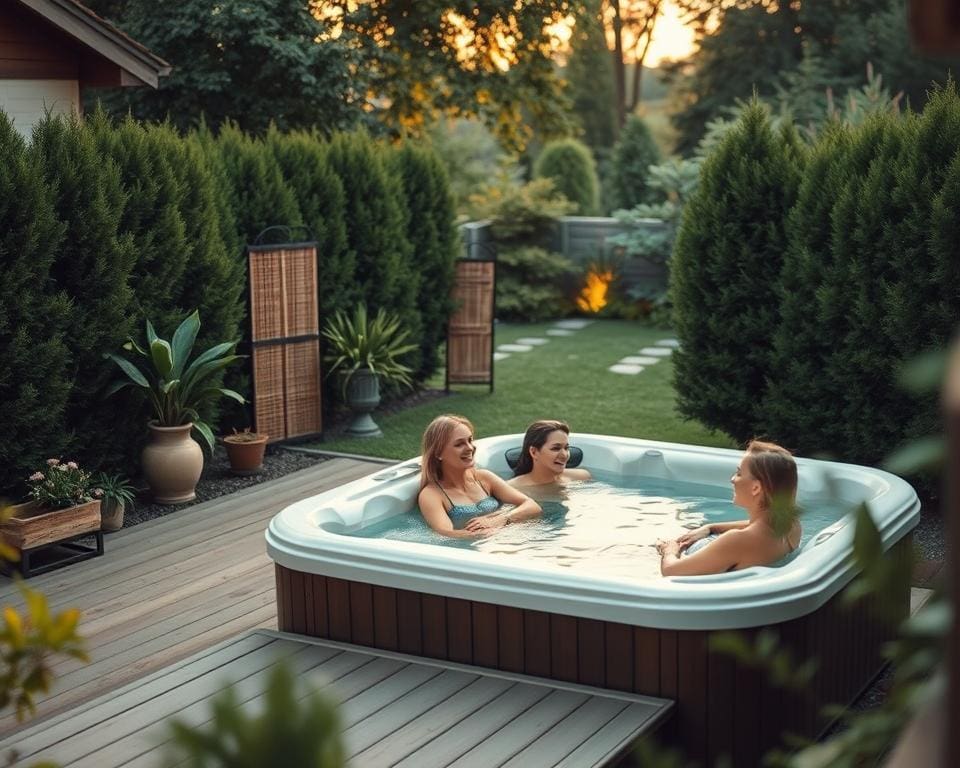

Good hot tub privacy helps you relax without making your garden feel closed in. You can create a private hot tub area with screens, fencing, walls, planting, lighting and careful positioning.
Start by checking the views into your garden. Look at neighbouring windows, upper-storey rooms, nearby paths and public areas. This will show you how to hide a hot tub without relying on one panel or hedge.
Effective garden hot tub privacy also considers noise, wind and the appearance of your garden. A screen may block views, but it should not trap fumes, reduce airflow or make the space feel cramped. Combine suitable hot tub screening ideas to improve comfort and outdoor spa privacy.
Keep clear access around the tub for cleaning, servicing, cover removal and safe entry. Planning rules may apply to tall fences, walls, screens, raised platforms and permanent structures. Check your local council’s guidance, especially if your home is listed or lies within a conservation area.
Any electrical work for lighting or accessories should be completed by a suitably qualified professional. Use suitable outdoor protection and an RCD-protected supply. With careful planning, you can create a relaxing, attractive and practical private space.
Why hot tub privacy matters in your garden
Privacy helps you enjoy your hot tub with greater comfort. You may want quiet time alone, a family soak or space to entertain guests. The benefits of hot tub privacy include feeling at ease and making better use of your garden throughout the year.
Start by mapping the views around your garden. A hot tub may be seen from a neighbouring garden, footpath, road, balcony, upper-floor window or taller building. This check is vital if you have an overlooked garden hot tub.
Protect your relaxation and personal space
Good privacy creates a more comfortable private outdoor space. It can help you relax without feeling watched or exposed. Consider visual privacy and acoustic privacy as separate needs.
Dense planting, fencing and solid screens can block unwanted views. Well-positioned boundaries and soft landscaping may soften voices, music and general outdoor noise. Choose materials that suit your garden and do not make the area feel harsh.
Reduce views from neighbouring properties
Inspect each sightline from standing and seated positions. A low boundary may hide the tub at ground level but leave it visible from an upstairs window. The height and position of your garden screening should match the real viewing angles.
Temporary fabric, cardboard or lightweight garden canes can help you test different screen positions. Mark the main views before buying materials. This simple step can prevent a screen from being too low, too high or placed in the wrong spot.
Consider privacy, ventilation and access together
Hot tub privacy from neighbours should not mean sealing the tub inside a tight enclosure. Fresh airflow helps prevent a damp, enclosed feel and supports proper ventilation around a heated spa. Sunlight and wind matter too, since a tall screen may create excess shade or restrict air movement.
Leave enough room to remove the cover, reach service panels and clean around the tub. You need a clear route for safe movement, with no trip hazards or blocked paths. Screens should not make it difficult to see children or other users.
Good hot tub enclosure planning brings privacy, airflow and access into one design. A balanced layout gives you shelter without making the tub difficult to use or maintain.
Create hot tub privacy with screening, fencing and walls
A well-placed barrier can make your hot tub feel calm and secluded. Choose a material that suits your garden, allows safe access and stands up to British weather. The screen should be fixed securely, since strong winds can strain tall panels.
Install timber screens and slatted panels
A timber hot tub screen can create a clear feature wall behind the tub. Choose treated timber or a naturally durable exterior wood. Follow the manufacturer’s care guidance to protect it from moisture, algae and decay.
Slatted privacy panels offer a useful balance between screening and airflow. Their gaps can block direct views without forming a solid wall. Privacy will change with the viewing angle. Vertical slats can make the garden seem taller, while horizontal boards can give it a wider feel.
Match the screen with your fencing, decking, paving and garden furniture. A coordinated colour helps the feature feel planned. You can find further ideas for a private and stylish garden fence before choosing your finish.
Use fencing, trellis and garden walls
A garden fence for hot tub use can extend an existing boundary or shield one exposed side. Solid boards give stronger visual privacy than open rails. They can catch more wind, so use sound posts and suitable fixings. Check how the new section will look from nearby properties.
A trellis privacy screen gives a lighter appearance and provides support for climbers. Open trellis offers little instant cover, so pair it with evergreen or dense climbing plants. Allow room for growth and keep plants clear of the hot tub cover and service points.
Brick or rendered walls provide lasting privacy and useful wind protection. Before building, consider foundations, drainage and structural stability. Local planning rules may apply, especially for a tall boundary. A wall should never obstruct safe access around the tub.
Choose retractable screens for flexible privacy
A retractable outdoor screen suits gardens where you want privacy at certain times but an open view at others. Select weather-resistant fabric, secure fixings and a reliable mechanism. The screen must not block the cover, walking route or ventilation around the hot tub.
Retract or secure the screen during strong winds when the manufacturer advises it. Check the fittings at the start of each season. Use a colour and material that connect with the wider garden, so the privacy feature feels like part of the design.
Use planting, lighting and garden layout to improve privacy
Thoughtful planting can soften timber screens, fences and walls. It makes the hot tub area feel more natural and less enclosed. Good planting for hot tub privacy should suit your soil, aspect, available space and the plant’s mature size.
Plant evergreen trees, shrubs and climbers
Evergreen screening plants provide coverage throughout the year. Yew, holly, laurel and several evergreen shrubs work well in UK gardens, though each has different growth habits and space needs. Check toxicity before planting if children or pets use the garden.
Deciduous trees and shrubs can bring flowers, colour and seasonal screening. Fast growth should not be your only selection guide. Vigorous plants need frequent pruning and may spread beyond the space you planned.
Climbers, including evergreen jasmine and ivy, can cover a suitable trellis. Strong support is essential, since mature climbers can become heavy. Ivy may spread into gutters, roofs and nearby boundaries, so regular cutting keeps it under control.
Keep trees and shrubs a manageable distance from the tub and service area. Roots may disturb paving or decking, while leaves, sap and pollen can affect filters and water quality. Privacy trees for gardens need enough room for healthy growth and safe maintenance.
Position the hot tub to make use of existing boundaries
Use your garden layout for privacy to reduce the amount of extra screening required. Placing the hot tub near an existing fence, wall, hedge or outbuilding can block views from one or more sides.
Do not push the tub so close to a boundary that you cannot inspect, clean or repair it. Leave clear access to the equipment and enough room to lift or remove the cover. Raised planters, large containers and layered planting can help where permanent structures are unsuitable.
Containers let you move plants and adjust your hot tub landscaping ideas as the garden changes. They need regular watering and can become very heavy. Choose strong pots and place them where they will not obstruct paths, steps or service panels.
Use outdoor lighting without creating glare
Careful outdoor hot tub lighting can make the space feel private without drawing attention to it. Low-level, warm-toned fittings create a gentle glow around paths, steps and planting. Keeping the main tub area softly lit can make it feel more secluded.
Avoid bright lamps aimed at neighbouring homes, upper-storey windows or your face. Shielded fittings and downward-facing lights reduce glare and limit light spill. Timers, dimmers and simple controls help you use only the light you need.
Light changes in level and access routes for safer movement after dark. Outdoor electrical fittings must suit their location. Where required, a qualified electrician should install them safely, especially near water.
Plan a comfortable and practical private hot tub area
Begin your private hot tub garden design by finding the most intrusive sightline. Then choose the least bulky solution that gives enough cover. A partial screen with evergreen planting may work better than a full enclosure. Review outdoor living garden ideas to help shape a balanced garden spa area that still feels open.
Set the tub on a stable, level and load-bearing surface. Use slip-resistant paving or decking around it, with space for splashes, rainwater and cleaning. Good drainage should stop water collecting near foundations, neighbouring boundaries or electrical equipment. Include a fitted cover in your hot tub landscaping plan. It protects the water, retains heat and limits views when the tub is not in use.
Leave enough room to lift and store the cover safely. If you add a pergola, gazebo, roof or screen, keep the sides well ventilated. A sealed safe hot tub enclosure can trap heat and moisture, causing condensation and discomfort. Add weather-resistant storage for towels, robes, steps, chemicals and cleaning tools. Lockable storage also keeps products away from children and pets.
Check that screens do not block gates, service panels, utility connections or emergency routes. Review your hot tub area ideas in every season, as planting, sunlight and lighting can change privacy levels. Trim plants, clean fittings and inspect fixings after storms. The strongest hot tub privacy design combines screening, planting, soft lighting, safe access and ventilation without making your garden feel cramped.