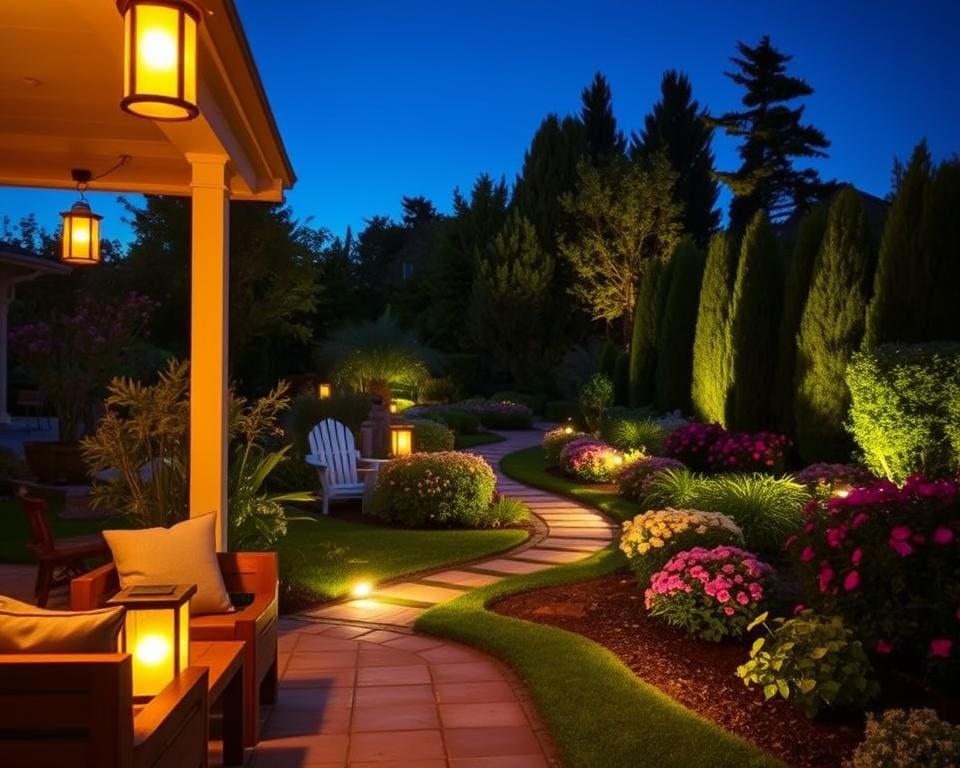

Garden lighting helps you enjoy your outdoor space long after sunset. With the right design, your patio becomes more comfortable, while paths, borders and flower beds gain shape and depth.
Well-placed outdoor lighting can support several needs at once. It helps you move safely, makes entertaining easier and draws attention to trees, planting, walls and other features. Soft LED garden lighting can also create a calm setting without using excessive energy.
For a successful scheme, you need more than bright fittings. The position, beam direction, colour temperature, brightness and control method all affect the final result. Patio lights should support seating areas, while path lighting should guide movement without causing glare.
Flower bed lighting can reveal texture and form, but excessive illumination may disturb neighbours and local wildlife. Your choices should also suit damp ground, changing weather, short winter days and the character of your property. These are key points in thoughtful UK garden design.
How garden lighting creates a welcoming outdoor space
Thoughtful patio lighting helps you use your garden for longer through spring, summer and early autumn. A mix of soft ambient light, focused task light and gentle accents gives each area a clear purpose without making the space feel harsh.
Good fittings should light seating and walking routes without shining into your eyes or across neighbouring properties. Choose products made for their location and protected against moisture. Fixed electrical work should meet current UK safety requirements and be installed by a suitably qualified professional where needed.
Enhancing patios for relaxing and entertaining
For outdoor entertaining, combine garden wall lights with downlighting beneath a covered roof or canopy. Recessed deck lighting can mark steps and edges, while portable lanterns and outdoor table lamps create useful light near food and drinks.
Festoon lights add a relaxed feel above a seating area, pergola or dining table. Use warm outdoor lights around sofas and covered seating areas to support comfortable seating area lighting. One intense fitting can flatten the space, so layered patio lighting creates better balance.
Timers, remote controls and smart systems make evening use simple. You can set operating times, adjust brightness and use motion sensors near paths without leaving lights on all night. For more ideas, explore this guide to lighting a patio at dusk.
Highlighting flower beds, trees and garden features
Careful landscape lighting gives planting depth after sunset. Low-level flower bed lighting can reveal colour and texture, while border lighting helps define paths without overpowering nearby plants.
Use uplighting beneath a tree to show its trunk and canopy. Gentle tree lighting can create a strong focal point when aimed with care. Garden feature lights suit statues, ponds and textured walls, with downlighting offering a natural effect from above.
Keep beams narrow where you want emphasis, and soften them where you need general visibility. This approach supports decorative garden lights while keeping glare under control.
Creating atmosphere for evenings in the garden
Warm white light supports calm garden ambience around dining areas and outdoor sofas. Very cool or bright light may feel stark, which can reduce comfort. Subtle garden mood lighting lets you change the tone for a quiet supper or a lively gathering.
Plan evening garden lighting in layers. Ambient fittings provide safe visibility, task lights help with dining or food preparation, and accent lights draw attention to planting or architectural details. Solar fixtures can illuminate paths and beds with low energy use, while suitable LEDs offer a long service life.
Choosing the best outdoor lights for patios, paths and flower beds
The best outdoor lights depend on each area’s purpose. Consider your power supply, garden layout, weather exposure and the level of maintenance you can manage. A patio may need broad light, while a flower bed often suits a softer, focused beam.
Wall lights work well beside patios, entrances, garages and garden rooms. They provide useful light close to buildings. Spike spotlights can be moved as trees, shrubs and planting grow, making them practical for changing borders and focal points.
Bollard lights suit paths and borders when spaced with care. Choose a suitable height to reduce glare and leave clear room for movement. Recessed ground lights can brighten paving, decks and steps, but they need correct positioning, drainage and installation depth.
Festoon lights and lanterns bring a decorative touch to pergolas and seating areas. You can find more ideas for lighting patios and garden features before choosing a style. Use warm light for a calm setting, rather than harsh white or vivid colours.
Solar garden lights offer a simple option where mains power is not available. Place the panels in a bright position, since shade, short winter days and poor battery capacity can reduce performance. Battery-operated products can provide similar flexibility, yet they need regular battery changes.
LED outdoor lighting is widely used for garden schemes. LEDs tend to use less electricity, last for many years and come in a broad range of brightness levels and colour temperatures. Warm tones often complement brick, timber and natural stone, while cooler light may suit modern paving or selected planting effects.
Low-voltage lighting is popular for paths, beds and seating zones. The transformer, cables, connections and controls must match the system. Mains-powered work must follow relevant UK requirements and may need installation or checking by a qualified electrician.
Check the IP rating before buying any garden light fittings. The first digit shows protection from solid particles, while the second shows protection from water. Fittings exposed to rain need a different level of protection from lights under cover or products placed near water.
Products sold as waterproof garden lights still need the correct rating for their position. IP44 can suit some sheltered outdoor areas, while exposed locations may require IP65 or a higher specification. Follow the maker’s instructions for cable routing, drainage, cleaning, maximum wattage and replacement parts.
Choose durable, corrosion-resistant materials for exposed or coastal gardens. Suitable stainless steel, treated metal, aluminium and robust outdoor plastics can withstand demanding conditions. Check that each fitting complements nearby surfaces and does not distract from the planting.
Practical garden lighting ideas for safety, style and efficiency
Start your garden lighting installation with a simple plan. Mark paths, steps, gates, patios, planting areas, power points and possible obstructions. Use path safety lights to show edges, risers and landings without glare, harsh shadows or bright spots divided by deep darkness. Keep fittings clear of walkways, mowing routes and access points.
Motion sensor garden lights work well near entrances, side passages and gates. Set their sensitivity and activation time carefully, so passing pedestrians, pets and wildlife do not trigger them unnecessarily. Timers, photocells and smart controls can switch lights on only when needed. With separate zones, you can light an essential route without illuminating the whole garden. For more ideas, explore this guide to automated garden lighting in the UK.
LED fittings, dimmers and lower brightness settings support energy-efficient outdoor lighting. Solar products can suit sunny, open areas, but their output may fall during dark and cloudy UK winters. Safe garden lighting also depends on careful cable routing. Protect cables as directed, particularly where digging, pets or children may cause damage.
Clean lenses, fittings, solar panels and drainage points regularly. Check for loose cables, damaged seals, corrosion, failed lamps and planting that blocks the beam. Adjustable fittings and accessible connections make future changes easier as plants mature. A balanced scheme limits light pollution, protects wildlife and preserves the garden’s character while improving safety, reliability and evening comfort.