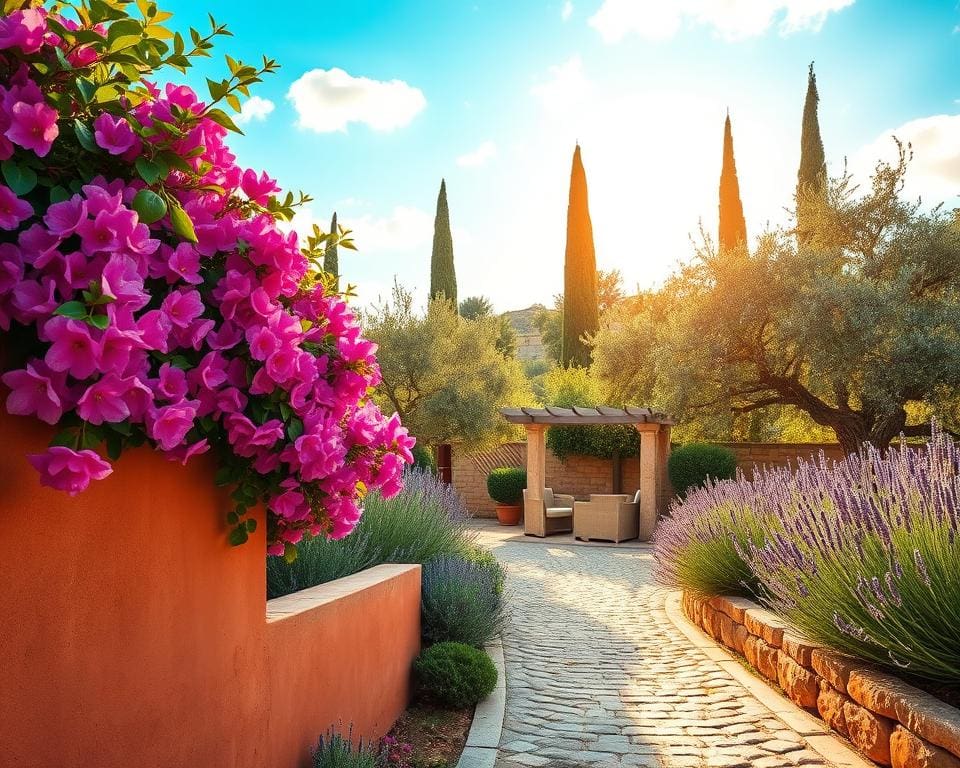

A Mediterranean garden brings together bright sunlight, relaxed planting and aromatic herbs. It often includes drought-tolerant plants, gravel, stone and warm spaces for outdoor dining. This style can make a UK garden feel calm, open and welcoming.
You do not need to copy a hot, dry climate. Good garden design should suit your rainfall, winter temperatures, soil and available space. Start with the sunniest position, improve drainage and group plants by their water needs. These steps support effective water-wise planting and help create a reliable drought-tolerant garden.
The idea works in a courtyard, balcony, terrace or front garden as well as a large plot. Use containers for tender plants, such as citrus or tender herbs, so you can move them to shelter during severe winter weather. Choose hardy sun-loving plants that suit your local conditions.
Open layouts, gravel and simple stone features also reduce upkeep. For more practical ideas, explore these low-maintenance garden tips. The following guide covers planning, plant selection, natural materials, efficient watering and seasonal care for your UK garden.
How to plan your Mediterranean garden design
Good Mediterranean garden design starts with the site. Study light, wind, soil and water before you choose plants or materials. A clear plan will help you create a warm, relaxed space that suits your home and the UK climate.
Choose a sunny, sheltered position
Most Mediterranean-style plants need full sun, with around six or more hours of direct light during the growing season. Watch how sunlight moves across your garden before planting. Trees, buildings and fences may cast longer shadows in autumn and winter.
A south-facing garden offers strong light and warmth in many parts of the UK. West-facing areas can work well, too. A bright east-facing space may suit herbs, shrubs and flowers that welcome gentle morning sun.
Protection from cold winds is vital in a sheltered garden. Walls, fences, hedges and buildings can create a warmer garden microclimate. A sunny wall may reflect heat towards rosemary, lavender, Mediterranean euphorbia and selected climbers.
Check containers near warm walls often, since reflected heat can dry their compost quickly. Avoid tender plants in frost pockets, permanently shaded corners and places where rainwater collects. Include access to water, views from windows and a convenient route from the house in your UK garden planning.
Create informal zones for dining, relaxing and planting
Divide the space into simple areas rather than using a formal pattern. Your Mediterranean garden layout might include an outdoor dining area near the kitchen, with garden seating placed to catch evening sun. Keep paths clear and make each space easy to reach.
Use informal planting to soften walls, steps and boundaries. A courtyard garden can feel larger when pale gravel, pots and repeated plant shapes lead the eye through the space. Low walls or screens can separate dining, resting and growing areas without blocking light.
Consider how the garden looks from inside your home. Place taller shrubs at the rear of a border and use lower herbs near paths. This approach supports Mediterranean landscaping while keeping scents, texture and colour close to where you spend time.
Use gravel, raised beds and terracing to improve drainage
Many Mediterranean plants dislike wet roots, so plan Mediterranean garden drainage before planting. Improve heavy ground with organic matter and grit where suitable. Aim for free-draining soil that holds enough moisture without becoming waterlogged.
A gravel garden provides a clean surface around drought-tolerant plants and helps rain move away from crowns. Choose angular gravel for better stability on paths. Set edging firmly to prevent stones from spreading onto lawns or paving.
Raised beds warm quickly and give you greater control over soil depth and drainage. On a sloping site, a terraced garden can reduce erosion and create useful planting levels. Low retaining walls can support herbs, flowers and dry garden landscaping without making the space feel rigid.
- Place seating on stable, level ground.
- Keep drainage channels clear of leaves and soil.
- Use steps and paths that remain safe in wet weather.
Choose drought-tolerant Mediterranean garden plants
Choose plants for their mature size, plant hardiness and soil preference, not appearance alone. Good Mediterranean plants for UK gardens need sun, shelter and well-drained ground. Drought-tolerant plants cope with limited water once established, though new plants need regular watering while their roots develop.
Grow herbs such as lavender, rosemary and thyme
Lavender, rosemary and thyme create a useful base for a lavender garden. These hardy herbs bring scent, colour and soft texture to your herb garden design. Other Mediterranean herbs, such as sage and oregano, thrive in sunny, free-draining soil.
Place fragrant garden plants near a path or seating area, where you can enjoy their scent. Group plants with similar water needs together. This supports low-maintenance planting and stops drought-tolerant herbs receiving too much water beside thirsty plants.
Add sun-loving flowers and evergreen shrubs
Use sun-loving flowers to add colour through the warmer months. Mediterranean flowers such as agapanthus and osteospermum work well in sheltered spots, while drought-resistant flowers can support a pollinator-friendly garden. Choose flowering shrubs such as cistus, santolina and hebes for height and seasonal interest.
Evergreen shrubs give the garden shape during winter. Evergreen Mediterranean shrubs, including bay, pittosporum and myrtle, bring lasting foliage to a sunny border. Add ornamental grasses for movement, though check their mature width before planting.
Silver, grey or finely textured leaves create the pale, reflective look linked with Mediterranean planting. Leaf colour alone does not prove drought tolerance, so check the plant label before buying. Combine evergreen structure with seasonal flowers and herbs to keep interest in every season.
Select plants that suit the UK climate and local soil
Check plant labels and trusted UK horticultural guidance before choosing hardy Mediterranean plants UK gardeners can rely on. This matters in exposed, coastal or elevated gardens, where strong winds and severe frost can damage tender growth. Your garden microclimate may offer extra warmth beside a wall or create a colder pocket in an open lawn.
Test your soil before planting. UK soil types vary from free-draining chalk to heavy clay, so clay soil plants need careful selection and improved drainage. Alkaline soil plants suit chalky ground, while compost and grit can help some Mediterranean species in heavier soil.
Read the label for mature height, flowering period, fragrance and maintenance needs. Water new plants during dry spells as their roots develop. Once established, well-chosen plants can support a resilient border with less watering and care.
Use natural materials to create Mediterranean garden style
Weathered surfaces can establish a Mediterranean garden style before your plants mature. Choose a restrained mix of natural garden materials, rather than using every texture at once. Stone, timber, gravel and clay create a calm setting with depth and character.
Combine terracotta pots, stone and gravel
Use terracotta pots for herbs, citrus trees, lavender and seasonal flowers. Their warm tones suit pale gravel, stone walls and limewashed surfaces. This simple combination gives your container planting a relaxed Mediterranean feel.
Check each pot for generous drainage holes. Raise containers on pot feet to help excess rain escape during wet UK winters. Choose frost-resistant pots for permanent displays, as saturated terracotta may crack when frozen compost expands.
Local or reclaimed stone can shape a stone garden with paths, edging, raised beds and seating platforms. Select gravel for colour, size and stability. Angular stone tends to lock together underfoot better than rounded shingle. Permeable gravel and planted areas support drainage and reduce surface water run-off.
Use stone for retaining walls, steps and raised beds only when the structure is properly built. A well-planned example of outdoor living garden design can help you link these features with dining and seating zones.
Add timber, wrought iron and rustic garden furniture
Timber brings warmth to paths, screens, benches and pergolas. A careful timber garden design works well beside gravel landscaping and pale masonry. Use treated or durable timber, and inspect it each year for weather damage.
For a stronger rustic garden style, pair aged timber with Mediterranean garden furniture. Wrought iron furniture suits small terraces, balconies and courtyards. Its fine lines keep the planting visible while adding a crafted detail.
Choose teak or powder-coated aluminium for outdoor dining furniture where rain is common. Add cushions in breathable fabrics, with shaded seating beneath a pergola, tree or canvas canopy. Keep furniture practical, with clear routes between planting, dining and relaxation areas.
Use warm colours and textured surfaces for a timeless look
Build a warm garden colour scheme with terracotta, sand, ochre, cream and muted blue. This Mediterranean colour palette reflects sun-baked walls and coastal stone without making the garden feel busy.
Textured garden walls can frame a seating area or protect tender plants from wind. Limewash, rough render and reclaimed brick provide subtle variation. Match these garden finishes with rustic landscaping, low planting and simple water features.
A small sculptural piece or fountain can act as a focal point beside a patio. Keep the shapes and colours linked across the space. This approach creates timeless garden design with a natural, lived-in quality.
Manage watering and maintain your Mediterranean-style garden
Mediterranean garden maintenance is not maintenance-free. However, established plants such as lavender, rosemary and sage often need less extra water than plants that prefer damp soil. This makes water-wise gardening easier once roots are well developed.
Water new plants deeply and often during their first growing season. Adjust the timing for rainfall, soil, heat and wind. Water at the base in the early morning or evening. Drip irrigation, leaky hoses and water butts can support efficient garden irrigation, subject to local guidance. Give priority to containers, edible crops and newly planted specimens.
Good drought-resistant garden care includes regular weeding and sensible mulching. Gravel suits many dry-loving plants, while well-rotted organic matter helps improve soil and retain moisture. Prune lavender, rosemary and sage at the right time, and feed sparingly, especially in lean soil. Water established plants only when they show stress or during prolonged dry weather.
Seasonal garden maintenance also protects the wider design. After storms or frost, check pots, drainage, furniture, paths and retaining walls. Rake displaced gravel, clear leaves and secure tall plants. Move tender containers to shelter when needed. If a plant repeatedly fails, replace it with a species better suited to your soil, moisture levels and local climate.