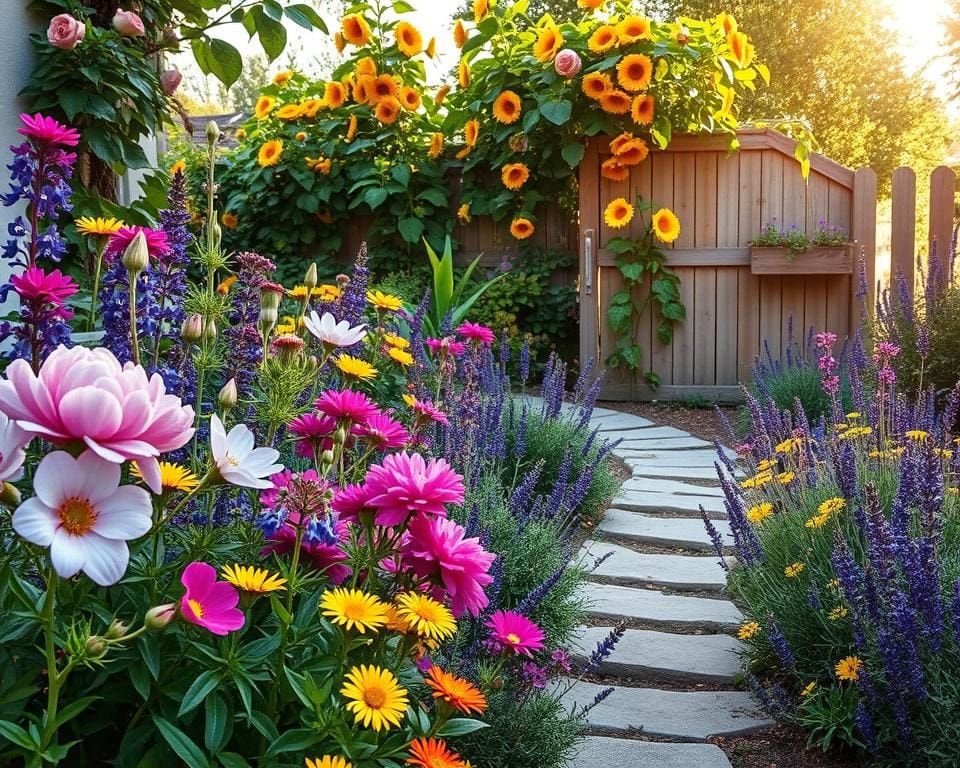

Choosing the right cottage garden plants can help you create a relaxed, colourful and wildlife-friendly display. Informal planting, generous flower colour and varied heights give the garden its charm. A long flowering season also keeps it interesting from spring to autumn.
Roses, foxgloves, delphiniums, lavender, lupins and hollyhocks suit traditional cottage garden planting. Hardy geraniums, peonies, dahlias, sweet peas and climbing plants add further shape, scent and colour. For early displays, you can also explore these spring-blooming flowers.
Before you plant, assess your garden’s sunlight, soil, drainage and moisture levels. Allow enough space for each plant to reach its mature size, while leaving room for air movement. These details matter in a small urban border, a courtyard, a front garden or a larger country-style plot.
This guide explores UK cottage garden ideas for sunny and shaded areas, difficult soils, self-seeding flowers and practical planting combinations. You will also find ways to use cottage garden flowers for seasonal colour, wildlife value and a natural, layered display.
Choosing the best cottage garden plants for colour and seasonal interest
Good English cottage garden planting blends flowering perennials, biennials, annuals, bulbs, herbs, shrubs and climbers. Arrange them in relaxed layers rather than neat rows. This mix gives you texture, scent and year-round cottage garden colour in a natural setting.
Traditional cottage garden favourites
Roses provide a strong framework for many traditional cottage garden plants. Shrub roses can anchor a border with colour and fragrance. Climbing and rambling roses bring height over arches, trellises, walls and fences. A combination of roses and foxgloves creates a timeless cottage garden scene.
Foxgloves produce tall flower spikes in pink, purple, white and cream. They are biennials or short-lived perennials, and may self-seed in suitable soil. Delphiniums add bold vertical colour in blue, violet, pink and white. Plant them in fertile, well-drained soil with full sun and shelter from strong winds. Staking may be needed.
Lupins, hollyhocks and peonies bring height and rich colour. Hardy geraniums soften the edges of borders, while catmint and lavender offer fragrant foliage. Phlox adds full flower heads later in the season. These perennial cottage garden plants work well when repeated in small groups.
Foxgloves, lupins and delphiniums can be harmful if eaten. Take care when planting them near children or pets. Choose a safer spot, and check plant labels before adding new varieties.
Plants for spring, summer and autumn colour
Plan for a steady change of colour through the year. Tulips, daffodils, primroses and other spring flowering plants brighten borders after winter. Pansies suit edging and pots, with vibrant blooms that fill gaps between bulbs.
For summer cottage garden flowers, combine roses, lupins, delphiniums, lavender and phlox. Use soft pastels for a calm display, or choose bold primary colours for a lively border. Marigolds provide warm shades and help attract pollinators during the warmer months.
Late-flowering plants can extend autumn garden colour. Repeat groups of seasonal cottage garden plants so the border feels connected. You can find useful monthly ideas through this guide to plants for seasonal colour.
Annuals and self-seeding flowers for a natural look
Cottage garden annuals fill bare spaces quickly and bring colour in their first year. Sweet peas climb trellises and offer a rich fragrance. Marigolds and pansies work well in pots, borders and small gaps between established plants.
Allow selected self-seeding cottage garden plants to spread naturally. Foxgloves, poppies and hardy annuals can create naturalistic flower borders with little effort. This wildflower-style planting suits informal gardens and supports local wildlife.
Repeat a few favourite plants to make the display feel cohesive. Mix upright spikes, rounded heads and open daisy shapes so the border does not look flat. With the right balance, you can create colourful, easy cottage garden flowers that change with every season.
Colourful cottage garden flowers for sunny borders
Most sunny cottage garden borders need at least several hours of direct light each day. Choose well-drained soil, since poor drainage can harm many cottage garden plants for full sun. Roses, lavender, catmint and salvias offer colour, scent and useful flowers for bees.
Use lavender, catmint and salvias near paths or at the front of the border. Their aromatic leaves release scent when brushed, while their soft shapes create a gentle edge. These drought-tolerant cottage garden plants suit warm, open sites once their roots are established.
Build height in layers to create a full display. Place hollyhocks, delphiniums, foxgloves and verbascums at the back or in the middle. Set penstemons, yarrow, echinacea, rudbeckia and hardy geraniums in front of them. Low-growing plants can soften the border edge.
Roses make a strong focal point in sunny flower borders. Soften the base with hardy geraniums, Nepeta, lavender or lady’s mantle. The contrast of open flowers and textured leaves gives the planting a relaxed cottage garden feel.
For a long season of colour, add lupins, gaura, dahlias and cosmos. Dahlias provide bold flowers into early autumn, though they are not fully hardy in every part of the UK. Lift the tubers or protect them over winter in colder areas.
Colour choices can shape the mood of your border. Blue and purple flowers work well with soft pink roses. Warm orange and yellow blooms look balanced beside white flowers and silver foliage. This approach suits colourful plants for south-facing gardens, where bright tones stand out in strong light.
Improve the soil before planting with well-rotted organic matter. Good drainage matters for Mediterranean plants such as lavender, which can fail in waterlogged ground. Check the soil after heavy rain before choosing drought-tolerant cottage garden plants for a dry border.
Deadhead roses, salvias, penstemons and other repeat-flowering plants to encourage fresh blooms. Remove faded flowers to keep the border neat. Leave selected seedheads on echinacea, rudbeckia and verbascums for autumn texture and winter interest.
Read each plant label before you buy. Check mature height, spread, hardiness and soil needs, then compare them with supplier guidance. This helps you place lavender and roses where each plant has enough light, air and room to grow.
Best cottage garden plants for shade and difficult areas
Shady borders can still feel colourful and full of life. The best cottage garden plants for shade depend on how much light reaches the soil. Light shade receives gentle sun for part of the day. Partial shade gets a few hours of direct light, while deep shade receives little sun. Check each border before you choose your plants.
Shade-tolerant flowers for borders and woodland-style planting
Many shade-tolerant flowers UK gardeners rely on bring colour across the seasons. Hellebores and snowdrops offer early blooms. Foxgloves, aquilegias, astrantias and hardy geraniums follow as the year warms. Pulmonaria, Japanese anemones, cyclamen and lily of the valley suit sheltered spots with gentle, dappled light.
Hostas and ferns create strong foliage contrast beside flowers. Hostas may suffer damage from slugs and snails, so inspect leaves often. These plants suit flowers for partial shade and many plants for north-facing gardens, where bright colour can be harder to achieve.
For woodland garden plants, use several layers. Place ground-covering plants at the front, medium-height perennials in the middle, and taller plants or small trees above. This design gives the border depth while helping the soil retain moisture.
Moist, dry and poor-soil planting conditions
Match plants to the soil rather than trying to force them into the wrong place. Astrantias, Japanese anemones and hardy geraniums work well as plants for damp borders. For cottage garden plants for poor soil, choose resilient foxgloves, aquilegias and some hardy geraniums. Add well-rotted compost where suitable, without burying plant crowns.
Dry shade beneath established trees can be one of the most difficult garden conditions. Tree roots compete for water and nutrients, so choose tough plants for dry soil and improve the surface carefully. Avoid deep digging, which can harm tree roots. A light mulch can improve soil health, conserve moisture and reduce weeds.
Native UK plants often suit local soil and weather, so they need less attention once established. Ground cover can suppress weeds and support low-maintenance cottage garden planting. Use drip irrigation to water root zones with less waste, and collect rainwater for dry spells. More practical ideas appear in this guide to low-maintenance cottage garden planting.
Lavender and many salvias need strong sunlight to flower well. Avoid placing these sun-loving plants in deep shade, where growth may be weak and blooms scarce. Sedum and echinacea prefer brighter, well-drained positions, though they can help sunny areas with poor soil.
Colourful climbers and plants for walls and fences
Cottage garden climbers bring height to a shaded boundary or a bright wall. Choose flowering climbers for walls according to light, shelter and soil moisture. Climbing roses need sun for the best display, while sweet peas prefer a bright, open position with regular water.
Use sturdy plants for fences and trellises to screen plain surfaces and connect different border layers. Train stems loosely with soft ties, leaving room for growth. A well-supported climber adds colour without taking much ground space, making it useful in compact gardens and other difficult garden conditions.
How to plant and combine cottage garden flowers successfully
Before you buy plants, measure the border and watch how sunlight moves across it. Test the soil and check for poor drainage or dry, compacted areas. This simple planning stage helps you learn how to plant cottage garden flowers in the right conditions, rather than forcing unsuitable varieties to grow.
Build your cottage garden border design in layers. Place tall delphiniums, foxgloves, hollyhocks and climbers at the back, or where they will not shade smaller plants. Use roses, peonies, phlox, lupins and hardy geraniums through the middle. Along paths, plant lavender, catmint, thyme, lady’s mantle and compact hardy geraniums.
Generous groups and repeated drifts create rhythm without making the border look formal. Mix spires, cups, daisies, umbels and rounded blooms for contrast. Balance strong colours with white flowers, green foliage or silver leaves. Combine spring bulbs, early perennials, summer flowers and late-season plants for a longer display. Good flower planting combinations should also include enough space for each plant’s mature spread.
Prepare the soil well, water new plants thoroughly and keep them watered during dry spells in their first growing season. Add supports before tall stems flop, especially in windy gardens. Regular weeding, mulching, deadheading and selective cutting back are key parts of cottage garden maintenance. Leave some seedheads for birds and winter interest, divide crowded perennials and edit self-seeded plants when needed. When planning informal garden planting, check each plant’s toxicity, hardiness and mature size, particularly if children or pets use the garden.