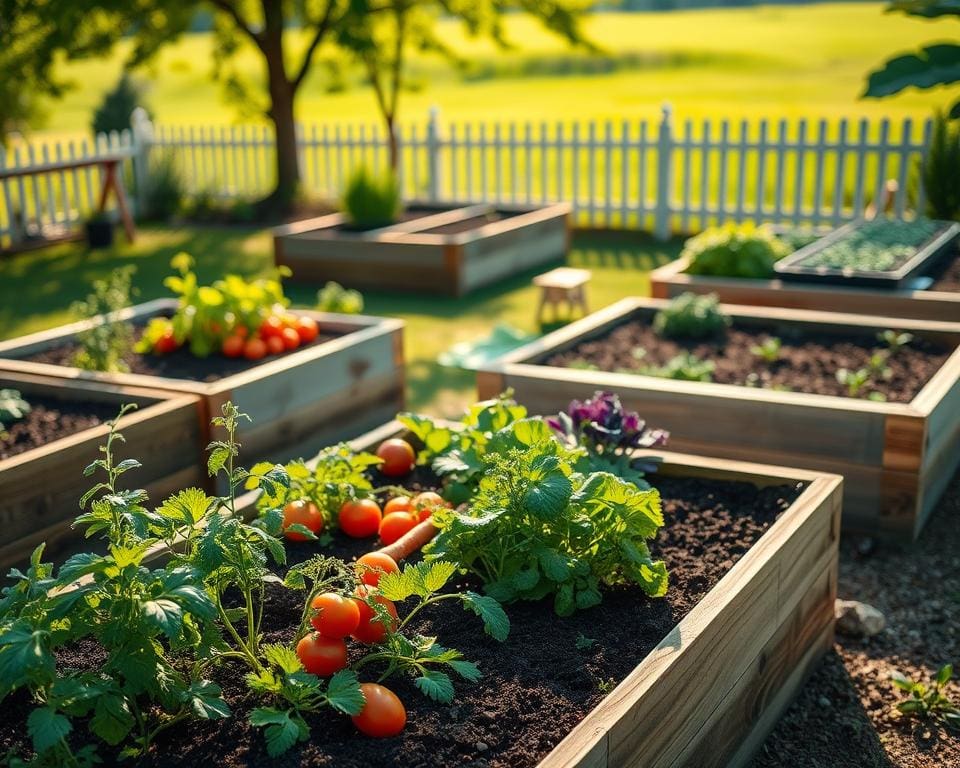

Raised garden beds are enclosed growing areas set above the surrounding ground. You fill them with a chosen mix of topsoil, compost and other growing materials. This gives you more control than planting straight into the soil.
For growing vegetables at home, that control can make a real difference. You can improve poor soil, manage drainage and create clear planting spaces. This is useful for vegetable gardening for beginners, as well as for anyone seeking easy gardening in a busy routine.
Raised beds suit lawns, patios, courtyards and allotments. Choose a position with around six to eight hours of direct sunlight each day for most crops. Lettuce, spinach and chard can cope with some partial shade, which helps when space or light is limited.
A defined bed also keeps paths separate from productive soil. You can organise crops, plan simple rotations and reach plants without compacting the growing area. In gardening in the UK, this is especially helpful when heavy clay, wet winters and changeable weather make ground-level planting harder.
Raised beds do not remove every task. You still need to water, feed and weed your crops, while checking for pests and harvesting often. However, a well-planned bed can support a productive garden and make your home vegetable garden easier to manage.
The following sections explain how raised beds improve soil and growing conditions, simplify planting and maintenance, and help you grow healthier crops. You can also explore vertical planting ideas when floor space is tight.
How raised garden beds improve soil, drainage and growing conditions
Raised beds give you closer control over the place where vegetables grow. You can create a fertile growing medium above poor, compacted or stony ground. This makes it easier to manage soil fertility, moisture and root space throughout the UK growing season.
Control your soil quality from the start
Filling a bed lets you choose the raised bed soil, instead of relying on the ground beneath it. The best soil for raised beds usually combines quality topsoil, mature garden compost and well-rotted organic matter. This blend should hold moisture while allowing air to reach plant roots.
Use compost for vegetables to support fertility and soil improvement. Compost helps build soil structure, supports earthworms and creates a crumbly texture that is easy to cultivate. It should not fill the whole bed. Too much organic matter can settle sharply and may provide more nutrients than some crops need.
Test the soil pH if you plan to grow crops with special needs. Most vegetables prefer slightly acidic to neutral soil, often between pH 6 and 7. A test can reveal nutrient shortages and help you avoid adding fertiliser without a clear reason.
Raised beds work well over clay soil, rubble, compacted ground or soil with a history of contamination. Your plants can grow in a cleaner medium with fewer obstacles. Add organic matter over time to maintain vegetable root health. Do not use fresh manure, as it can scorch roots, spread weeds and introduce harmful pathogens. Well-rotted manure is a safer choice when it suits the crop.
Improve drainage and reduce waterlogging
Good raised beds drainage protects roots from sitting in wet soil. A raised position lets surplus rain move away from the root zone, which can help prevent waterlogging. This matters on heavy ground, where drainage for clay soil can be difficult.
Fill the bed with an open, well-structured mix. Avoid adding a deep layer of gravel beneath the soil, as this can slow water movement at the boundary between materials. If the surrounding ground stays saturated, place the bed where rain can flow away. You can improve garden drainage with shallow channels or a slight fall across the site.
Healthy roots need both water and air. Check the bed after heavy rain, especially during the wetter months. If water remains on the surface, review the soil texture, bed position and nearby paths before planting.
Warm the soil earlier in the growing season
Raised soil often warms sooner than ground-level soil because it receives more sun and drains faster. This can support early planting raised beds, giving you a useful start with spring vegetables such as radishes, lettuce and early carrots.
Warmer soil can help seeds germinate and young plants establish. Use fleece, cloches or horticultural fabric when cold nights threaten. This simple frost protection can help you extend growing season plans without exposing tender plants to severe weather.
Keep checking night temperatures, as raised beds can lose heat quickly in clear weather. A sheltered position near a wall may provide extra warmth. Do not plant tender crops too early if the forecast still shows hard frost.
Choose the right raised bed materials and size
Your choice of raised bed materials affects strength, safety and appearance. Wooden raised beds blend into most gardens and are simple to repair. Choose untreated timber or wood that is approved for food-growing areas. Avoid old railway sleepers or timber with an unknown treatment history.
Metal garden beds last for years and offer clean lines. Select products made from safe garden materials, with firm edges and a stable base. Galvanised steel is widely used for garden beds, though dark metal can heat quickly in strong summer sun.
Plan the raised bed dimensions around your reach and the available space. A width of about 1.2 metres lets you tend both sides without standing on the soil. Keep the length manageable and leave clear paths between beds. Lower beds can support accessible gardening, while sturdy edges provide a useful seat for some gardeners.
Choose a height that suits your needs, crops and budget. A deeper bed gives roots more room, yet it requires more soil and stronger sides. Check that the structure is level, stable and easy to water before filling it.
Make planting and maintaining vegetables simpler
A raised bed creates a clear growing space, so you can plan each crop with care. This makes easy vegetable gardening more practical, since you can see where every plant belongs and how much room it needs.
For efficient raised bed planting, use a simple grid or block layout instead of long, wide rows. Plants grow closer together, leaving less bare soil where weeds can take hold.
Good crop spacing supports healthy growth. Crowded plants compete for light, water and nutrients, while wide gaps waste useful space. Follow the guidance on seed packets, while allowing for the variety’s mature size and the fertility of your soil.
Small, regular sowings can give you a steadier harvest. With succession planting, sow salad leaves, radishes, beetroot or peas at short intervals instead of growing the whole crop at once.
You can follow early crops with later plantings. Try winter salads after early potatoes, or plant autumn brassicas after spring crops. This keeps the bed productive through more of the year.
Raised beds can make crop rotation easier because you can divide the plot into clear growing areas. Moving crop families between these areas may reduce the build-up of pests and diseases, though a small bed gives you less room for a full rotation.
Defined edges and paths make routine garden maintenance simpler. You can hand-weed, hoe, feed plants and check leaves without stepping on the soil.
A raised bed can limit weed invasion from nearby lawns and borders. It cannot stop weeds brought by wind, birds, compost or contaminated soil. Cover exposed soil with a suitable mulch to suppress weed seedlings, retain moisture and reduce soil splashing during heavy rain.
Water the root zone instead of wetting the foliage. Use a watering can, a hose with a suitable attachment or drip irrigation, based on the bed’s size and position. An irrigation timer for vegetable beds can keep moisture levels more consistent when your schedule is busy.
Raised beds may dry out faster than ground-level soil during warm or windy weather. Check the moisture below the surface before watering, since the top layer can look dry while the roots remain moist.
Well-planned, accessible vegetable beds can make gardening more comfortable if bending or kneeling is difficult. Build the bed at a suitable height, and leave paths wide enough for safe movement and easy access.
Check plants often for slugs, snails, aphids, caterpillars and signs of disease. Early action is usually easier than trying to rescue badly damaged crops.
- Install supports for peas, runner beans, cucumbers and climbing French beans before planting or soon after.
- Use netting, fleece or cloches when crops need protection from birds, insects, wind or cold.
- Secure covers without pressing them against delicate leaves.
Early support installation avoids disturbing established roots. A clear layout makes these protective measures easier to fit, inspect and remove when conditions improve.
How raised beds help you grow healthier, more productive vegetables
Improved soil structure, reliable drainage and good fertility help roots spread through the bed. They can reach water, oxygen and nutrients more easily, which supports healthy vegetable plants. Strong roots give plants a better base for producing leaves, flowers and edible crops.
Productive raised beds do not guarantee higher vegetable yields. Results also depend on sunlight, variety choice, sowing dates, watering, feeding, pollination, pest management and the weather. Choose crops suited to your space and the UK climate, such as compact tomatoes, dwarf beans, cut-and-come-again salads and shorter-rooted carrots.
Regular harvesting can encourage continued production from courgettes, runner beans, French beans, salad leaves and chard. Fertile soil supports close planting, but replenish crop nutrition responsibly with compost and suitable fertiliser rather than excess feed. Mulch helps retain moisture, protect the soil surface, reduce erosion and add organic matter as it breaks down.
Good spacing and airflow can reduce fungal disease, especially during damp weather, while prompt removal of diseased material limits its spread. Use barriers, hand-picking, healthy plants and natural predators for practical pest management; netting can protect brassicas from cabbage white butterflies and crops from birds. Calendula, nasturtiums and marigolds add colour and resources for pollinators, but they should support, not replace, sound crop care. Keep simple records of sowing dates, varieties, harvests, pests and bed use to improve future plans. With suitable materials and regular care, raised beds make sustainable gardening more manageable and help you enjoy a more reliable supply of homegrown produce.