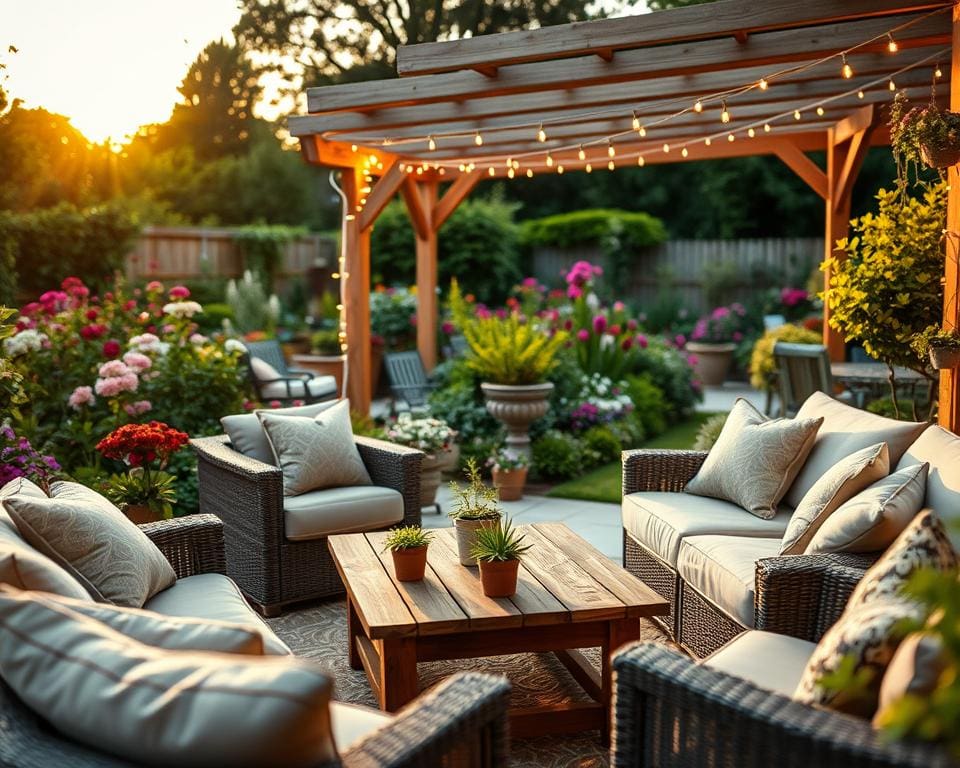

An outdoor living room can turn your garden into a natural extension of your home. With the right layout, you can dine, relax and enjoy outdoor entertaining throughout the warmer months.
You do not need a large garden to create a welcoming garden seating area. Thoughtful furniture, suitable shelter and a little privacy can make even a compact UK outdoor space feel comfortable and sociable.
When planning your space, consider changing weather from the outset. Rain, wind and damp conditions all affect furniture, lighting and storage. These practical summer garden ideas can help you build a flexible setting for quiet evenings, casual meals and relaxed alfresco living.
The following guide covers layout, seating, durable materials, warm lighting and useful finishing touches. Together, these choices will help you create an outdoor living room that feels inviting and works well all summer.
Plan your outdoor living room for comfort and easy entertaining
The position of your outdoor living room affects how often you use it. A spot close to the house makes it easier to carry food, drinks and cushions between the kitchen and garden. Before buying furniture, measure the area and mark doors, paths and storage points. Use the furniture dimensions to test your outdoor living room layout, so the space feels comfortable rather than crowded.
Choose the best location for shelter, privacy and sunlight
Watch how sunlight moves across the garden during the day. A sunny position can feel welcoming in cooler weather, while afternoon and evening shade may suit warm summer days. Existing shelter from walls, fences, trees, pergolas, awnings or parasols can protect you from wind and light rain.
For a sheltered seating area, choose a place that feels protected without becoming dark or enclosed. Improve privacy by positioning seats near a boundary, planting evergreen screening, or adding trellis panels with climbing plants. Keep enough open space for natural light and fresh air.
Arrange outdoor furniture to encourage conversation
Place sofas, armchairs and loungers so everyone can see and speak to one another. A central coffee table can provide a useful focal point for drinks and books. A fire pit may create a welcoming centre, but it must sit well away from fabrics, fences and overhanging branches.
Leave clear routes between the house, seating, dining areas and storage. This makes your garden furniture arrangement safer and easier to use. Modular seating, lightweight chairs and nesting tables give you flexibility when the space needs to change for meals or guests.
Plan private garden seating in a quieter corner if you want a place to read or relax. For larger gatherings, keep the main outdoor entertaining space open enough for people to move around without brushing against furniture.
Select weather-resistant materials for lasting comfort
Choose materials that suit the conditions in your garden. Powder-coated aluminium is light and resists rust. Treated timber adds natural warmth, while synthetic rattan offers a practical woven finish. Check that timber is treated for exterior use, and follow the care guidance provided by the manufacturer.
Outdoor fabrics should be made for exterior use and able to withstand moisture and sunlight. Allow cushions and textiles to dry fully before storing them. Good drainage matters too, so avoid placing furniture where water collects and leave space for air to circulate.
- Keep furniture clear of drains and areas that stay wet.
- Use covers that allow moisture to escape.
- Check fixings and finishes at the start of each summer.
Choose comfortable seating and practical outdoor furniture
Make seating the foundation of your outdoor living room. Choose pieces that suit your routine, from quiet reading to relaxed dining and summer gatherings. Check the seat height, depth and back support before you buy. Deep chairs feel laid-back, while firmer seats can make meals and conversation easier.
Use garden sofas to anchor the space, then add outdoor armchairs, benches or footstools for flexible seating. A modular design can adapt to changing needs. If space is limited, small garden furniture can provide comfort without making the patio feel crowded.
Choose robust frames made from treated wood, powder-coated metal or weather-resistant wicker. HAY and Fritz Hansen offer modern designs with clean lines, while reclaimed wood suits a softer, more natural setting. Cast aluminium tables, such as those from Lazy Susan, provide a durable choice for changeable British weather.
Look for outdoor cushions with water-resistant or quick-drying covers. Removable fabric makes cleaning easier, while UV-resistant material helps limit fading. Store cushions in a weather-resistant box, covered bench or deck box when rain is expected.
Place a garden coffee table within easy reach of every seat. Leave enough space for drinks, books and serving dishes. A lower shelf adds storage, while a lightweight frame makes moving the table simple. An outdoor rug can define the seating area and soften paving beneath your feet.
For regular alfresco meals, add a dining table that fits the garden’s scale. Round designs support conversation and improve movement in compact spaces. Rectangular tables suit larger groups. Stackable chairs, folding tables and lift-up storage benches make patio furniture easier to rearrange and store.
Explore these stylish lounging ideas when comparing daybeds, chaises, recliners and lounge chairs. Keep furniture stable, secure lightweight pieces in exposed areas and place seating away from barbecue heat. Breathable covers can protect your furniture from rain and frost without trapping moisture.
Add warm lighting for relaxed alfresco evenings
Good outdoor living room lighting lets you enjoy your seating area after sunset. It improves visibility around chairs, steps and paths while giving the garden a calm, welcoming feel. A layered plan works better than one bright fitting, as each light source serves a clear purpose.
Layer lanterns, string lights and wall lighting
Start with LED-lit outdoor lounge furniture or a soft central glow. Add outdoor string lights to a pergola, balcony, wall or secure garden support. Keep cables away from walkways, standing water and sharp edges, and fasten them so they cannot become a trip hazard.
Place patio lanterns on tables, steps or the floor for a gentle, portable glow. Choose stable designs and keep candles or flames away from cushions, curtains, dry planting and other flammable items. Wall lights suit doors, outdoor kitchens and serving areas, where clear visibility matters.
Shielded fittings and downlights can direct light towards a wall, path or planting. This approach adds depth without shining straight across your seating area. These garden lighting ideas help you balance safety with a relaxed setting.
Use solar and low-energy lighting options
Solar garden lights suit borders, paths and decorative features where they receive plenty of daylight. Their output can drop during cloudy weather and shorter winter days, so use them as accents rather than your only source of light.
Warm-toned LED bulbs use less electricity than traditional incandescent bulbs. They work well for alfresco lighting and create a comfortable colour that complements timber, brick, greenery and neutral fabrics. Timers, smart controls and motion sensors can reduce wasted energy, with sensors proving useful near entrances and paths.
Check that every fitting has the right outdoor rating for its position. Lights exposed to rain need suitable protection, and electrical work must follow UK safety requirements. Inspect cables and fittings for damage before each season of use.
Create a cosy atmosphere without harsh glare
Choose warm white bulbs for sofas and dining areas instead of very cool white light. Keep brighter task lighting near cooking spaces, serving points and steps. Use softer accents around seating, planters and boundaries to create a calm balance.
Position bulbs below eye level where possible, and use shades or diffusers to soften their glow. Direct light towards walls, surfaces and planting rather than across the room. This makes your warm outdoor lighting feel gentle while preserving useful visibility for evening gatherings.
Complete your summer living space with thoughtful details
Finish your outdoor living room with practical touches that add comfort and character. Outdoor cushions and throws, washable rugs and tableware bring colour, texture and an indoor feel outside. Choose fabrics made for exterior use, then store soft furnishings in a dry, ventilated place when rain is due. A selection of weather-resistant patio furniture can also help create a durable, polished setting.
Use summer garden décor to connect the seating area with the wider garden. Containers of herbs, scented flowers and seasonal plants can soften hard surfaces and support useful garden privacy ideas. Select plants for the available light, soil and wind exposure. Add a parasol, awning or pergola for shade, and secure freestanding options with a suitable heavy base.
Keep alfresco dining accessories close by, including serving trays, outdoor glassware, table decorations and a drinks trolley. Durable, easy-clean pieces make entertaining simpler. Well-planned outdoor storage, such as a storage bench, box or shed, protects cushions, lanterns, games and dining items. For cooler evenings, add blankets, a patio heater or a correctly installed fire pit, keeping heat sources away from combustible materials.
Repeat colours and materials from your home so the garden feels like a natural extension of the interior. Choose rust-resistant frames, sealed surfaces and covers that can be washed or moved easily. After several evenings, review where guests sit, where drinks collect and whether wind, damp or lighting affects comfort. Remove anything that creates clutter, and keep only the details that support relaxation, conversation, dining or easy upkeep.