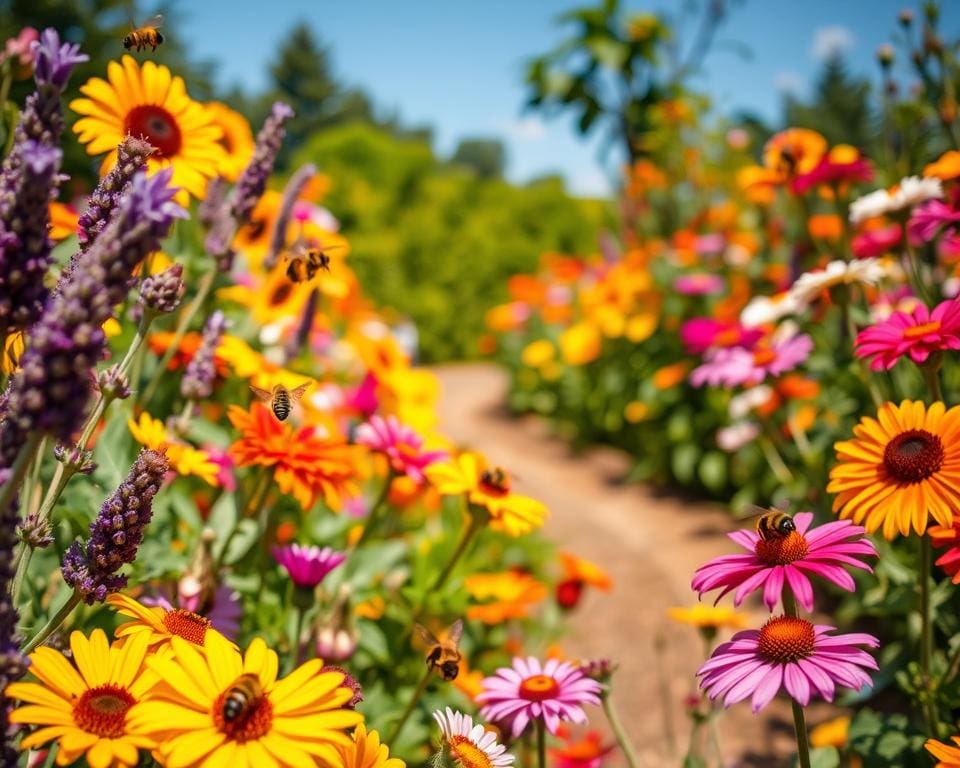

Choosing the right flowers can turn your outdoor space into a lively source of nectar and pollen. This guide will help you find flowers for bees and butterflies while creating a colourful, wildlife-friendly garden.
Bees collect nectar and pollen, while adult butterflies mainly feed on nectar. The best flowers for pollinators therefore offer varied shapes, colours and scents. A mix of plants also keeps your garden in bloom for longer.
Your choices should suit British conditions. Consider your soil, drainage, sunlight and exposure before planting. Suitable pollinator plants UK gardeners can grow include flowers for borders, containers, window boxes, balconies and small urban spaces.
You will also learn how to build a bee-friendly garden and a butterfly-friendly garden through seasonal planting. Simple steps, such as planting open flowers, limiting pesticides and leaving a small area untidy, can make wildlife-friendly gardening more useful for pollinators. Explore this guide to flowers that attract bees and for further ideas.
Flowers for bees and butterflies: the best plants for your garden
Good planting gives pollinators food, shelter and a longer feeding season. Nectar provides bees with energy for flying and foraging. Pollen supplies protein and other nutrients for adult bees and developing larvae.
A flower may offer nectar, pollen or both. A varied planting scheme is more useful than choosing plants for appearance alone. Include spring, summer and autumn blooms to prevent a short burst of food followed by a gap.
Bee-friendly flowers rich in nectar and pollen
Lavender is one of the most reliable summer nectar-rich plants. Its dense purple spikes attract bumblebees, honeybees and solitary bees. Plant lavender for bees in a sunny, well-drained spot for strong growth and many blooms.
Borage has open, blue, star-shaped flowers that make nectar easy for bees to reach. Borage for bees is a useful choice for a long flowering period, and it can self-seed in suitable soil. Foxgloves suit long-tongued bumblebees, which can reach deep inside their tubular flowers. Native foxglove, Digitalis purpurea, grows well in partial shade and woodland-style borders.
Alliums produce rounded heads made from many small flowers. Each head creates a clear landing and feeding area with plenty of nectar. Choose single flowers where possible, since open petals leave pollen and nectaries within easier reach. Heavily double flowers can hide or reduce these food sources.
Useful bee-friendly flowers UK gardeners can grow include thyme, marjoram, single dahlias and late-flowering sedums. These pollen-rich flowers work well in pots, borders and raised beds.
Butterfly-attracting flowers for a colourful garden
Butterflies need nectar-rich flowers with flat or open shapes. Buddleia, verbena, marjoram, scabious and coneflowers provide landing places with accessible food. They bring colour and movement to borders, making strong butterfly garden flowers for sunny spaces.
For butterfly plants UK gardens can support, combine tall stems with lower flowers. Use buddleia at the back, verbena through the middle and scabious near the front. These colourful pollinator plants suit a range of soil types and keep feeding areas close together.
Early flowers matter too. Primrose offers valuable spring nectar before many summer plants open. You can find more ideas for seasonal displays in this guide to the best spring-blooming flowers, including fragrant lilacs, sweet peas and tulips.
Native British flowers that support pollinators
Native British wildflowers fit local conditions and provide familiar food for wildlife. Red campion, knapweed, oxeye daisy, bird’s-foot trefoil and yarrow suit informal borders, meadows and wildlife areas. They make valuable native flowers for bees and native flowers for butterflies.
Teasel adds height and seed heads for garden wildlife, while foxgloves bring nectar to shaded edges. Primrose supports early insects in spring. Together, these UK pollinator plants create varied structure, colour and food across the year.
How to choose flowers that support bees and butterflies throughout the seasons
A steady supply of nectar and pollen helps more than a garden that blooms heavily for a few weeks. Plan your seasonal flowers for bees and butterflies so that flowering periods overlap from early spring to late autumn. This creates a year-round pollinator garden with fewer gaps in its food supply.
Early spring can be a difficult time for wildlife. Primrose, lungwort, hellebore, flowering currant and willow provide useful food for emerging queen bumblebees and other insects. Crocus, snowdrops and grape hyacinths extend this offer where they grow well. Choose open flowers that insects can reach, rather than relying only on highly ornate forms.
Good spring flowers for bees should lead smoothly into late spring and early summer. Foxglove, comfrey, alliums, red campion, chives and hawthorn help bridge the gap between spring bulbs and peak summer flowering. You can find further ideas for seasonal planting when choosing plants for your space.
Summer offers the widest choice of nectar and pollen plants. Lavender, borage, marjoram, buddleia, verbena, scabious, knapweed and single-flowered roses are strong options for summer butterfly plants. Plant flowers at different heights and in groups, so insects can spot them easily and feed without flying far between blooms.
For late summer and autumn, grow sedum, Michaelmas daisies, rudbeckia, coneflowers, ivy and late-flowering verbena. These autumn flowers for pollinators provide food as temperatures fall. Butterflies may still visit on warm days, while bees need late-season energy for their colonies and newly emerged queens.
Flowering ivy is especially valuable in autumn, when many summer plants have faded. Its blooms offer nectar, while dense evergreen growth gives insects shelter. Several species for each season are safer than relying on one variety. Poor weather, disease or a short flowering period is less likely to create a food gap.
Leave some seed heads and fading flowers over winter. They can feed birds, shelter insects and add structure to your beds, supporting winter garden wildlife. Check the flowering calendar on plant labels, and record bloom times in your own garden, since local weather and growing conditions can change the dates.
How to create a pollinator-friendly garden for bees and butterflies
Most nectar-rich flowers grow best in sunny spots sheltered from strong winds. Sun helps plants produce nectar and gives butterflies a safe place to warm their wings. Group matching flowers in blocks or drifts, rather than spacing them far apart. This makes it easier for pollinators to find food and saves energy as they move between blooms.
Use flowering perennials, herbs and shrubs in borders, or grow lavender, marjoram, thyme and compact flowers in containers. Choose trailing or upright plants for window boxes to suit the available light. Pots and vertical planters work well on balconies, but secure them and water them often. These simple eco-friendly garden ideas also suit a small pollinator garden, where compact, long-flowering plants help avoid overcrowding.
Add a shallow saucer of clean water with partly submerged stones, so insects can land safely. Stones, logs, leaf piles, hollow stems and bare soil offer shelter, nesting material and places to overwinter. A wild corner, unmown patch or pile of old stems can provide more value than a perfectly tidy lawn. Grow thyme, chives, sage, oregano, marjoram, mint and fennel for useful nectar, but keep vigorous mint in a pot.
For a complete butterfly habitat, grow caterpillar food plants as well as nectar flowers. Nettles support peacock, red admiral and small tortoiseshell butterflies, while holly feeds holly blue caterpillars; some leaf damage is a normal part of a healthy garden. Avoid pesticides and use ladybirds, lacewings, hoverflies, birds, hand removal and healthy, disease-resistant plants for natural control. Choose single or semi-double flowers, mow less while lawn plants bloom, and leave seed heads until late winter or early spring. These are practical ways to learn how to attract bees and butterflies while creating a pesticide-free garden based on bee-friendly gardening and wildlife garden ideas UK gardeners can use.