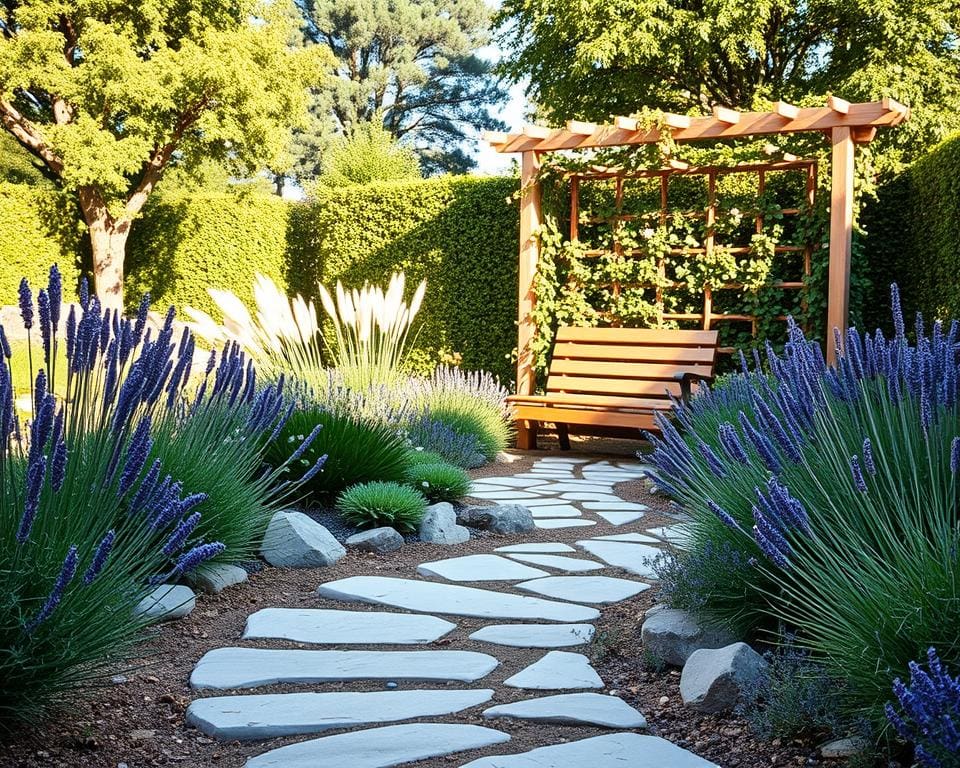

A low-maintenance garden is a practical, attractive outdoor space that cuts down routine chores while still offering year-round interest. In the UK this means reducing tasks such as frequent mowing, deadheading, weeding, heavy pruning and intensive watering, yet keeping biodiversity, structure and places to relax.
Choosing an easy-care garden saves you time and money. It lowers garden upkeep, reduces water use and limits chemical treatments, which benefits pollinators and wildlife. The result suits busy households, owners with limited mobility and those who prefer to spend weekends enjoying their garden rather than working in it.
This short guide explains simple garden design UK principles, plant selection and practical systems so you can build a minimal maintenance garden. You will learn how to plan sensible layouts and hard landscaping, pick hardy perennials, evergreens and drought-tolerant natives, group plants by need, and use mulches and irrigation to cut future work.
Expect realistic outcomes: with good design your garden will typically need a few hours of attention each week in the growing season, or only seasonal checks for a truly low-effort plot. The advice here reflects British seasonal rhythms — mild, often wet winters and changeable summers — and helps you plan for resilience in those conditions.
Design principles for a low-maintenance garden
Start by sketching a clear garden layout that keeps routes simple and tasks grouped. A simple garden plan with defined garden zoning for entertaining, planting and storage cuts time spent moving between areas. Prioritise sightlines so you can spot weeds, pest damage or irrigation faults quickly.
Plan for simplicity and practical layout
Limit the number of beds and avoid narrow, awkward strips of lawn that demand frequent edging. Raised beds or containers at comfortable heights reduce bending and speed common tasks. Place compost and shed near planting zones to consolidate routine work.
Choose hard landscaping to reduce upkeep
Increase durable hard landscaping where it makes sense. Patios, paving or a gravel garden reduce lawn to mow and beds to tidy. Select permeable surfaces such as resin-bound gravel or permeable paving to help drainage and align with SuDS guidance for the UK.
Invest in quality installation and materials to avoid repairs. Choose composite decking or rot-resistant timber like Accoya for decks. Well-compacted sub-bases and neat edging cut weed ingress and future settling.
Use repetition and structure to minimise maintenance
Adopt planting repetition to simplify pruning and feeding schedules. Simple planting schemes built around a strong garden structure of evergreens, architectural grasses and hardy perennials give year-round form and reduce replanting.
Layer planting with canopy, shrubs, perennials and groundcover to suppress weeds and reduce bare soil. A formal structure can work in a small yard when balanced with relaxed materials to keep upkeep low.
Consider microclimates and sun exposure
Survey your aspect and microclimate before finalising plant positions. South-facing walls warm quicker and suit drought-tolerant choices, while north-facing corners need shade-tolerant species. Use sheltered garden spots and windbreaks of hedging or fencing to protect tender specimens.
Place thirsty plants together near a water source and site drought-hardy groups where the aspect is driest. For practical tips on materials, mulches and water-saving strategies consult top tips for a low-maintenance backyard.
Plant selection and planting strategies
You can cut maintenance by choosing the right plants and placing them with care. Start by thinking about native plants UK and drought-tolerant plants for resilience through dry spells. Aim for a balance of hardy perennials and evergreen shrubs so your borders look good all year.
Opt for hardy, native and drought-tolerant plants
Native plants UK such as primroses and Oxeye daisy support wildlife-friendly planting while needing less water and feed once settled. Look to Lavandula, Salvia, Echinacea and grasses like Festuca for proven drought-tolerant plants that perform in many UK gardens.
Choose species with pest and disease resistance and avoid high-maintenance cultivars that demand frequent attention. Consult resources like the RHS plant finder to match plants to your garden’s conditions.
Prefer perennials, evergreen shrubs and groundcovers
Perennials return each year, reducing replanting and lowering upkeep. Pair hardy perennials with evergreen shrubs such as Euonymus or Hebe to give winter structure and hide bare soil.
Use groundcover plants like Ajuga, Lamium maculatum or hardy sedums to suppress weeds and keep beds tidy. Take care with Vinca minor in sensitive sites where it can spread aggressively.
Group plants by water and soil needs
Plant grouping makes irrigation easier and reduces stress on neighbours. Create distinct watering zones for dry, moderate and moist conditions so you feed and water efficiently.
Design groups around soil types on your site. A Mediterranean group of lavender, rosemary and Santolina suits free-draining soil. Moist corners benefit from hostas and astilbe grouped together.
Planting tips to reduce future work (mulch, spacing, soil improvement)
Carry out soil improvement before planting. Test pH and add well-rotted compost to heavy clay or sandy soils as needed. For very poor ground, use raised beds with a balanced mix.
Follow planting depth guidance: set perennials at crown level and shrubs at rootball level to avoid rot. Good root care at planting helps faster establishment and less later watering.
- Plant at recommended mature spacing to avoid future thinning.
- Use slightly tighter spacing for groundcover plants to speed formation of a dense mat.
- Apply 5–8 cm of organic mulching, keeping mulch away from stems to prevent rot.
Water thoroughly at planting and mark watering zones to simplify future irrigation. Consider a slow-release feed or root conditioner for tricky soils. Protect young specimens with guards or fleece in exposed spots while they establish.
Practical maintenance tips, tools and systems
Set a simple seasonal calendar and stick to short, regular walk‑rounds. In spring, check shrubs for winter damage, prune where needed, apply a balanced soil feed and keep on top of young weeds. Summer is for smart watering and refreshing mulch; aim to water deeply and rarely. In autumn, clear heavy leaf build‑up, plant bare‑root hedging and prepare borders for winter. Winter tasks should be limited to essential pruning and tool care to avoid unnecessary work.
Choose irrigation systems that save time and water. Drip irrigation and soaker hoses work well for borders, while automatic timers with rain sensors and smart watering controllers help prevent over‑watering. Fit water butts to collect rain and use moisture sensors where possible to match irrigation to soil needs — a small upfront cost often cuts your bills and effort long term.
Think about lawn alternatives and lower‑care surfaces to reduce chores. Mixed meadow or clover turf, sedum lawns and gravel or paving strips make appealing replacements for thirsty lawns. For small grassy areas, select low‑cut varieties and use a battery‑powered mower for quiet, easy upkeep. Mulch heavily to suppress weeds and conserve moisture, and use landscape fabric under paths if needed, but avoid permanent membranes beneath planted beds to protect soil life.
Invest in a few reliable low‑maintenance tools and call in help for heavy jobs. A good pair of bypass secateurs such as Felco, a lightweight strimmer for edges, a long‑handled weeder, a quality hose with an adjustable nozzle and a battery mower will save hours. Consider hiring local garden maintenance services for scarifying, heavy pruning or large hedge cuts. Leave a small corner to naturalise for wildlife while keeping high‑use areas tidy; this balances neatness with biodiversity and keeps ongoing garden maintenance manageable.