
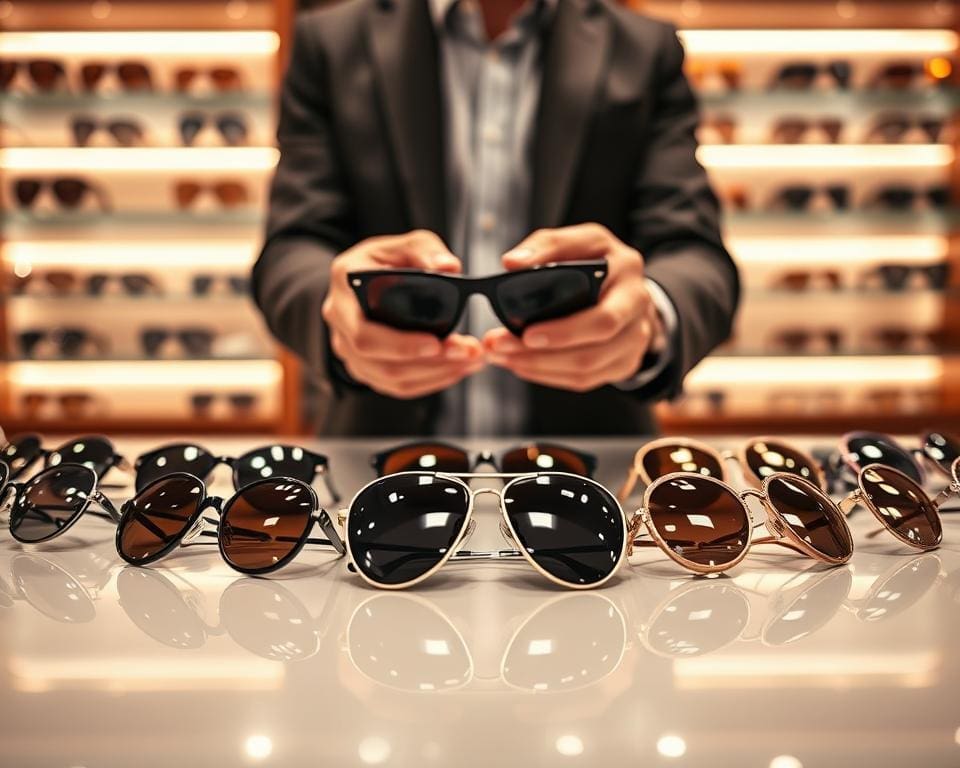
Choosing designer sunglasses is about more than brand prestige. You want shades that flatter your face, give reliable UV protection and feel like a sensible investment. This short sunglasses buying guide focuses on practical, evidence-based advice for shoppers across the United Kingdom.
This guide is written for you — whether you’re after best designer sunglasses UK options for style, prescription designer sunglasses, or durable everyday designer shades. By the end you will know how to choose sunglasses that suit your face shape, pick the right frame materials and lenses, verify UV400 and CE protection, and spot counterfeit products.
Core factors you will read about include face shape and frame style; frame materials and durability; lens technology and UV400/CE standards; prescription and transitional lenses; and designer brand selection, budgeting and authenticity checks. The recommendations draw on recognised standards and optical industry practice, and use examples from established eyewear brands such as Ray-Ban, Prada, Gucci, Persol, Oakley and Tom Ford.
The article is organised in four clear sections: identifying face shape and suitable styles; material, lens technology and UV protection; brand selection, budget and authenticity checks; and care, warranty and replacement timing. Use this guide as a concise tool to make confident buying decisions when shopping for designer sunglasses in the UK.
designer sunglasses: finding the right style for your face shape
Choosing designer sunglasses that flatter your features starts with a quick, practical check of proportions. Measure forehead width at the temples, cheekbone width at the widest point, jawline width and face length from hairline to chin. Compare those numbers to spot whether your face is round, oval, square, heart-shaped or diamond. Pull your hair back and examine a photo in natural light to avoid hairstyle or facial hair skewing perception.
Many people fall between types. Focus on the dominant proportions rather than a strict label. For further guidance on matching shape and style, see this short guide on choosing the right sunglasses.
Identify your face shape
Round faces have similar width and length with softer angles. Oval faces show balanced proportions with high cheekbones and are slightly longer than wide. Square faces feature a strong jaw and broad forehead. Heart-shaped faces present a wider forehead tapering to a narrow chin. Diamond faces have narrow forehead and jaw with broad cheekbones.
Assess the dominant measurements to classify your face. Use a tape measure or a clear photo and mark the widest points. This helps when browsing designer collections where fit varies by model and brand.
Frame styles that complement each face shape
For round faces, choose angular or geometric options to add definition. Rectangular or square silhouettes lengthen the face. Consider Ray-Ban Clubmaster or Wayfarer-inspired shapes and Persol rectangular styles as examples of the best frames for round face types.
If your face is square, pick rounded or oval frames to soften the jawline. Round metal frames popularised by Oliver Peoples or thin acetate ovals work well for sunglasses for square face proportions.
Oval face sunglasses suit many designs. Aviators such as the Ray-Ban Aviator, cat-eye, square or oversize frames all fit. Pay attention to scale so frames remain proportional to your face size.
For heart and diamond shapes, seek balance. Heart-shaped faces benefit from bottom-heavy or browline styles and cat-eye shapes with narrower tops. Diamond faces respond well to frames that highlight the eyes and soften cheekbones: oval, cat-eye or rimless styles are effective.
Fit details matter. Frame width should roughly match the widest part of your face. A too-wide or too-narrow frame upsets balance. Adjustable nose pads on metal frames help fine-tune bridge fit. Check temple length for comfort and that lenses sit centred over your pupils.
Colour and proportion influence the final look. Choose tortoiseshell, black or neutral hues for versatility. Use bolder tones for a statement. Lens size and shape — oversized versus minimal — change perceived balance and style.
Trying frames virtually and in-store
Many designer brands and retailers offer augmented-reality tools for virtual try-ons. Use virtual try-on sunglasses features on retailer sites and brand pages to preview styles at home. Verify scale by comparing the overlay to a reference photo to avoid camera distortion.
When you try frames in person, follow practical in-store fitting tips. Check for even weight distribution and no pinching on the nose. Ensure temples sit securely without pressure behind the ears. Lenses must centre over your pupils with no large gaps at the temples.
While in-store, test for peripheral distortion by looking left, right and up and down. Wear frames for several minutes to judge comfort and watch for slipping or squeaking. Try different sizes of the same model, bring a friend for a second opinion and, if you wear prescription lenses, bring your prescription to discuss compatibility with staff at retailers such as Sunglass Hut or Boots Opticians.
Material, lens technology and UV protection: practical buying considerations
Choosing the right sunglasses means weighing frame build, lens tech and certified protection. Your priorities may be comfort, durability or specialist performance for driving, water sports or daily wear. Read labels and ask an optician about materials, coatings and certification before you buy.
Frame materials and durability
Cellulose acetate is a favourite among designer houses such as Prada, Gucci and Persol. Acetate frames take rich colours and tortoiseshell patterns, feel solid on the face and can be warmed by an optician for a tailored fit. They work well if you want style with substance.
Metal options include stainless steel and mixed alloys that give slim profiles and adjustable nose pads. If you live by the coast pick higher-grade stainless steel to reduce corrosion from salt air. Lightweight alloys and injected nylon suit sports models from brands like Oakley.
Titanium sunglasses offer an excellent balance of weight and strength. Titanium is corrosion-resistant, often hypoallergenic and built for long wear. Look for spring hinges and reinforced temples for frames that flex without breaking and remain comfortable all day.
Lens types and coatings
Lens material affects weight and impact resistance. Polycarbonate or Trivex are light and shatter-resistant for sport. CR-39 is common for optical clarity at a modest cost. Glass gives the best scratch resistance but adds weight.
Polarised lenses cut horizontal glare, making them invaluable for driving, fishing and snow. Be aware polarisation can affect viewing LCD panels and some instrument displays. Photochromic lenses darken in UV light and suit variable conditions, though they react less behind a car windscreen.
Coatings improve performance. Anti-reflective coatings enhance clarity by reducing internal reflections. Mirrored and gradient tints control light in bright or mixed environments. Hydrophobic and oleophobic layers make cleaning easier by repelling water and oils. Scratch-resistant coatings help, but no lens is completely scratch-proof.
Understanding UV protection standards
Look for UV400 sunglasses or an explicit claim of 100% UVA and UVB blockage. UV400 blocks wavelengths up to 400 nanometres and covers the essential ultraviolet range your eyes need shielded from. CE marking shows conformity with UK and EU safety rules for many products.
Verify protection by checking product labelling and any documentation. Buy from reputable retailers and request UV transmission test results if available. Beware very cheap, unbranded pairs that may lack proper filtering. Lens tint categories signal visible light transmission: category 2–3 suits everyday UK use while category 4 is for extreme glare and not safe for driving.
Prescription and transitional lens options
If you need vision correction use a current prescription and share your pupillary distance (PD) with the optician. Many designer frames accept replacement lenses, but steep curves or very large sizes can complicate fitting.
Prescription sunglasses UK buyers often opt for polarised lenses for driving or water use. Photochromic lenses are great if you move between indoors and bright sunlight, yet they may darken less inside cars. Some photochromic treatments combine with polarisation and AR coatings, but discuss compatibility with your optician.
For higher prescriptions consider high-index plastics to reduce lens thickness and check for edge visibility on fashionable frames. Bifocal or varifocal options are available; an optician can advise on fitting, lens centre placement and whether a chosen frame suits your prescription.
For practical guidance and test-check tips visit this buyer guide to compare options and make an informed choice.
Designer brand selection, budget and authenticity checks
When choosing between designer sunglasses brands, start with heritage and signature details. Classics like Ray-Ban Aviators and Wayfarers or Persol’s Meflecto embody decades of craftsmanship, while houses such as Gucci, Prada, Tom Ford and Céline offer both iconography and trend-led silhouettes. Heritage brands often command higher prices because of artisanal materials, Italian manufacturing and limited editions, factors that also boost resale value when a frame becomes sought after.
Decide whether to invest or opt for mid-range based on use and lens needs. If you wear sunglasses daily, require polarised or high-index prescription lenses, or value long-term durability, a premium pair can lower cost per wear. Use a simple calculation: purchase price divided by expected years of regular use to compare options. For seasonal looks or occasional wear, premium high-street labels can be a sensible, cost-effective choice.
Learn how to spot fake sunglasses before buying. Check packaging quality, consistent logo placement, engraved serial numbers and model codes on the temples, and the weight and finish of the frame — counterfeits often feel lighter and show poor finishing. Confirm the correct case and cleaning cloth with brand markings and compare details to images on official brand sites to help spot fake sunglasses.
Buy from authorised retailers and keep warranty and repair access in mind. Choose official brand stores, authorised resellers such as Sunglass Hut and established opticians or department stores like Selfridges and Harrods. Verify retailer authorisation on brand websites and keep proof of purchase to claim sunglasses warranty UK benefits. For care, storage and replacement timing, clean lenses with a microfibre cloth and lens cleaner, store glasses in a rigid case, avoid leaving them in hot cars, and replace them when scratches impair vision or when frames no longer fit. Before you pay, run through a quick checklist: correct fit, UV400/CE protection, preferred lens type, sturdy hinge and frame material, prescription compatibility, authenticity markers and a clear returns and warranty policy.