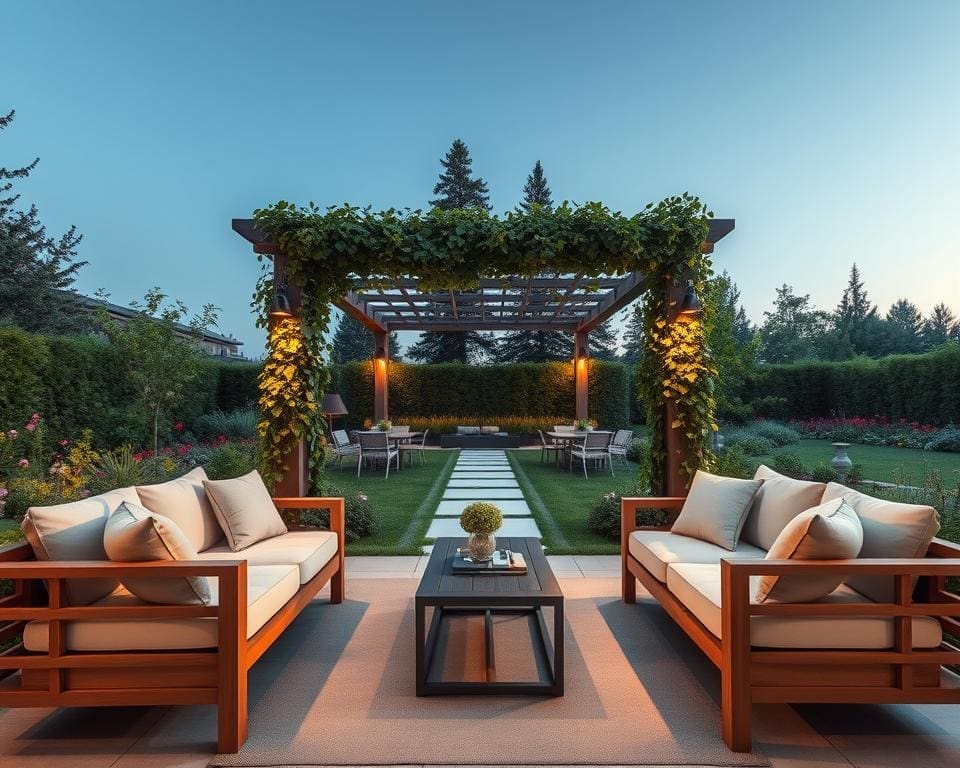

Designing a modern garden combines form and function to create outdoor living UK spaces that feel like a natural extension of your home. In modern garden design you use clean lines, a restrained plant palette and well‑planned zones so each area has a clear purpose. The goal is a contemporary garden layout that works through the seasons and suits everyday life.
A pergola is a simple way to define space without closing it off. It gives partial shelter, supports climbers, frames sightlines and adds vertical interest. You can place a pergola over a dining set, a modular lounge or a shaded walkway—classic pergola ideas that bring structure and focus to your layout.
Outdoor furniture completes the picture by adding comfort and durability. Think about dining sets for meals, modular lounge seating for flexibility, sun loungers for relaxation and multifunctional benches with storage. Choosing weather‑resistant materials and coherent finishes ensures your garden design pergola furniture looks good and lasts in the UK climate.
This article guides you through site assessment, zoning, pergola styles and materials, furniture selection, planting and lighting, hardscape choices and the practical bits like maintenance, sustainability and planning rules. By the end you will have the confidence to plan a cohesive, contemporary garden layout that suits your home and the British weather.
Planning your modern garden layout with function and flow
Start with a clear view of how each area will be used. Good garden layout planning helps you balance form and function, so the space works for dining, relaxing and entertaining without feeling crowded.
Assessing your site: light, soil, and microclimates
Begin with a practical site assessment UK survey. Measure boundaries, note existing trees, outbuildings and services. Track sun paths with a compass or phone app to learn where light falls in summer and winter.
Test soil with a simple pH strip and feel test to classify loam, clay or sand. Amend heavy clay with organic matter or consider raised beds if drainage is poor. Mark sheltered corners and frost pockets to exploit microclimates for tender plants.
Defining zones for dining, relaxation and entertaining
Plan distinct but connected areas for dining, a lounge under a pergola and a play or utility space. Locate the dining zone close to the kitchen for ease of use. Size each zone so people can move and sit comfortably.
Use low walls, planting or screens to divide zones while keeping visual links. Thoughtful garden zoning creates privacy without cutting the space into unusable fragments.
Circulation and sightlines to maximise usability
Design clear garden circulation routes with paths at least 0.9–1.2m wide for two-way flow. Position routes to link the house with outdoor zones and bin or storage areas.
Align sightlines from key windows and doors to focal points like a pergola or water feature. This strengthens the connection between inside and out and makes the garden feel larger.
Account for level changes with gentle steps and place low-level lighting on paths for safe access after dusk.
Budgeting and phasing your garden project
Set a realistic gardening budget and break the work into phases. Tackle core hardscape and drainage first, add planting in a second phase and finish with furniture and accessories.
Obtain multiple quotes for larger items such as bespoke pergolas or paving. Prioritise durable, low-maintenance finishes to reduce future costs and protect your investment.
garden design pergola furniture
You can use a pergola to shape outdoor rooms and guide movement while keeping a light, modern feel. Start by matching form to your home: clean rectangular frames complement minimalist façades and slatted roofs add subtle texture without heaviness. Think about positioning so the structure frames a view, marks an entrance or defines a dining area.
Choosing pergola styles that complement modern architecture
For contemporary homes choose simple lines and restrained profiles. Cantilevered pergolas give a floating effect and work well where you want an uninterrupted floor area. Freestanding pergolas create a focal point in a lawn or terrace. Attached pergolas offer easy access from the kitchen or living room and can extend indoor sightlines outdoors.
Bioclimatic louvred pergolas offer adjustable sun and rain control and add technical flexibility to a modern scheme. Use the pergola as a framing device to guide sightlines and to make a smaller garden feel organised and intentional.
Material choices for pergolas: timber, aluminium and composite
Timber gives warmth and natural grain. Softwoods such as treated pine are cost-effective and hardwoods like oak or Siberian larch last longer with the right maintenance. Expect periodic staining or sealing to protect the finish.
Aluminium suits a minimalist look. It is low-maintenance, corrosion-resistant and available powder-coated in many tones. Slim aluminium frames can read more contemporary than bulky timber posts.
Composite and PVC options mimic timber while reducing upkeep. They resist rot and need little attention, though they lack the same thermal character as solid wood. For durability use stainless-steel fixings and secure bases to concrete pads or hidden brackets, and check structural guidance for wind loading in exposed UK sites.
Selecting outdoor furniture for comfort, durability and style
Choose materials that stand up to the British climate. Synthetic rattan (HDPE), powder-coated aluminium and teak are dependable choices. Look for showerproof fabrics such as Sunbrella and quick-dry foam for cushions to avoid damp issues.
Prioritise comfort by testing seat depth and cushion density. Modular seating adapts to different group sizes and folding or stackable dining sets suit compact gardens. Think about storage solutions and protective covers for winter.
When sourcing, consider reputable UK names such as Hartman, Alexander Rose, Gloster and RattanDirect for varying budgets. That makes your outdoor furniture selection both practical and stylish.
Colour palettes and finishes that create cohesion
Adopt a restrained garden colour palette to create a calm modern setting. Use neutral base tones—warm timber, greys and charcoal—and add one or two accent colours in cushions or planters.
Match pergola powder-coat colours with metal furniture frames and light fittings to tie metalwork together. Layer texture through wicker, timber grain and textiles rather than bright clashing hues to keep the scheme refined and cohesive.
Integrating planting, lighting and hardscape for a cohesive look
To make your modern garden sing, combine planting, hard landscaping and lighting so each element supports the others. Start with a clear plan that places specimens, paving and fixtures where they will be most effective. This creates rhythm, texture and clear sightlines from terraces and pergolas.
Planting schemes for year-round interest and texture
Build layered planting with evergreen structural plants such as box and yew for year-round form. Add perennials like salvia and geraniums and grasses such as Calamagrostis for seasonal movement and texture. Repeat a limited palette to achieve a calm, modern look and reinforce rhythm through the garden.
Include wildlife-friendly and native species to reduce maintenance and support biodiversity. Plant winter-flowering hellebores, spring bulbs and late-season perennials to keep interest across months. Under pergolas, train climbers—wisteria, clematis or Trachelospermum jasminoides—for scented summer cover with a clear pruning routine.
Hard landscaping materials: paving, decking and gravel options
Choose non-slip finishes that cope with UK weather. Natural stone such as Yorkstone or slate gives character, while porcelain paving offers consistent colour and low porosity for easy care. For decking, consider pressure-treated softwood, cedar or composite boards from brands like Trex or Silvadec to cut maintenance needs.
Use well-prepared sub-bases and geotextile membranes beneath gravel. Resin-bound gravel delivers a smooth, permeable finish that can help meet SuDS principles. Define edges with raised planters, low walls or steel edging to keep materials tidy and prevent migration between zones.
Outdoor lighting strategies for ambience and safety
Layer your lighting: task lights for dining and pathways, accent lights for specimen plants and ambient sources for general mood. Warm white LEDs create welcoming tones after dusk. Use solar for low-energy path illumination where appropriate, but rely on mains-powered fixtures for consistent high-output areas.
Integrate lighting into pergolas with recessed LED strips or pendant fittings to extend evening use. Check IP ratings and use outdoor-rated cables with RCD protection. Seek electrician guidance for mains installations to ensure safety and compliance with standards.
Water features and focal points to enhance modern design
Select water features that suit the scale of your space. Small reflective pools, minimalist rills and restrained fountains provide modern punctuation without dominating the garden. Size pumps and filters for UK conditions to ensure reliable performance.
Place focal points at the end of sightlines or within seating arrangements to draw the eye and create destinations. Aim for gentle sound levels so conversation is not overwhelmed. If children will use the garden, design safety measures around any larger bodies of water.
- Repeat planting combinations to create cohesion across borders.
- Prioritise durable hard landscaping materials for longevity.
- Use layered garden lighting ideas to balance ambience and safety.
- Choose water features contemporary garden owners find calming and proportionate.
Practical considerations: maintenance, sustainability and regulations
Plan for garden maintenance UK from the start so your design remains practical. Choose low-maintenance paving and durable plants if you have limited time. Provide clear access for cutting back, cleaning pergola components and servicing outdoor furniture; this reduces long-term effort and cost.
Seasonal tasks keep a modern garden healthy. In spring do pruning and feedings, in summer focus on watering and weed control, in autumn clear leaves and top up mulch, and in winter protect tender specimens. Mulch suppresses weeds and retains moisture, while rainwater harvesting helps with irrigation and supports sustainable garden design.
Follow manufacturer guidance for outdoor furniture care: clean synthetic rattan with mild detergent, oil teak annually and store cushions or use breathable covers in wet months. Choose FSC-certified timber, recycled aluminium or composite products to reduce replacements. Add biodiversity features such as native planting, insect hotels, log piles and bird boxes to boost ecology.
Check pergola planning permission and garden regulations UK before you build. Many freestanding pergolas fall under permitted development but height, proximity to boundaries and local policies vary. For listed buildings, conservation areas or installations with electrics or raised decking, consult the local planning authority and use qualified contractors to meet building regulations. Keep warranties and inform your insurer about significant structures to protect your investment.