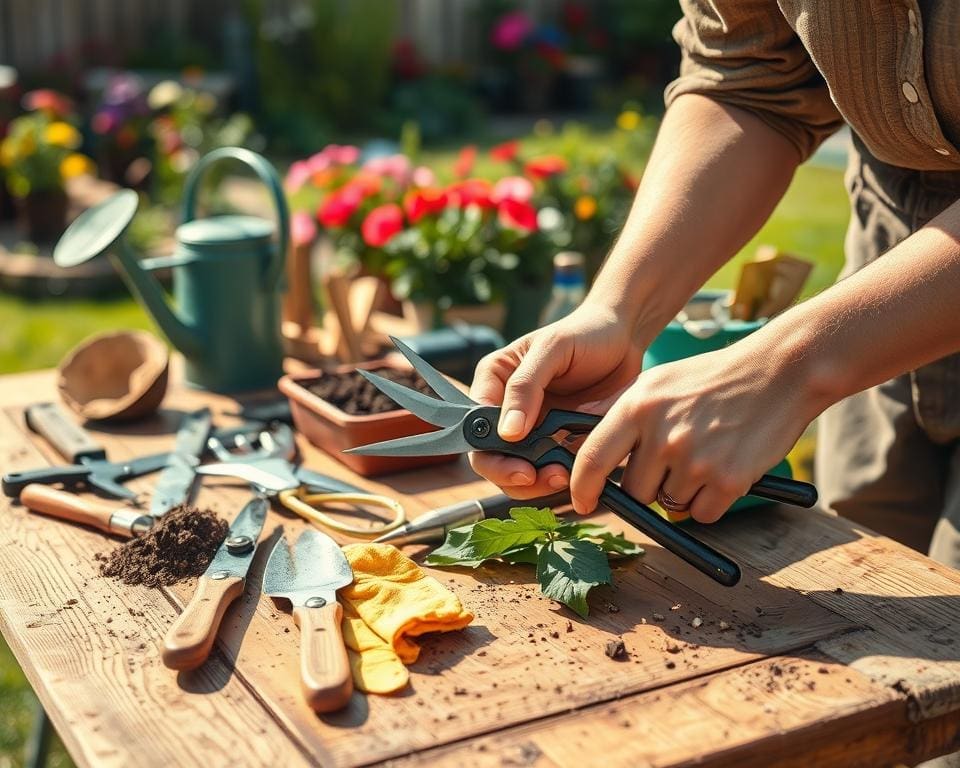

Keeping a home garden healthy, tidy and productive year-round in the United Kingdom starts with the right kit and simple garden tools maintenance. Whether you tend a small suburban lawn, an allotment plot or a cluster of patio containers, well-chosen garden maintenance tools save you time, give cleaner cuts for plants and even lawns, and reduce the chance of accidents.
You will find practical guidance on essential garden equipment, from handheld secateurs and trowels to powered kit such as cordless mowers and strimmers. The article also covers keeping tools sharp, clean and dry, the role of safety gear, and a few specialist accessories to help your garden thrive.
Wet winters and changeable springs in the UK make drying, rust prevention and winter storage especially important for any gardening toolkit. With routine care you extend tool life and avoid costly replacements, whether you prefer Fiskars or Spear & Jackson for hand tools, or Bosch, Stihl and Flymo for powered equipment.
This section sets the scene; next, start with the essential handheld tools you’ll use every week and learn how to choose the right models for your garden upkeep UK.
Essential handheld tools for everyday garden care
To keep your garden healthy and tidy you need a small, reliable kit of handheld garden tools that suit routine tasks. The right items save time, protect plants and reduce strain. A compact selection gets most jobs done without taking up space in a shed.
Pruning shears and secateurs for precision cutting
Pruning shears are the go-to for shaping and removing dead growth. Choose bypass secateurs for clean cuts on live stems, anvil secateurs for dead wood and ratchet secateurs if you need extra leverage on thicker stems. Aim for a cutting capacity of about 20–25mm for general use.
Look to trusted brands such as Felco, Fiskars and Spear & Jackson for durable steel blades and comfortable grips. Keep secateurs sharp, check blade alignment and disinfect blades after cutting diseased plants to curb the spread of pathogens. Always lock secateurs when not in use and carry them in a sheath for safety.
Hand trowels and forks for planting and soil work
A sharp hand trowel makes planting, transplanting and scooping compost much quicker. Narrow trowels suit pots while wider transplanters work best at borders. Pick blades in stainless steel or carbon steel with a strong tang and a comfortable wooden or synthetic handle.
Hand forks are essential for breaking compacted soil and extracting stubborn roots. Brands such as Burgon & Ball and Spear & Jackson offer robust options that last. Use the right tool to limit soil disturbance and protect neighbouring plants.
Garden gloves to protect your hands and improve grip
Good garden gloves protect against cuts, blisters and soil-borne organisms. Leather gloves are best for heavy tasks and thorny shrubs. Nitrile-coated gloves give dexterity for planting while breathable fabric gloves suit light weeding.
Wash gloves following the manufacturer’s instructions and dry them thoroughly to prevent mould. Replace gloves when they become worn or the grip fails to protect your hands properly.
Weeders and dibbers for weed removal and planting bulbs
Specialist weeders remove deep taproots with minimal soil upheaval. Use fork weeders for broad-rooted weeds and narrow dandelion weeders for taproots. Dibbers are small but handy for making neat holes when planting bulbs and plug plants.
Choose ergonomic designs to cut down on wrist strain. Using the right tool keeps roots intact where needed and reduces damage to nearby plants.
Keep a small kit of essentials close to hand: a garden kneeler or pad, a bucket, twine and plant labels complete your set of small garden tools UK. These bits make everyday tasks smoother and help you care for plants with confidence.
Powered equipment to save time and tackle bigger jobs
When your garden grows beyond a few borders, powered garden tools cut effort and speed up tasks. For typical UK plots, these machines help you manage lawns, edges and seasonal clearances without backache. Choose garden power equipment that suits your garden size, noise limits and how often you use it.
Lawnmowers: rotary, cylinder and cordless options
Rotary mowers suit most lawns because they cope with longer grass and uneven ground. Cylinder mowers give a neat, formal finish on small, flat lawns when you want a striped look.
A cordless mower is quiet and low maintenance. Check cutting width and battery run-time before you buy. Brands to consider include Bosch, Flymo, Honda and Mountfield for reliability and parts support.
Maintain blades sharp and store batteries correctly. For petrol models, check spark plugs and oil regularly to keep them running well.
Strimmers and edging tools for tidy borders
Strimmer heads come in single line and double line formats. Single line is fine for light work. Double line gives faster cutting for tougher growth.
Choose corded, cordless or petrol based on area and mobility needs. Petrol offers power for large plots. Cordless keeps noise and fuss down for close neighbours.
Powered edgers and handheld mechanical edgers create crisp lawn-to-border lines. Wear eye and ear protection and clear stones before you start strimming.
Leaf blowers and vacuums for seasonal clearance
A leaf blower moves debris quickly. A vacuum collects leaves and often shreds them for compost, cutting disposal volume.
Electric models are quieter for residential streets while petrol versions suit large properties. Stihl is well regarded for petrol machines. Bosch and Ryobi make solid electric and cordless options.
Consider noise levels for autumn and spring work. A quieter tool keeps good relations with neighbours and complies with local expectations on engine noise.
Petrol versus electric: choosing the right power source
Petrol machines deliver torque and long run-times for big gardens. Expect more maintenance, fumes and sound when you use them.
Electric tools provide continuous power if you can work near a socket. Cordless models give mobility and lower noise but need battery management and may limit run-time.
Match your choice to garden size, frequency of use and local noise or emissions sensitivity. Consider UK guidance on engine noise in residential areas before you buy.
garden tools maintenance: keeping your kit sharp, clean and safe
Good garden tools maintenance keeps your kit reliable and safe. A few simple habits after each job lengthen tool life and cut long‑term costs. Follow manufacturer guidance for powered items and plan seasonal checks to avoid surprises when spring arrives.
Routine cleaning and drying to prevent rust
After use, remove soil and sap with a stiff brush and water. Dry metal parts thoroughly to aid rust prevention. For stubborn sap, dab household white vinegar or a proprietary sap remover and wipe clean.
For lawnmowers and strimmers, clear grass and debris from under decks, cooling fins and intake areas. Never hose electrical components; follow the manual for safe cleaning of motors and electrics.
Disinfect pruning blades between jobs when disease is a risk. A diluted household bleach solution or surgical spirit will reduce spread of rosette, canker and other pathogens.
Sharpening blades and replacing worn parts
Keep secateurs and shears keen with a sharpening stone or file. Match the original bevel angle and sharpen only the cutting edge on bypass tools. Mower blades need a bench grinder or a professional service for a balanced edge.
Replace items that show bent shafts, cracked handles or deep blade pitting. Irreparable motor faults require authorised repair or replacement. Manufacturers such as Stihl, Bosch and Flymo supply spare parts and authorised servicing at local dealers.
Lubrication, storage and seasonal care
Lubricate pivot points on secateurs with light machine oil. Use spray lubricants like WD-40 Specialist or 3-in-1 for other moving parts. Follow the manual for petrol engine oil changes.
Hang long‑handled tools off the ground and store them in a dry shed or garage to improve garden tool storage. Keep batteries charged to recommended levels and store them frost‑free and out of direct sunlight.
Before winter, drain fuel from two‑stroke engines or add stabiliser. Sharpen and oil blades, then inspect belts and cables ahead of the new season.
Safety checks and PPE maintenance
Inspect handles for splinters and cracks. Check guards, safety switches and cable integrity on powered machines. Replace frayed leads and damaged plugs before use.
Look after your PPE. Check gloves for holes, wash face and eye protection as advised and replace ear defenders when worn. Keep respirators clean and change filters per manufacturer guidance for effective PPE maintenance.
Good tool care UK routines — regular cleaning, tool sharpening and smart garden tool storage — reduce accidents and keep your garden gear working when you need it most.
Specialist tools and accessories for a thriving garden
Once you have the basics and keep them well maintained, specialist garden tools help you refine results and tackle specific problems. A good soil testing kit, such as pH testers from Gardeners’ World or meters by Hanna Instruments, tells you whether to add lime, phosphate or potash. Pair testing with a sturdy garden fork or a soil aerator to relieve compaction and improve drainage.
For watering, consider irrigation tools suited to UK conditions. Soaker hoses and drip irrigation save water and time, while timers, pressure regulators and frost-proof taps protect systems through winter. Brands like Hozelock and Gardena supply reliable kits, and a hose reel keeps your equipment tidy between uses.
Composting accessories bring waste back into the garden as rich humus. A compost bin or tumbler combined with a kitchen caddy will cut your rubbish and feed borders. Use a compost aerator and a garden sieve to finish material, and mulching forks or a wheelbarrow to distribute organic matter across beds.
Greenhouse tools and planting accessories UK gardeners value include propagation trays, heated mats, humidifiers and plant supports from Halls, Hartley Botanic or Eden. Add pruning saws for woody cuttings and focus on ventilation, shading and pest exclusion to protect young plants. For pest and disease control, a reliable hand sprayer or battery sprayer and suitable PPE let you treat problems safely, while ties, bamboo canes and trellis provide lasting support. Buy specialist items by priority: start with quality handhelds and one dependable powered machine, then add irrigation tools, greenhouse tools and planting accessories UK as projects demand. Proper maintenance keeps costs down and performance high.