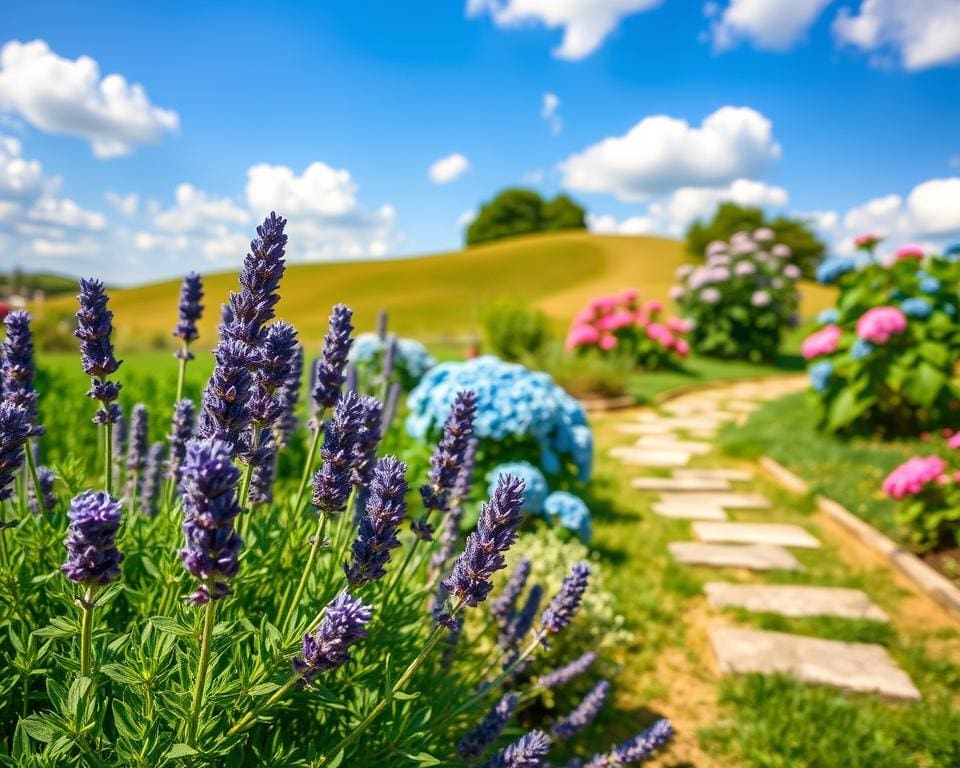

If you want a low-maintenance UK garden that still looks full of life, focus on garden plants lavender hydrangea and similar species that give colour, scent and structure without constant fuss.
Choosing easy-to-maintain garden plants cuts watering and feeding, reduces pruning and lowers pest problems. Lavender brings drought tolerance, a lasting scent and pollinators, while hydrangea delivers large, reliable blooms and copes well in partial shade.
This guide is written for gardeners across the United Kingdom. Britain’s temperate maritime climate and regional differences — from the milder south-west to cooler highland areas — affect success, so cultivar choice and good site preparation matter for lavender care UK and hydrangea care UK.
Ahead, you’ll find practical advice: specific planting tips for lavender and hydrangea, easy companion perennials for continuous colour, low-maintenance structural shrubs and foliage plants, and actionable routines and resources to save you time.
The article aims to help you plant and maintain a low-maintenance UK garden with clear, step-by-step guidance and month-by-month and cultivar-specific information later on.
Garden plants lavender hydrangea: easy options and planting tips
Pairing lavender with hydrangea gives your garden a pleasing mix of scent, texture and seasonal colour. You will find both plants suit lower-maintenance schemes when you choose the right varieties and give simple care at planting. Read the guidance below to get the best start and enjoy reliable displays.
Why these plants are good for low-maintenance gardens
Lavender is hardy and drought-tolerant once it roots in, so it fits a lavender low maintenance approach. Varieties such as ‘Hidcote’ and ‘Munstead’ stay compact, smell delightful and respond well to light pruning.
Hydrangeas give long-lasting, dramatic blooms with minimal fuss when sited correctly. Types like Hydrangea paniculata and Hydrangea macrophylla cope with part shade and reward you with large heads of flowers.
- Lavender suits gravel beds, Mediterranean-style borders and containers.
- Hydrangeas work as focal shrubs or mixed into perennial beds for shelter and structure.
- Their different water needs create texture and seasonal contrast without constant attention.
Soil, light and position requirements for lavender and hydrangea
Lavender prefers free-draining soil, slightly alkaline to neutral, and full sun for at least six hours each day. For heavy clay, improve drainage with grit or plant in raised beds. The best position for lavender is at the front of borders or on slopes where water drains away.
Hydrangea soil pH affects colour in many H. macrophylla cultivars. Acidic soils give bluer blooms, alkaline soils make pinker flowers. Hydrangeas favour fertile, moisture-retentive yet well-draining soil and thrive in morning sun with afternoon shade, although H. paniculata tolerates more sun.
- Place lavender where air circulates freely to prevent root rot.
- Sit hydrangeas near seating or sheltered spots so blooms are protected from strong winds.
- Space plants correctly: lavender 30–60cm apart, hydrangeas about 1–2m depending on species.
Planting month-by-month guidance for the UK climate
Early spring, March to April, is a good time to plant potted lavender once severe frost risk has eased. Prepare the soil and add grit for extra drainage. Bare-root and potted hydrangeas can go in from late winter to early spring if the ground is workable.
Late spring to early summer, May to June, suits most planting. This window helps roots establish before the cold. Mulch hydrangeas after planting to conserve moisture. Avoid mulching lavender too close to the stems.
Autumn, September to November, often offers the best conditions as soil stays warm and rainfall aids establishment. You can plant both lavender and hydrangea then, taking care with shallow-rooted lavender and avoiding waterlogged sites.
Winter planting of hydrangeas is possible when the soil is not frozen. Do not plant lavender into frozen or waterlogged ground.
For reliable results, buy healthy, well-branched stock from reputable UK nurseries such as Thompson & Morgan or Crocus, follow planting depths and give initial watering. These lavender hydrangea planting tips will help you establish a low-fuss, attractive border.
Low-maintenance flowering perennials for continuous colour
Your beds can deliver steady colour with a small list of reliable plants that suit both sun and shade. Pick groups of perennials to match site conditions and watering capacity so you spend less time fussing and more time enjoying the display.
Suitable perennials to pair with lavender and hydrangea
For sunny, dry edges beside lavender, choose drought-tolerant perennials such as Nepeta (catmint), Salvia nemorosa, Sedum spectabile and Echinacea. These perennials for lavender have long bloom periods, attract pollinators and need little water once established.
Under part-shade or near hydrangea, pick moisture-loving options like Astilbe, Rodgersia, Hosta and Heuchera. These companion plants for hydrangea give strong foliage contrast and fill the lower layer beneath bigger shrubs without heavy maintenance.
Simple bulbs and annuals add seasonal lift. Plant alliums or narcissi for spring interest around hydrangea bases. Use cosmos or marigolds in pots with lavender for summer colour and easy rotation.
Watering routines that save time without stressing plants
Adopt deep, infrequent watering once roots are established. Water thoroughly to encourage depth, then let the topsoil dry slightly for drought-tolerant perennials. Group plants with similar needs to simplify irrigation and reduce waste.
Hydrangeas need steadier moisture. Apply a mulch of bark or compost to preserve soil moisture and cut down on watering visits. Use a water butt to catch rain and feed beds naturally.
Fit drip irrigation or soaker hoses to a simple timer for busy weeks. Increase watering in prolonged dry spells, reduce feeding and allow hydrangeas to harden off in late summer to prepare for winter.
Pruning and deadheading practices to reduce upkeep
Light pruning keeps plants tidy and reduces future work. For pruning lavender hydrangea care, trim lavender in late summer or early autumn by about one third, avoiding old wood so new shoots can form. Compact lavender types often need a single maintenance cut to keep shape.
Hydrangea pruning depends on species. Leave H. macrophylla and H. serrata mostly alone, removing dead flower heads and shaping lightly after bloom. Cut back H. paniculata and H. arborescens in late winter or early spring to promote robust flowering; prune H. paniculata ‘Limelight’ to 30–60cm to retain good structure.
Deadhead Nepeta, Salvia and Echinacea every couple of weeks during peak season to extend blooms with little effort. Use bypass secateurs for clean cuts, wear gloves when handling woody stems and sterilise tools between plants to reduce disease spread.
Maintenance-free structural plants and shrubs for year-round interest
Choose a backbone of low-maintenance structural plants to keep your garden neat through the seasons. Evergreens and architectural foliage give shape when perennials finish flowering. Aim for a mix that suits sun and shade, so your borders look considered with little fuss.
Start with hardy evergreen low-maintenance shrubs UK that hold form and colour. Consider Buxus sempervirens for clipped structure, Skimmia japonica for scented spring flowers, Hebe for long-season colour and Pieris for shady corners. For small plots pick dwarf photinia, euonymus or Ilex crenata as compact alternatives to larger specimens.
Think about ornamental grasses for borders to add movement and texture. Festuca glauca gives a neat blue mound, Pennisetum alopecuroides creates soft fountain heads and Miscanthus sinensis offers height and winter interest. Most need only an annual tidy in late winter.
Use foliage plants to bridge the gap between shrubs and blooms. Heuchera brightens shade with colourful leaves, Rodgersia suits damp spots with bold foliage and Phormium adds architectural form in sun. Container-friendly choices such as Sarcococca, rosemary and dwarf conifers work where space is tight.
Select pest-resistant shrubs and cultivars bred for disease resilience. Look for hydrangeas and box alternatives with resistance claims from reputable nurseries or RHS guidance. Choosing healthy stock reduces the risk of issues appearing in your borders.
Adopt simple cultural measures to keep problems low. Sit plants in the right place, give adequate spacing for air flow, clear fallen debris and avoid overhead watering where possible. Check containers for vine weevil and monitor new shoots for aphids so you can act early with cultural controls.
Buy from trusted UK suppliers and inspect plants before you bring them home. Reliable sources such as local garden centres, Petersham Nurseries or Thompson & Morgan can help you find well-grown specimens. A careful purchase sets you up for success with low-maintenance structural plants that look good all year.
Practical care strategies and resources for busy gardeners
Group plants by water and light needs to simplify chores. Place lavender in free-draining, sunny spots and hydrangea where they get morning sun and some shade. Use mulch and low groundcover to suppress weeds and reduce watering. These simple garden maintenance tips UK help cut time spent on routine tasks.
Adopt a few automated aids to make low-effort garden care effective. Fit an irrigation timer to a hose or drip system, use water butts for summer top-ups, and lay mulch mats where weeds are a problem. Choose a slow-release fertiliser in spring so you only feed once or twice a year.
Keep a short, monthly checklist for month-by-month garden care: spring planting and mulching, light lavender pruning and feeding; summer deadheading and watering checks; autumn planting and cutting back perennials; winter pruning of shrubs that flower on new wood. These care strategies for busy gardeners make upkeep predictable and quick.
Use trusted gardening resources UK for species-specific advice and inspiration. The Royal Horticultural Society, Royal Botanic Gardens and reputable nurseries offer reliable guidance. For tools and supplies, consider Fiskars secateurs, ericaceous compost for acid-loving plants and sharp grit for lavender. Start with one bed or container to build confidence, then scale up as you master low-effort garden care.