Modern home accessories are the small, considered pieces that give a room its voice. Think minimalist lighting from Anglepoise, sculptural vases, geometric cushions, sleek mirrors and practical storage from brands like Muji. These items combine form and function, turning ordinary rooms into contemporary home styling statements.
This guide explains how to decorate with modern accessories so your space feels cohesive, personal and practical. It covers what modern interior accessories are, how to choose colour and material palettes, and how to layer pieces for impact.
Whether you live in a Victorian terrace, a London flat or a new-build, seasonal change in the UK matters: warm lighting lifts short winter days, while breathable linens suit summer. Use accessories as storytelling devices to add warmth and refinement without losing a modern sensibility.
Read on to learn modern décor ideas that help you choose a sub-style, place accessories for visual balance and curate a collection from high-street finds, UK designers and vintage markets.
Modern home accessories: defining the look and choosing a style
Choosing accessories sets the tone for any room. Start by thinking about how each piece will support the architecture and furniture. Use restraint so accessories enhance rather than overwhelm; this approach sits at the heart of a strong modern home style.
Understanding modern design principles
Modern design principles favour clean lines, balanced proportions and purposeful simplicity. Accessories should echo those traits and offer visual clarity.
Think of function and form together. A cosy wool cushion from John Lewis doubles as comfort and shape. An Anglepoise LED floor lamp gives light and defines a corner.
Less is more. Edit carefully so every item has a reason to be in the room.
Choosing a cohesive colour and material palette
Begin with a neutral base such as warm greys or off-whites. Add a mid-tone and one accent to follow a simple 60-30-10 rule for balance.
Contemporary colour palettes work with muted teal, terracotta, mustard or ochre as accents. Monochrome schemes remain popular, yet a single accent hue adds depth.
Material combinations should layer warm woods like oak or walnut with cool metals such as brass or matte black steel. Introduce tactile stone, terrazzo or a low-pile wool rug for warmth without clutter.
Identifying your modern sub-style
Decide which modern flavour fits your home before you buy. Scandinavian modern favours pale woods, soft textiles and a light, airy feel. Look to brands like Muuto, HAY and &Tradition for inspiration.
Industrial modern uses raw materials, darker palettes and reclaimed wood. Habitat and Made.com stock pieces that add that urban edge.
Contemporary luxe focuses on refined materials, marble, lustrous metals and statement lighting. Tom Dixon and Jonathan Adler capture that elevated tone.
Accessories can shift a room between sub-styles. A brass lamp and marble tray lift a pared-back scheme toward contemporary luxe. A metal-framed mirror and concrete planter push a Scandinavian modern base in an industrial modern direction.
- Start in one room and commit to one sub-style to build coherence.
- Create a moodboard to test contemporary colour palettes and material combinations before you buy.
- Match scale to space: large accessories suit bigger rooms; compact, high-impact pieces work best in typical UK flats.
Placement and layering of accessories to enhance living spaces
Thoughtful accessory placement turns rooms into inviting, lived-in spaces that feel calm and considered. Aim for focal points that guide the eye, balance visual weight and improve usability without clutter. Combine items of varied heights and shapes to create rhythm: tall lamps, medium vases, low bowls and flat trays work together to add interest.
Accessorising the living room
Start with anchor pieces to define zones. A statement rug and well-chosen cushions set scale and texture for seating areas. Brands such as John Lewis, Graham & Green and Anthropologie offer reliable choices for fabrics and finishes that suit modern living room decor.
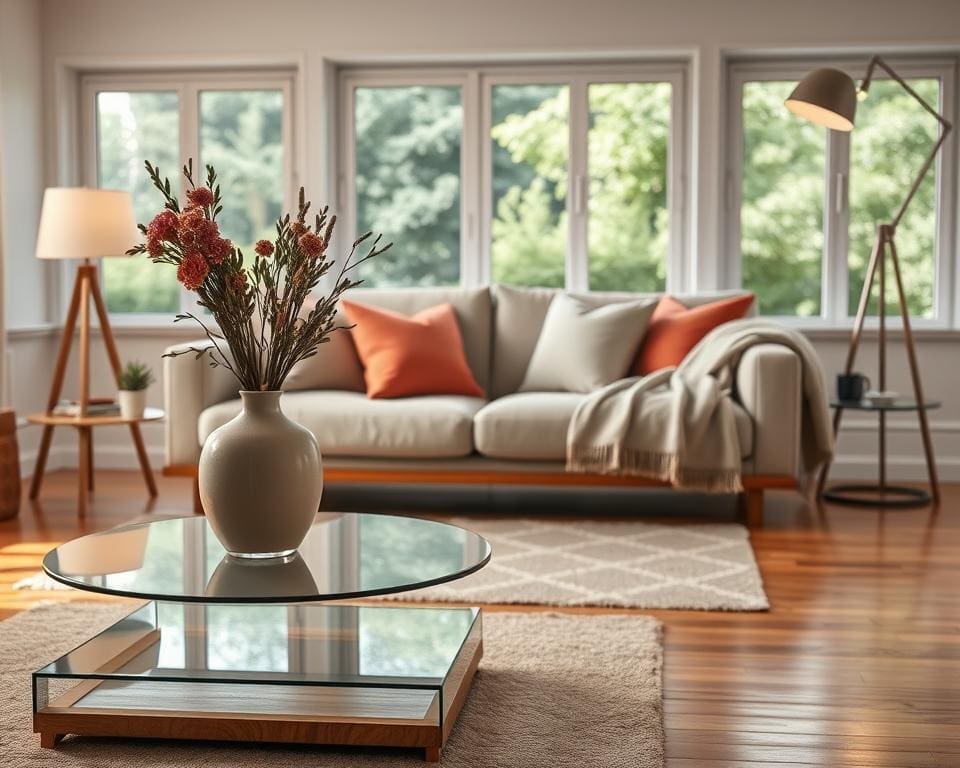
Layer accessories in odd-numbered groupings so each ensemble feels natural. Place a floor lamp beside a sofa, a medium vase on a side table and a low tray on the coffee table to create a pleasing rhythm. Use throws to add softness and tie colour across the space.
Art and mirrors should create focal points. Hang a large artwork or a curated gallery wall above the sofa. In smaller UK rooms, place a mirror opposite a window to boost light and perceived depth.
Styling surfaces: mantels, coffee tables and shelves
Mantels require a strong central piece with two supporting items to keep balance. A large mirror or framed artwork works well with paired candlesticks or ceramic vases at each side.
When styling coffee tables, use a tray to organise. Include one sculptural object, one stylish coffee-table book and one practical item such as coasters or a small bowl. This approach to styling coffee tables keeps things useful and photogenic.
Shelves should alternate books with objects and plants. Leave breathing space around items rather than filling every shelf edge to edge. Trays, bowls and functional sculptures corral small items and reduce visual clutter while adding sculptural appeal.
Bedroom and dining areas
In the bedroom, choose bedside lamps with warm light and simple bases to create a restful ambience. Pair a minimal alarm clock with a small tray for jewellery and a linen throw for tactile softness. Thoughtful bedroom lighting ideas make the room feel layered and calm.
For dining, select a dining table centrepiece that complements the table scale. A long, low runner with a row of small vases or a single sculptural bowl gives modern elegance without blocking sightlines. Choose statement pendant lighting to anchor the table and set the mood.
To improve flow and cut clutter, prefer multifunctional pieces such as nested tables or storage ottomans. Use baskets and stylish boxes to hide essentials while keeping the modern look tidy. When you layer accessories with restraint, each object can breathe and contribute to the room’s story.
Curating and sourcing accessories for a personalised modern home
Start by deciding which pieces will be investments and which will be budget buys. Invest in a handful of statement items — a designer lamp from Tom Dixon, a sofa cushion in quality fabric or an artwork — and layer these with affordable finds from IKEA, Dunelm or Wayfair. This mix keeps rooms grounded while allowing change without a big cost.
Support British designers and local makers to add authenticity and craft. Seek independent makers on Not On The High Street, Etsy (UK sellers) and stalls at the London Design Festival. Hand‑thrown ceramics, woven textiles and artisanal glass add warmth and tactility that modern schemes often need.
Introduce vintage modern accessories to give depth and character. A mid‑century lamp or brass tray paired with contemporary furnishings creates a layered, lived‑in feel. Hunt at Portobello Road, Brick Lane, local antique fairs or online marketplaces like eBay and Vinterior for authenticated pieces.
Build a capsule accessory collection to simplify updates: neutral rugs, a pair of lamps, a set of cushions, a tray and one large artwork form a flexible base. Swap accent items seasonally — cushions, throws and small objects — and keep storage tidy with built‑in cupboards, ottomans and baskets from Dunelm or modular solutions from John Lewis. Edit every six months and favour durable, timeless materials to make sustainability part of the practice.