
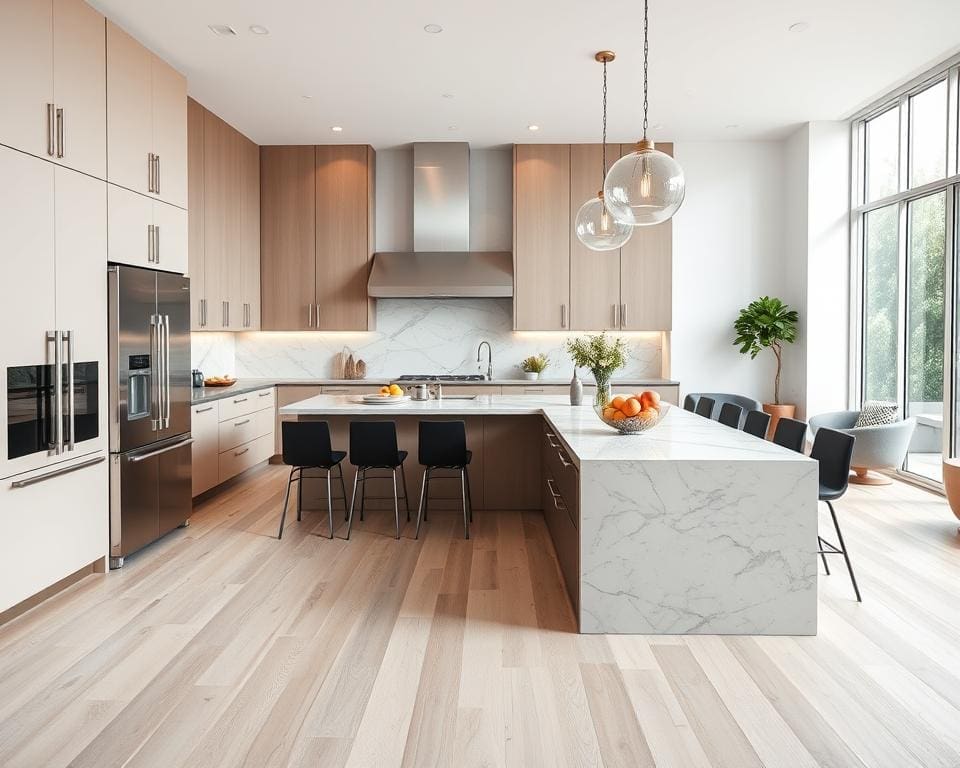
Planning a modern kitchen renovation ideas guide starts with clarity. This short introduction sets the scene for a practical, inspiring contemporary kitchen remodel tailored to homes across the United Kingdom.
Trends in the UK and beyond mix open‑plan living, minimalist cabinetry and biophilic touches. Retailers and publications such as John Lewis & Partners, Howdens, Magnet, Dezeen and Architectural Digest shape what homeowners expect from modern kitchen design today.
Early planning matters. Measure your space, write a clear brief and list priorities: cooking, entertaining or storage. Typical kitchen renovation UK budgets fall into three bands. A budget make‑over can refresh surfaces and appliances; a mid‑range scheme often delivers new cabinets and worktops; a premium kitchen makeover ideas package includes bespoke cabinetry, integrated appliances and natural stone.
Allow realistic lead times: design and planning often take 2–6 weeks, procurement 2–8 weeks for bespoke items, and fit‑out 2–6 weeks. Engage an architect or kitchen designer for major changes and hire certified tradespeople—Gas Safe engineers for gas, NICEIC‑registered electricians for wiring.
Practical checks avoid costly delays. Consider Building Regulations for structural work, the Party Wall Act if neighbours are affected, plus ventilation for modern hobs. Plan waste and recycling, and think about accessibility to future‑proof your scheme.
This guide will next examine layout and style, smart appliances and energy efficiency, materials and finishes, then lighting, storage and personal touches to help you shape a cohesive, modern kitchen renovation.
modern kitchen renovation ideas for style and function
A modern kitchen must blend style with practical use. Thoughtful kitchen layout ideas and considered finishes let households cook, dine and socialise with ease. Below are key approaches to help you plan a space that looks refined and works hard every day.
Streamlined layouts and open-plan integration
Efficient plans include galley, L-shape, U-shape, peninsula and island-centred arrangements. Each supports the work triangle of sink, hob and fridge so movement stays direct and safe. For large households, aim for clear circulation routes to prevent bottlenecks during meal prep.
Opening a kitchen into living space calls for careful thought about structure. Removing a non-load-bearing wall is straightforward. Removing a load-bearing wall requires a structural engineer and often a supporting steel beam. Keep sightlines, continuous flooring and matching finishes to create a seamless open-plan kitchen design.
Practical tips: position the island with at least 1m–1.2m clearances, group services like plumbing and gas to cut costs, and use zoning—different flooring or targeted lighting—to mark cooking, dining and lounging areas.
Minimalist cabinetry and handleless designs
Handleless kitchen cabinets use integrated rails, push-to-open or recessed channels to create clean lines and easy upkeep. UK suppliers such as Howdens and Wren supply popular ranges. Bespoke workshops can produce tailored high-end solutions for unique spaces.
Choose from matt lacquer, high-gloss lacquer, thermoform or textured laminates. Matt finishes disguise fingerprints. High-gloss reflects light and enlarges a room but shows smears more readily. Consider soft-close hinges, appliance garages and internal organisers to keep worktops uncluttered.
Colour palettes that balance warmth and crispness
Winning combinations include muted greys with warm oak, deep navy with brass details, forest green paired with white marble-effect surfaces, and monochrome schemes softened by timber or plants. Use a neutral base for longevity and add a bold feature unit or splashback to introduce colour without overpowering the room.
Painted or lacquered cabinetry makes a strong colour statement. Brands like Farrow & Ball and Dulux offer trending shades that respond differently under natural and artificial light. Test samples at various times of day before committing to a palette.
Statement islands and breakfast bars for social living
An island can be a prep zone, house a sink or hob, provide integrated storage and offer seating for socialising. Aim for a minimum depth of 120cm for islands with seating and a worktop overhang of 90cm or more where comfortable seating is required.
Allow roughly 60–90cm per seat at a breakfast bar. Use contrasting island colours or timber cladding to create a focal point. Waterfall edges in quartz or stone add drama. Fit power sockets, pop-up chargers and waste-sorting units to keep the island practical and tidy.
Smart technology and energy-efficient appliances
Smart ideas lift a kitchen from useful to joyful. Choosing smart kitchen appliances and energy-saving appliances UK shoppers trust can cut bills and simplify daily life. A thoughtful mix of connected devices, efficient cooking gear and tuned lighting creates an energy-efficient kitchen that feels modern and reliable.
Connected appliances to simplify cooking and cleaning
Smart ovens from Bosch with Home Connect and Samsung models let you preheat remotely, follow recipe-guided programmes and receive maintenance alerts. Wi‑Fi enabled refrigerators such as LG and Samsung linked as a connected fridge can suggest shopping lists and reorder basics. Integrated dishwashers report cycle status and prompt detergent refills.
These systems sync to suggest cooking programmes across devices, cut prep time and reduce waste. Take care with cybersecurity: use a secure home Wi‑Fi network, apply firmware updates and read manufacturer privacy policies. Expect a higher upfront cost and some dependency on brand ecosystems.
Energy-efficient ovens, hobs and refrigeration
Look at UK energy labels and kWh figures when selecting ovens, fridge freezers and hobs. Top-rated choices deliver lower running costs over time. An induction hob heats faster and wastes less energy than traditional electric rings. Induction requires compatible pans but offers precise control and safety.
For refrigeration, choose frost-free models with inverter compressors for quiet, efficient cooling and longer lifespan. Brands such as Bosch, Miele and Siemens often lead on efficiency. Fan-assisted ovens and combination steam ovens cook evenly and cut preheat time, preserving nutrients while saving energy.
Smart lighting systems and motion-sensing controls
LEDs should form the backbone of any modern kitchen. They last longer, use less power and come in warm to cool tones that suit different tasks. Systems from Philips Hue and Lutron integrate with voice assistants to set scenes for cooking, dining or cleaning.
Apply smart lighting for kitchens to task areas like under cupboards, highlight open shelves and add plinth lighting for mood. Motion sensors in cupboards, pantries and utility zones switch lights only when needed, reducing waste and improving convenience.
- Choose devices with clear energy ratings and transparent kWh data.
- Prioritise induction hob zones for speed and efficiency.
- Pair a connected fridge with inventory features to avoid overbuying.
- Use scene presets to cut manual switching and prevent wasted light.
Materials, surfaces and durable finishes
Choosing the right materials shapes both the look and longevity of a kitchen. Select surfaces that meet daily wear, cooking habits and aesthetic goals. Consider maintenance, warranties and the reputation of UK fabricators when planning new kitchen worktops UK and flooring.
Quartz, granite and engineered stone worktops
Granite brings natural veining and high heat resistance but needs periodic sealing to manage porosity. Engineered quartz brands such as Silestone and Caesarstone are non-porous, stain-resistant and low maintenance, making quartz worktops popular for busy homes. Solid-surface options like Corian allow seamless joins and integrated sinks for a smooth, contemporary finish.
Edge profiles and thickness affect style and durability. Common thicknesses are 20–30mm. Choose waterfall edges or mitred joints for a modern statement. Get quotes from reputable UK fabricators and check warranties before committing.
Water-resistant flooring options for busy households
Luxury vinyl tile (LVT) offers warmth underfoot, resilience and easy fitting. Porcelain tile delivers extreme durability and water resistance, though it can feel cooler. Waterproof engineered wood combines timber looks with improved moisture performance over solid wood.
Prioritise slip resistance and underfloor heating compatibility. Look for R9–R11 grip ratings and PEI classifications on tiles. Proper subfloor preparation and decoupling membranes reduce the risk of cracks and long-term failures when tiling.
Durable splashbacks: glass, stainless steel and tiles
Toughened glass splashbacks provide seamless colour and simple cleaning, a strong choice for modern schemes. Stainless steel gives a professional, heat-resistant surface behind hobs and works well in busy kitchens. Ceramic and large-format porcelain tiles create texture and reduce grout lines when installed thoughtfully.
Ensure correct fixing and adequate heat clearance behind cooking appliances. Opt for epoxy grout where stain resistance matters, and consider splashback ideas that balance style with ease of maintenance.
Sustainable and low-VOC materials for healthier air quality
Choose certified timber from the Forest Stewardship Council and materials carrying Greenguard or Environmental Product Declarations. Low-VOC finishes lower indoor pollutants; brands offering low-VOC paints and lacquers help maintain indoor air quality in tightly sealed homes.
Incorporate reclaimed timber accents, recycled-glass countertops or recycled composite surfaces to reduce environmental impact. Use low-VOC finishes, adhesives and sealants to protect family health while achieving an attractive, durable kitchen. Sustainable kitchen materials pay dividends in comfort and long-term value.
Lighting, storage solutions and personalised touches
Layered lighting transforms both mood and function. Start with ambient ceiling or pendant lighting, add task lights such as under-cabinet LED strips and recessed spots over worktops, then finish with accent options like plinth lights or internal cabinet illumination. Choose colour temperatures carefully: 2700–3000K for warm social zones and 3000–4000K for food preparation, with a CRI of 90+ to show true colours. For safety, specify damp-rated fittings near sinks and position pendants to avoid glare or blocked sightlines; these kitchen lighting ideas keep the space practical and inviting.
Smart storage makes a kitchen feel effortless. Fit deep drawers for pots, pull-out pantries and Le Mans corner carousels, and include integrated bin and recycling systems. Tall, floor-to-ceiling cabinetry conceals fridge-freezers and ovens, while open shelving offers display space balanced by hidden cupboards for clutter control. Accessibility matters: soft-close runners, pull-down shelves for high units and drawer heights matched to contents are central to modern kitchen storage solutions.
Personal touches lift a practical scheme into a room you love. Consider bespoke kitchen finishes such as mural glass splashbacks, statement tapware from Grohe or Quooker, and textured elements like fluted panels or timber slats. Add greenery with herb planters, washable non-slip rugs and practical Kilner-style jars for pantry staples. Acoustic panels, soft furnishings and integrated audio help open-plan areas feel comfortable and calm, supporting a considered personalised kitchen design.
Before work begins, use a simple checklist: finalise the brief and budget, confirm exact measurements, secure trades and warranties, and order long lead-time items early. Choose reputable UK suppliers and installers, check reviews and guarantees, and keep receipts and certificates for appliances and electrics. A planned approach ensures your kitchen accessories UK and bespoke kitchen finishes arrive on time and your renovation runs smoothly.