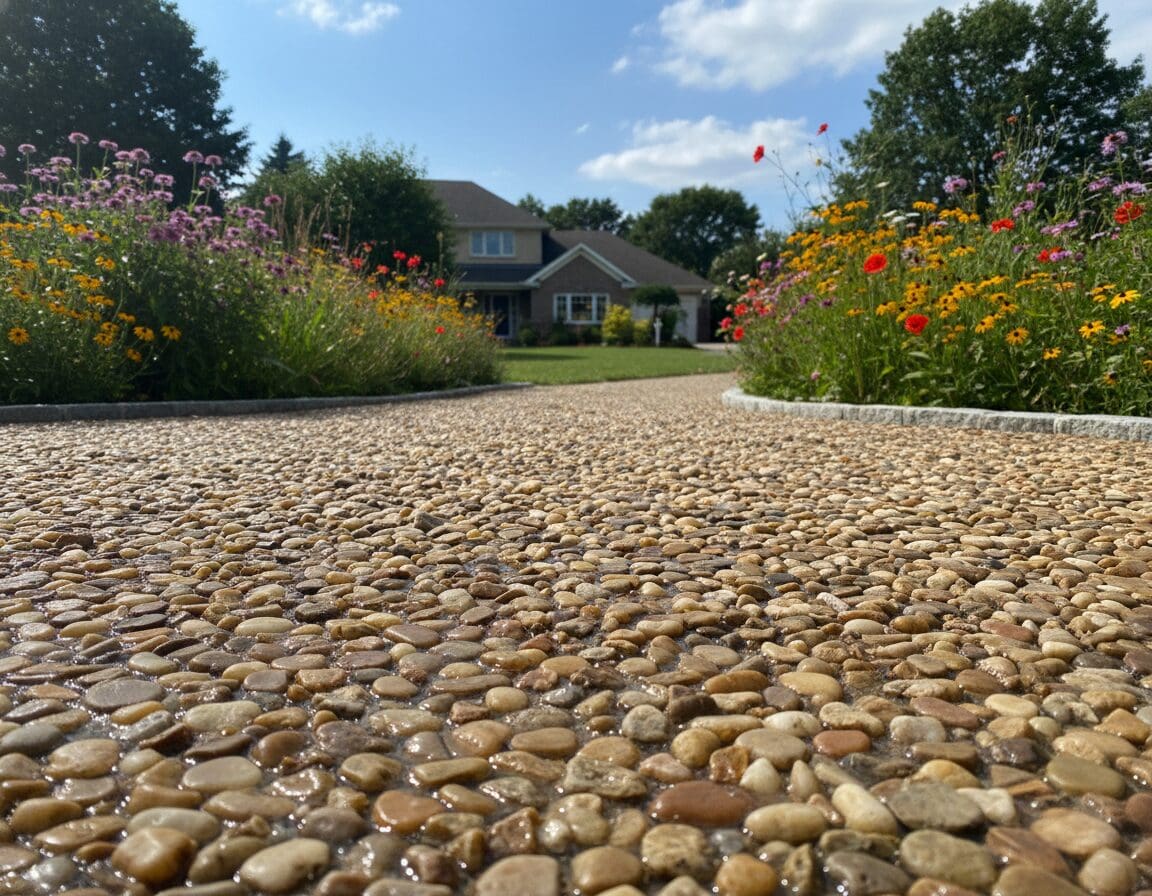

Across the United Kingdom, homeowners and landscapers are turning to gravel binder for driveways and paths to combine the rustic appeal of loose stone with the durability of a paved surface. A properly bound finish can stabilise loose gravel surfaces, preventing stone migration and wheel tracking while keeping the natural texture and colour of the aggregate.
Compared with loose gravel, a bound surface needs far less topping-up and routine attention. Resin bound systems create a long lasting resin bound gravel finish that copes with rain, freeze–thaw cycles and daily use, so driveways and garden routes remain tidy and safe for years.
Installation is relatively quick and causes minimal disruption compared with full paving or blockwork. For many properties, gravel binder driveways paths provide a permeable, low-maintenance solution that looks attractive and performs well under both pedestrian and vehicular traffic.
What is a gravel binder and how it transforms outdoor surfaces
A gravel binder is a polymer resin system that binds loose aggregate into a cohesive surface. It preserves the natural look of stone while it stabilises loose gravel surfaces against displacement and dust. Homeowners and landscapers choose gravel binder for driveways and paths to get a neat, durable finish that keeps gravel in place.
Definition and types
Resin bound gravel mixes resin and stone before it is laid, creating a fully interlocked, porous surface often described as resin bound gravel. Resin bonded systems use a thin layer of resin on the substrate with loose aggregate scattered over the top. Pour on gravel binder products are liquid systems designed to stabilise gravel in situ and suit light-traffic areas or simple repairs. Suppliers and guides offering pour on gravel binder DIY on theresinbondedslabcompany.co.uk can help homeowners tackle small jobs themselves.
How a gravel binder works
The resin surrounds and encapsulates particles to transfer loads across the surface rather than letting stones move independently. This behaviour produces a long lasting resin bound gravel finish that resists ruts and potholes. Proper mixing, correct resin-to-stone ratio and a prepared sub-base are essential for performance under vehicle tyres and foot traffic.
Permeable gravel surface system
A permeable gravel surface system allows surface water to pass through when installed over a suitable sub-base. Resin bound gravel is naturally porous and aids drainage for driveways and paths when laid to the right depth. This permeability helps sites meet SuDS guidance while reducing surface runoff and local flood risk.
Practical choices
Choose UV-stable, weather-resistant formulations such as polyurethane or hybrid alkoxy resins. Match aggregate size to intended use to balance porosity and strength. Well-specified systems create a stable, attractive surface that remains low maintenance and durable for years.
Gravel binder driveways paths
The right gravel binder for driveways and paths turns loose stone into a durable, low-maintenance surface that suits homes across the UK. Bound gravel keeps the natural look of stone while giving a stable finish for cars, bikes and foot traffic. This makes it a strong choice when you want to stabilise loose gravel surfaces without losing aesthetic appeal.
Benefits for driveways: durability under traffic and low maintenance
Resin bonded systems for driveways are formulated to withstand repeated vehicle loads and tyre abrasion. Choosing a resin solution for binding stones that is rated for vehicular use helps ensure long life.
Compared with loose gravel, these surfaces need less frequent repairs. Low maintenance driveways require only sweeping, occasional pressure washing and minor weed control. Properly specified systems resist oil staining and retain colour and texture for years.
Benefits for paths and patios: aesthetic versatility and safe, slip-resistant finish
Gravel binder for garden paths and patios accepts a wide range of aggregates. Options include natural gravels, recycled glass and coloured mineral chips to create borders, patterns and bespoke colourways.
Finished surfaces offer a safe slip-resistant finish that improves accessibility for prams and wheelchairs. The interlocked texture reduces loose stones and trip hazards while still providing visual warmth in garden schemes.
DIY gravel binder for landscaping vs professional installation
Some homeowners opt for a pour on gravel binder DIY kit to save money on small projects. DIY gravel binder for landscaping can be rewarding for patios or small paths when instructions are followed precisely.
Large areas and driveways often benefit from professional installation. Experts advise on substrate preparation, resin choice and thickness to meet traffic demands. Professional installation reduces the risk of uneven coverage and curing problems.
Choosing the right aggregate and resin solution for binding stones
Choosing aggregate for resin bound matters for performance and appearance. Hard-wearing stones such as granite, quartz and basalt suit high-traffic driveways. Particle size and colourfastness influence texture and longevity.
Match the aggregate to a UV-stable, weather-resistant resin solution for binding stones. Follow manufacturer mix ratios and test small areas before full application. Correct edge restraints and a stable base are essential to protect the finish.
Why choose an eco friendly gravel binder solution for long-term performance
An eco friendly gravel binder solution delivers sustainable surfacing that supports modern drainage needs. A permeable gravel surface system reduces stormwater runoff, aids SuDS objectives and avoids the repeated expense of replacing loose stone. Select materials that balance permeability with durability to secure long-term performance for driveways and paths.
Recent advances in resin solution for binding stones mean lower-VOC formulas and responsibly sourced binders are now available. Manufacturers and specialist contractors publish lifecycle data and case studies demonstrating reduced environmental impact when recycled aggregates and UV-stable resins are used. These material innovations make sustainable choices practical and verifiable.
Although a quality resin bound installation can cost more up front than loose gravel, whole-life calculations often favour sustainable surfacing. Fewer repairs, lower maintenance and extended service life reduce total ownership cost. Using an accredited installer and documented performance certificates also helps meet planning guidance and local authority requirements for surface water management.
For long-term performance, specify a permeable gravel surface system over a suitable sub-base, choose a proven resin solution for binding stones and source recycled or locally quarried aggregates. This approach delivers an eco friendly gravel binder solution that is resilient, attractive and aligned with UK sustainability goals.