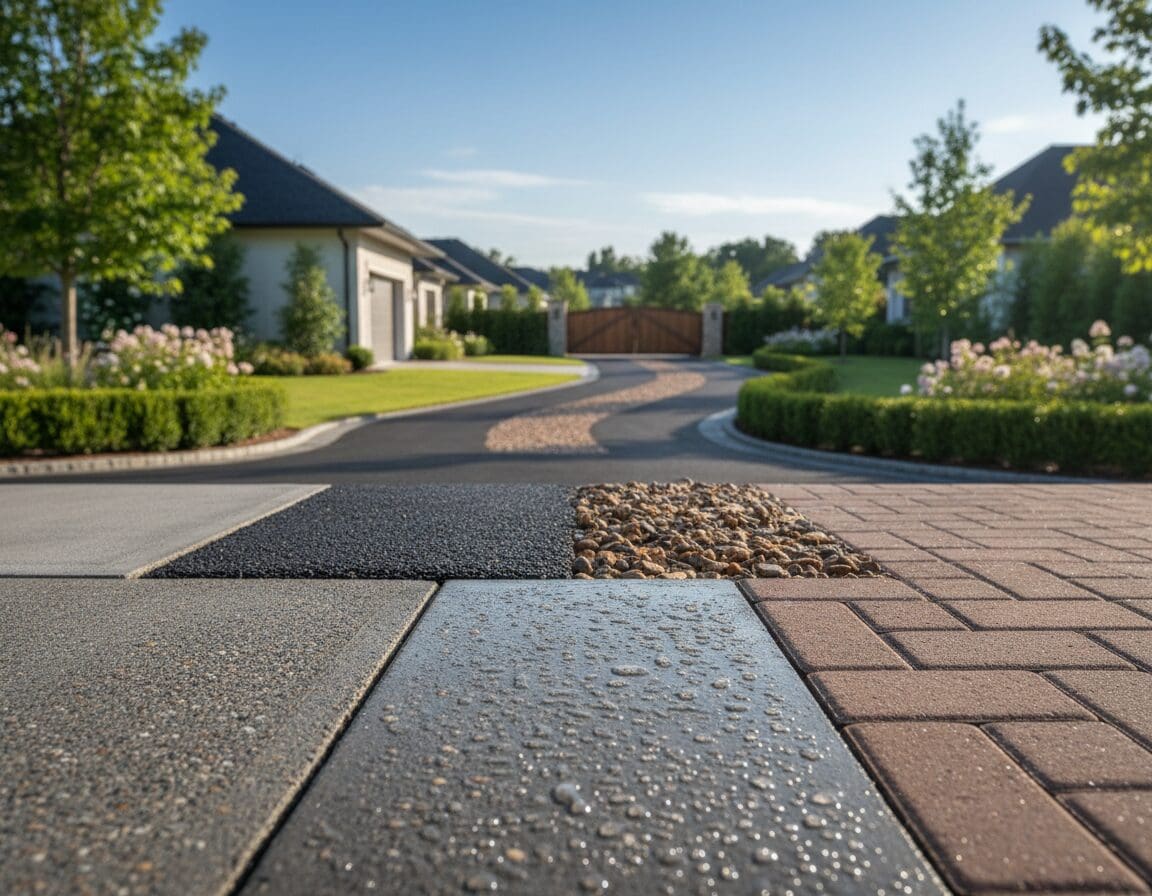

Choosing the best driveway materials is the first step towards a long-lasting driveway that looks good and performs well year after year. In the UK, durable driveways must cope with frequent rain, freeze–thaw cycles and varied soils such as clay or chalk. A durable driveway material resists cracking and rutting, manages surface water and keeps maintenance demands low.
By durable driveway materials we mean surfaces that retain structural integrity under vehicle loads, offer adequate permeability or drainage, and resist wear from weather and tyre action. Key performance factors include compressive strength, load-bearing capacity, permeability, expected lifespan and the practical cost of upkeep.
This guide focuses on driveway materials UK homeowners trust for longevity and curb appeal. We will compare concrete, tarmac and asphalt, resin-bound and resin-bonded systems, and block paving or permeable pavers. You’ll also find advice on matching materials to soil, traffic and local regulations, plus installation, maintenance and sustainability so you can choose the best driveway materials for your home.
durable driveway materials: top options for longevity and performance
Choosing the right surface shapes a driveway’s look and life. This overview compares the main materials suited to UK homes, emphasising performance in wet and cold weather, upkeep needs and visual choices. Read on to weigh practical strengths against aesthetic aims in a clear driveway durability comparison.
Concrete driveways — advantages and lifespan
Concrete offers high compressive strength and strong load-bearing capacity when installed with a proper sub-base and control joints. It resists oil and fuel spillages well once sealed, which keeps surfaces usable and tidy.
Typical lifespans range from 25 to 40 years or longer with good installation, reinforcement and drainage. Fibre or steel reinforcement reduces cracking and helps the slab endure heavy vehicles and frequent use.
Maintenance is straightforward: occasional resealing, prompt repair of hairline cracks and attention to drainage to avoid freeze–thaw damage. Variants include plain poured finishes, coloured or stamped concrete and exposed aggregate for added texture and character.
Tarmac and asphalt — durability, maintenance and ideal uses
Tarmac delivers a flexible surface that copes well with freeze–thaw cycles and allows rapid installation. It gives reliable skid resistance and suits many suburban drives and larger private roads.
Lifespan for a typical tarmac driveway lifespan sits around 15 to 25 years, depending on thickness, workmanship and traffic levels. Resurfacing can extend serviceable life at a lower upfront cost than some rigid alternatives.
Routine care involves crack sealing, edge repairs and periodic resurfacing. Oil stains may appear, but they rarely harm structural integrity. Tarmac works well where quick, practical surfacing is needed for frequent vehicle movement.
Resin-bound and resin-bonded surfaces — modern appearance with resilience
Resin-bound mixes stone and resin before laying, giving a smooth, permeable finish when installed correctly. Resin-bonded systems use a tack coat with stones broadcast on top, creating a textured, less porous surface.
Resin-bound driveway benefits include an attractive contemporary look, good anti-slip performance and potential SuDS compliance through permeability. Lifespans typically fall between 10 and 20 years based on UV-stable resin, traffic and installation quality.
Maintenance is simple: regular cleaning and prompt removal of oil or organic debris. Small patch repairs work well, though these surfaces need a stable sub-base and are not ideal for sites with frequent heavy tracked vehicles.
Block paving and permeable pavers — strength, patterns and drainage benefits
Interlocking block paving uses concrete or clay units that distribute loads through joints. Laid on a correct sub-base with secure edging, these surfaces prove extremely durable and flexible in appearance.
Quality block paving can last 20 to 50 years, with clay options often holding colour and form longest. Permeable block paving or permeable jointing systems allow surface water to infiltrate, reducing runoff and supporting sustainable drainage.
Upkeep is manageable: joint topping, weed control, pressure washing and replacing any displaced blocks. The wide range of colours, shapes and patterns such as herringbone or stretcher bond makes this choice ideal where appearance matters as much as function.
How to choose the right material for your driveway in the UK
Choosing the right surface starts with an honest look at the site, use and local rules. A clear decision process helps you choose driveway material UK that fits soil, traffic and budget without costly changes later.
Assessing soil type, drainage and local climate impact
Begin with a driveway soil assessment to learn whether clay, sand or mixed soils lie beneath the topsoil. Clay can heave when wet and shrink in dry spells, so you will need a deeper, well-compacted sub-base for rigid or flexible surfacing.
Check how surface water behaves on the site. Permeable surfaces such as resin-bound finishes or permeable block paving ease surface water run-off and help satisfy SuDS preferences in many councils.
Think about freeze–thaw cycles and frequent rain. Flexible materials like tarmac cope with movement, while well-jointed block paving resists frost when installed with frost-resistant aggregates and correct jointing.
Traffic load and vehicle types — matching material to use
Match the surfacing to the vehicles that will use it. Household cars suit most materials when the sub-base is engineered correctly.
For heavy vans, deliveries or occasional tracked equipment, choose reinforced concrete or a thicker tarmac construction. Avoid delicate resin finishes where concentrated loads or sharp turning will occur.
Design turning areas and wheel tracks with extra depth and edge reinforcement to prevent rutting and edge failure over time.
Planning permission, conservation areas and local regulations
Check driveway planning permission rules before work begins. Paving over more than five square metres of front garden may trigger rules about surface water discharge and require a permeable solution or drainage to soakaways.
If your property sits in a conservation area or is listed, local authorities often insist on traditional materials and prior consent. Seek pre-application advice from the local planning portal or highway authority to avoid delays.
Local SuDS policies increasingly favour permeable surfacing. Early contact with the council can clarify permitted options and reduce later redesign risks.
Budgeting: upfront costs versus long-term maintenance
Balance initial outlay with expected upkeep. Typical relative costs run from gravel at the low end, through tarmac and resin-bound, to block paving and concrete at the higher end.
Adopt a driveway budget lifecycle cost view. Consider lifespan, likely maintenance such as resurfacing or sealant replacement, and the cost of repairs after wheel-track wear or frost damage.
Check installer warranties and seek multiple quotes. Look for accreditation from reputable brands like Marshalls for block paving or established resin suppliers when evaluating guarantees and product support.
Installation, maintenance and sustainability considerations
Begin any driveway installation UK project with a clear plan for the sub-base. Excavate to the correct depth, lay well-compacted Type 1 MOT or equivalent aggregate, form falls for drainage and install robust edge restraints. These steps prevent settling and lateral movement and are essential whether you choose concrete, tarmac, block paving or resin-bound surfaces.
Use accredited local contractors who provide written specifications for sub-base depth, binder type and jointing. For concrete allow for control joints and curing time; for tarmac insist on correct binder mixes and compaction; resin systems require a dry, clean base and UV-stable resins; block paving needs a consistent bedding layer and proper jointing sand. Set realistic timeframes and expect seasonal limits — resin and tarmac work best in dry conditions.
Routine driveway maintenance tips will extend life and protect investment. Clear debris, remove oil stains promptly and avoid parking leaking vehicles. Keep gutters and drainage runs clear. Schedule resealing for concrete, resurface tarmac when oxidation appears, power-wash and re-sand block paving joints and repair resin defects early to prevent larger issues. In winter, use grit rather than heavy de-icers on permeable surfaces to preserve joints and finishes.
Choose sustainable driveway materials and consider permeable driveway installation where possible to support SuDS and reduce sewer burden. Opt for recycled aggregates, warm-mix asphalt or low-carbon concrete mixes to lower embodied carbon. Permeable finishes and lighter surfaces can cut surface heat and help biodiversity. At end of life, select materials and suppliers that enable reclamation and recycling. For best results, obtain a professional site assessment, several quotes and written guarantees, and always prioritise correct sub-base and drainage for long-term durability.