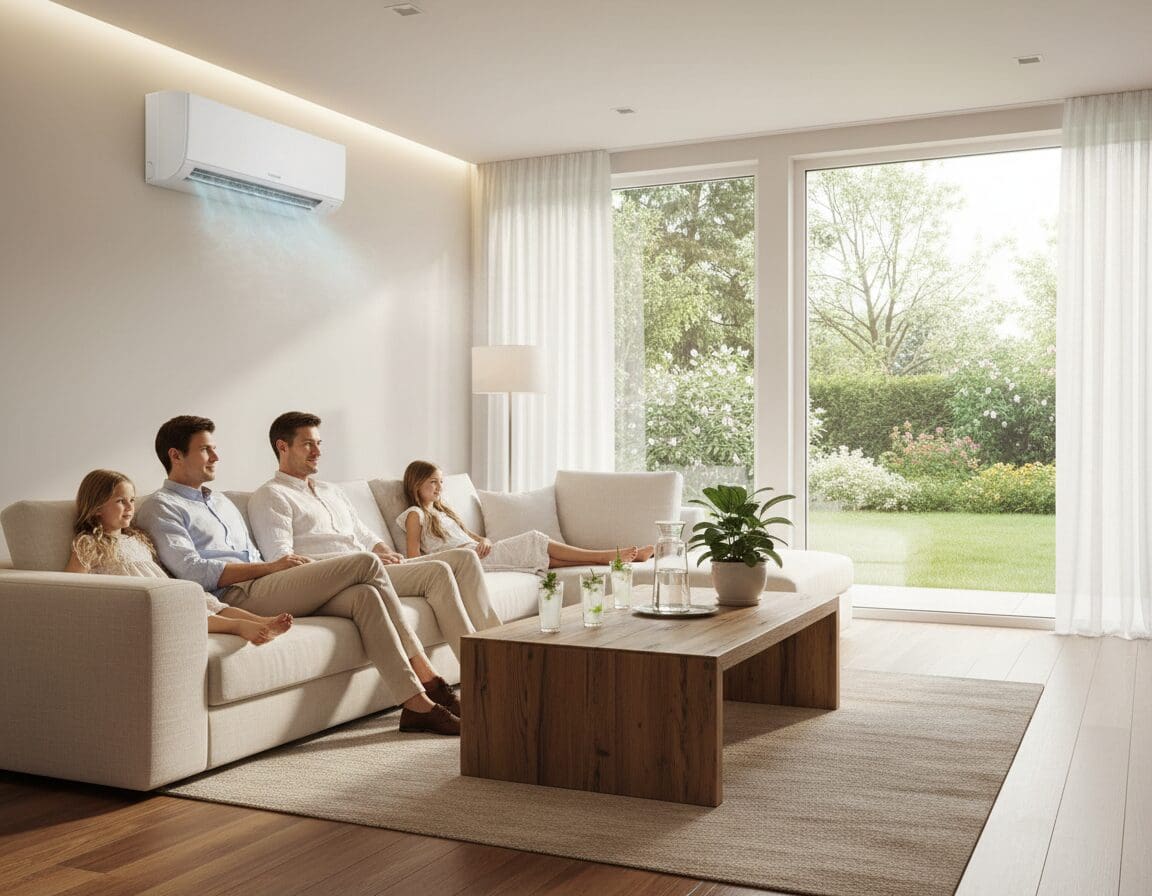

Installing air conditioning at home can change how you live through warmer months. This short introduction outlines the practical, health, economic and lifestyle benefits of domestic air conditioning advantages across UK households.
The benefits of home air conditioning include precise temperature control, reliable humidity regulation and improved indoor air quality. These features help reduce heat-related stress, promote better sleep and limit exposure to dust and allergens.
With climate change causing more frequent heatwaves, the case for installing air conditioning UK-wide grows stronger. Data from the Met Office shows rising summer temperatures, and NHS guidance stresses the importance of avoiding heat-related illness, especially for older people and those with health conditions.
This article is for homeowners and renters in the United Kingdom who are weighing up systems or upgrades. It aims to inform decisions by combining practical facts, health considerations and energy-saving options so readers can choose the right equipment and installers.
Read on to discover how different systems and smart controls deliver these air conditioning home benefits, and what to consider when comparing units, running costs and professional installation.
air conditioning home benefits for comfort and indoor climate control
Adding air conditioning to a home lifts everyday comfort and gives precise home climate control. Modern split systems, multi-splits and air-source heat pumps work quietly to keep living spaces pleasant year-round. Their ability to cool and, where fitted with reverse-cycle technology, to heat makes them a versatile alternative to separate heating and cooling appliances.
Maintaining consistent indoor temperatures
These systems maintain a consistent indoor temperature with tight thermostat control. Many units hold within 1–2°C of the set point, avoiding the peaks and troughs that come from fans or open windows. This steadiness protects sensitive items such as electronics, musical instruments and wooden furniture while making rooms reliably comfortable for occupants.
Humidity control for a healthier environment
Air conditioning offers effective humidity control by removing excess moisture during cooling cycles. Lower relative humidity helps spaces feel cooler at higher temperatures and reduces condensation on windows.
Reduced moisture also limits mould and mildew growth and cuts dust mite populations. Some domestic cooling systems include dehumidification modes and built-in humidity sensors for precise control. Regular filter cleaning and drain checks keep systems hygienic and prevent microbial build-up.
Improved air circulation and ventilation
Good air circulation keeps a home feeling fresh and reduces stagnant pockets of warm air. Typical split systems recirculate indoor air to maintain temperature, while upgrades such as mechanical ventilation with heat recovery (MVHR) bring in filtered fresh air without wasting warmth in winter.
Filtration ranges from basic washable screens to finer HEPA-equivalent or MERV-rated filters on some domestic units, which remove particulate matter and allergens. Combining air circulation with added indoor ventilation features reduces stuffiness and lowers indoor pollutant levels, helping homes breathe easier.
Health and wellbeing advantages of home air conditioning
Well‑maintained cooling brings measurable air conditioning health benefits for many households across the UK. Careful temperature and humidity control can improve daily comfort while helping to protect vulnerable family members from the worst effects of hot weather and poor indoor air quality.
Reducing heat-related stress and improving sleep
Cooler bedrooms support deeper sleep for many adults. Research and guidance from the NHS point to bedroom temperatures around 16–19°C as comfortable for sleep, though personal needs differ. An air conditioner can keep that range on warm nights, improving sleep quality and cooling to cut night‑time awakenings.
Lowering heat stress also helps daytime focus, mood and productivity. Practical steps for heat stress reduction UK include using shading and timed cooling, which reduce the risk of heat exhaustion and heatstroke among older adults and infants.
Minimising allergens, dust and pollutant exposure
Built‑in filtration in modern units captures pollen, dust and larger particulates, helping to reduce allergens inside the home during Britain’s high‑pollen seasons. Cleaner indoor air quality often means fewer sneezes and less irritation for household members with seasonal sensitivities.
Routine maintenance is crucial. Cleaning or replacing filters, clearing drains and servicing coils prevents biological growth that can release spores or odours. Options such as UV‑C modules and activated‑carbon filters tackle microbes and smells, though these should be fitted by reputable manufacturers such as Daikin, Mitsubishi Electric or Panasonic, or by certified installers.
Supporting those with respiratory conditions and vulnerabilities
Controlled temperatures and reduced humidity lower triggers like mould and dust mites. For people with asthma, COPD or other respiratory issues, this can reduce breathlessness and the frequency of flare‑ups, offering practical respiratory support in daily life.
Proper servicing is essential to avoid poorly maintained systems becoming contamination sources. Annual professional checks that follow manufacturer guidance and British Standards help keep units safe. For medically vulnerable occupants, discussing ideal indoor conditions with healthcare professionals is a sensible step when setting system parameters.
Energy efficiency, cost savings and eco-friendly options
Choosing the right cooling solution can cut bills and shrink your household carbon footprint. Modern systems deliver much more cooling for each unit of electricity, making energy-efficient air conditioning a realistic way to lower use without losing comfort. Thoughtful measures around the home will support savings and performance.
Modern systems and reduced running costs
Today’s air conditioners and heat pumps reach high SCOP and SEER ratings, which means less electricity for the same output. Picking an appropriately sized unit prevents wasted cycles and helps deliver low running costs. Simple home improvements, such as better loft insulation, shaded windows and heavy curtain linings, reduce cooling demand and extend system life.
Given current UK energy prices, investing in a high-efficiency model often lowers total lifecycle cost compared with older systems. Look for clear SEER/SCOP figures and an ErP label when comparing offers from Mitsubishi Electric, Toshiba or Daikin.
Smart thermostats and zoned cooling for efficiency
Smart thermostats bring precise scheduling and remote control so you only cool when needed. Systems that work with Samsung smart controls or the Daikin residential app can link to third-party smart thermostats for better optimisation and lower bills.
Zoned cooling, via multi-split or ducted layouts, lets you run rooms independently. That limits energy use in empty spaces and improves comfort where people spend time. Occupancy sensors, timers and integration with home automation support usage on time-of-use tariffs for further savings.
Choosing energy-efficient units and low-GWP refrigerants
UK regulation now favours lower impact refrigerants under F-Gas rules and the HFC phase-down. Selecting systems that use low-GWP refrigerants, such as R32, or heat pumps with natural refrigerants, reduces long-term environmental risk. Check for REFCOM-qualified installers and MCS certification when booking work.
High-efficiency models and low-GWP refrigerants can cost more up front, yet they tend to deliver lower running costs and a smaller carbon footprint over the years. Comparing SEER/SCOP ratings, manufacturer warranties and installer credentials helps ensure an investment that performs and lasts.
Lifestyle improvements and added property value
Reliable air conditioning transforms daily life by keeping indoor temperatures steady for socialising, leisure and work-from-home routines. Modern systems make home comfort effortless, so families enjoy movie nights, dinner parties and exercise without worrying about heat or humidity. Reverse-cycle units also provide winter heating, offering year-round comfort and reducing reliance on secondary heaters.
For home offices, a stable climate helps protect laptops and routers from overheating and supports concentration during long calls or focused tasks. Many remote workers now list thermal comfort among their top priorities, so domestic AC installation UK can directly enhance productivity and the overall lifestyle benefits of a property.
A well-chosen, professionally installed system can boost resale value and market appeal. Energy-efficient models from trusted brands such as Daikin, Mitsubishi Electric, Panasonic and Fujitsu sit well with modern buyers, and the presence of discreet indoor units or concealed ducting often raises perceived property quality without harming aesthetics.
To protect resale value and ensure a smooth sale, keep full service records, use certified installers and meet building regulations and electrical safety standards. Discuss with local estate agents whether property value air conditioning is a selling point in your area, and weigh upfront costs against long-term gains in health, home comfort and reduced running costs.