
This guide helps UK homeowners choose the best materials for bathroom work. It sets a clear scope: balance moisture resistance, durability, looks and cost when picking bathroom renovation materials.
British homes face high humidity, regular showers and changeable temperatures. Materials must meet Building Regulations Part C and relevant BS EN standards. Popular UK suppliers such as Topps Tiles, Victoria Plum and Wickes supply many bathroom materials UK with CE or UKCA marking since Brexit.
Decisions hinge on a few factors: water resistance, slip rating (tile R-rating), wear score (PEI), maintenance, price and installation difficulty. Also check compatibility with underfloor heating and the long-term look of durable bathroom finishes.
Practical issues matter too. Expect lead times for large-format porcelain slabs and specialist items. Consider skill levels for installation — for example tile-ready trays versus tiled trays — and plan for waste disposal, structural checks and improved ventilation.
Read on to learn about essential durable materials, wet‑zone products, aesthetic finishes and sustainable options. Follow this advice and you can select renovation materials bathroom that create a stylish, long‑lasting space suited to your budget and home type.
Essential bathroom renovation materials for durability and style
Choosing the right materials sets the tone for a bathroom that looks great and lasts. Practical decisions around flooring, walls and worktops influence maintenance, safety and long-term value. Below are focused options to consider when you plan a durable, stylish bathroom.
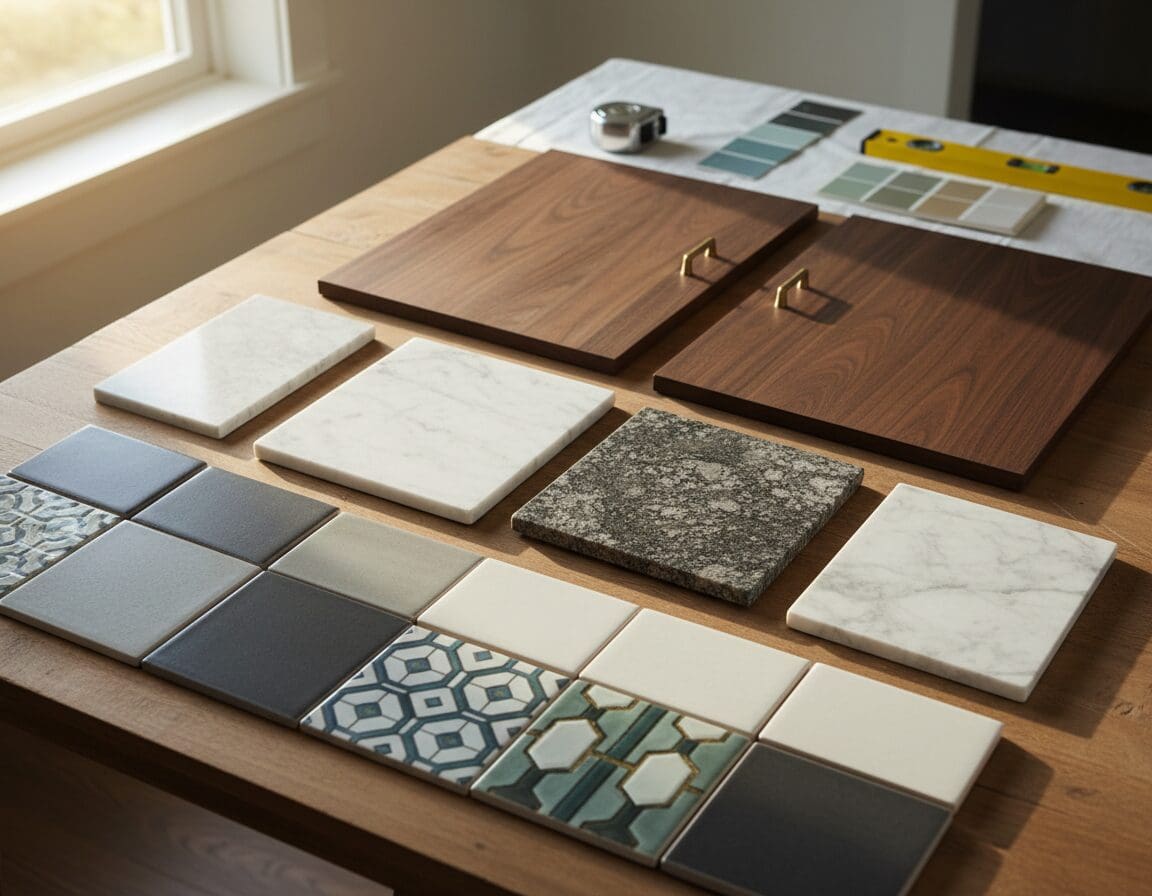
Porcelain and ceramic tiles offer unmatched design choice and proven performance. Porcelain bathroom tiles are denser and less porous than ceramic, with typical water absorption below 0.5%. That low porosity gives strong bathroom tile durability and makes porcelain ideal for high-traffic floors and wet areas. Ceramic tiles bathroom options suit walls and decorative schemes where a vast palette of colours and finishes is wanted.
Look at PEI ratings when picking floor tiles. For bathrooms, PEI classes 3–5 are appropriate. Choose finishes with R9–R13 slip ratings or check pendulum test values for safety. Sizes range from small mosaics to 600x1200mm and patterns such as herringbone and brick bond add character. Rectified edges allow tight grout lines for a refined finish.
Natural stone bathroom choices bring a premium, unique look. Marble gives elegant veining but is porous and can etch with acidic cleaners. Slate offers texture and slip resistance, making it a good floor option. Limestone has warm tones and a softer feel but needs regular sealing.
Stone demands specialist installation, correct substrate support and routine maintenance. Use impregnating sealers and avoid acidic products on marble. Natural stone performs best as feature walls, vanity tops or statement floors paired with glass and metal fittings for a high-end scheme.
Engineered materials: porcelain slabs and large-format tiles create near-seamless surfaces. Large-format porcelain can reach slab sizes used by Laminam and Neolith and gives minimal grout lines, excellent stain resistance and a modern aesthetic. These slabs suit shower walls, worktops and expansive floors where a continuous look is desired.
Installation needs experienced fitters, precise cutting and very flat substrates. Their premium cost is offset by low maintenance and a long life, strengthening overall bathroom tile durability in contemporary schemes.
- Maintenance: routine cleaning for tiles is simple; grout may need sealing in wet-floor areas.
- Suppliers: consider established brands such as Porcelanosa, Johnson Tiles and retailers like Topps Tiles or Fired Earth for quality assurance.
- Use: match material choice to use—porcelain for heavy wear and moisture, ceramic for walls, natural stone for accents, large-format porcelain for seamless modern looks.
Bathroom renovation materials for wet zones and moisture resistance
Creating a reliable wet zone starts with the right combination of waterproof bathroom materials and careful detailing. Choose products that work together to handle constant moisture, provide long-term protection and meet British Standards for wet-room installations.
Waterproof backer boards and tanking membranes
Cementitious backer boards such as Wedi and Knauf Aquapanel, plus fibre cement options, form a stable base for tiles. Pair these boards with a tanking membrane like Kerdi by Schluter or Mapei’s Mapelastic to stop water reaching the substrate.
Install membranes continuously across walls and floors, tape and seal joints, and make sure transitions to drains are watertight. Follow manufacturer instructions and check warranties to ensure compatibility with adhesives and vapour requirements.
Vinyl and luxury vinyl tiles for wet-room applications
Sheet vinyl and luxury vinyl tile (LVT) systems from brands such as Karndean, Amtico and Forbo offer waterproof cores and high slip resistance. Sheet vinyl is ideal for full wet-room schemes where seams can be welded for a continuous membrane.
Choose SPC or WPC core products when warm underfoot performance and resilience matter. Pay attention to edge sealing, heating compatibility and correct substrate preparation for a long-lasting vinyl flooring bathroom finish.
Sealing and grout choices to prevent mould and water ingress
Grout options include traditional cementitious mixes, polymer-modified formulations and epoxy grout. Epoxy grout resists staining and water penetration best, lowering the risk of mould in showers and wet zones.
Use sanitary-grade silicone at junctions and impregnating sealers on natural stone. Follow a maintenance schedule to re-seal where recommended and choose trusted manufacturers like Mapei, Ardex and Rubson for products suited to wet-room materials.
Shower tray materials: acrylic, stone resin and tile-ready options
Acrylic trays are light, warm and economical but need solid support to avoid flex. Stone resin trays give a dense, premium feel and excel at durability and sound deadening.
Tile-ready trays let you continue the floor finish into the shower for a seamless look but demand accurate falls and correct waterproofing. Consider trap access, load-bearing substrate and compatibility with wet-room designs when selecting shower tray materials from Merlyn, Ideal Standard or Twyford.
bathroom renovation materials to enhance aesthetics and finishes
Choose materials that lift the look of a room while standing up to moisture and use. Thoughtful selections for surfaces, fittings and screens create a cohesive scheme that speaks to modern bathroom aesthetics UK and lasting value.
Timber and wood-look alternatives for warmth and character
Real timber adds warmth to vanities, shelving and framed mirrors. Thermally modified wood and engineered timbers cope better with humidity than untreated solid timber. Place solid pieces away from direct splash zones unless sealed and maintained.
Wood-look options deliver the visual charm without the upkeep. Porcelain wood-effect tiles, waterproof laminates and textured luxury vinyl planks are practical for floors and wet areas. Use timber bathroom ideas to balance warm wood tones with cool stone or tile for contrast.
Metals and finishes: brass, chrome and brushed nickel for fittings
Fittings set the tone for a scheme. Polished chrome feels classic and is simple to keep clean. Brushed nickel gives a softer, contemporary look. For period or luxe schemes, aged brass or gold-tone pieces make a strong statement.
Choose brass bathroom fittings with ceramic disc valves and PVD coatings for durability. Match tap finishes with shower valves, waste covers and accessories to keep the design coherent. Brands such as Grohe, Hansgrohe and Samuel Heath offer quality options that support good bathroom finishes.
Glass choices: clear, frosted and textured for partitions and screens
Glass defines space and light. Clear frameless panels open a small bathroom, creating the feel of more space. Frosted or patterned glass gives privacy while letting light through. Textured panels can add subtle decoration without overpowering the room.
For showers, select toughened glass and consider laminated panels where extra safety is needed. Glass shower screens come as frameless, semi-frameless and sliding options, typically 8–10mm for robust panels. Anti-limescale coatings reduce maintenance and keep glass looking pristine.
- Use timber bathroom ideas for accents that soften tile and stone.
- Select brass bathroom fittings or chrome to suit the chosen period or modern look.
- Install glass shower screens to maintain light and a clean silhouette.
Sustainable and budget-friendly bathroom renovation materials
Choose reclaimed and recycled materials to cut embodied carbon and add character. Reclaimed timber for a vanity, recycled glass tiles or terrazzo with recycled aggregates give an eco-friendly bathroom a distinct look without high cost. For wet areas, recycled tiles can be mixed with low-impact porcelain or ceramic sourced from European manufacturers that publish Environmental Product Declarations.
Prioritise water-saving fittings and energy-efficient kit to lower running costs. Dual-flush toilets, low-flow showerheads and thermostatic mixers with Water Label accreditation reduce water use. LED lighting, insulated hot water cylinders and well-specified electric showers cut energy bills. Underfloor heating can be efficient if paired with good insulation and smart controls.
For a budget bathroom renovation, balance statement materials with economical finishes. Use porcelain or stone resin where durability matters, and save on larger surfaces with vinyl flooring, ceramic wall tiles, acrylic shower trays and laminate vanities from retailers such as IKEA, B&Q or Wickes. Keep the existing layout, buy offcuts or end-of-line tiles and use feature tiles sparingly to stretch your budget.
Look to UK suppliers and second‑hand sources for value and sustainability. Reclamation yards, eBay and Preloved often have reclaimed timber and fittings, while local tile outlets and national chains stock low-cost bathroom materials UK. Check BREEAM guidance, Water UK resources and manufacturers’ certifications when sustainability is a priority, and balance initial outlay against long-term savings to achieve a practical, eco-conscious result.