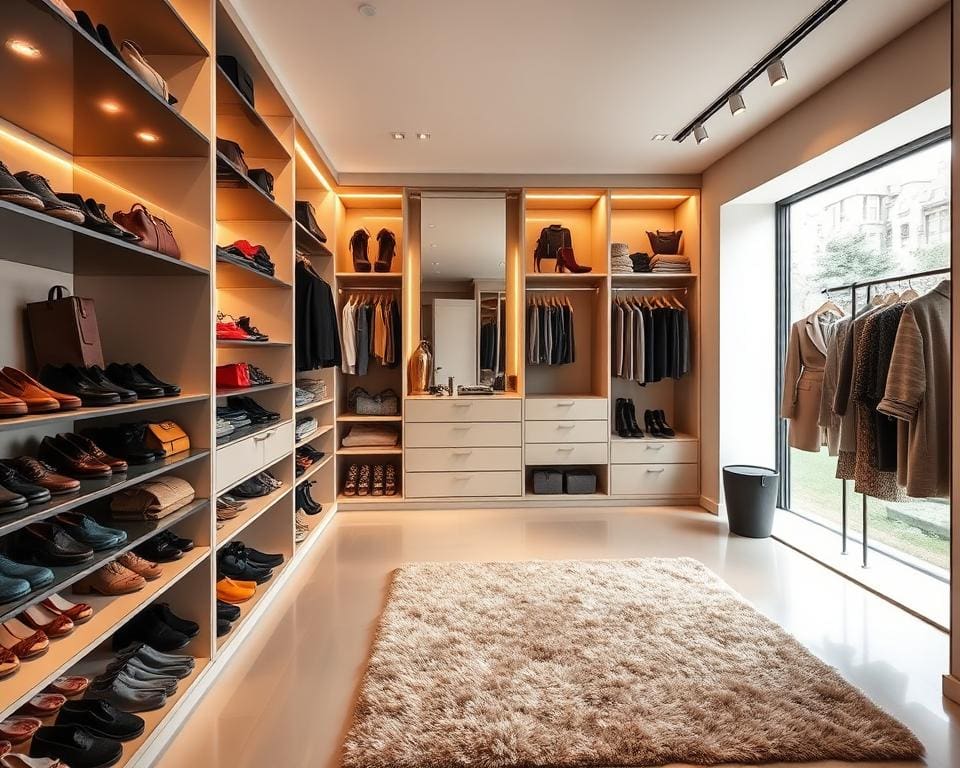

Across London, Manchester, Birmingham and surrounding commuter belts, buyers now expect more than four walls and a garden. Developers spotlight built-in storage for new homes as a way to add immediate appeal. This shift responds to smaller average floor areas in urban flats and a growing appetite for luxury wardrobes UK that make everyday routines feel elevated.
Walk-in wardrobe benefits go beyond style. Estate agents and new-build marketing materials regularly list dedicated dressing areas as standout features, and planning shows many developers are allocating space to practical dressing zones. The result is a clear message: a walk-in wardrobe new build can be both aspirational and functional.
Why are walk-in wardrobes desirable in new builds? They promise a perceived uplift in property value while solving real storage and organisation needs for modern lifestyles. With more people working from home, embracing capsule wardrobes and prioritising sustainable purchases, the tidy, tailored storage of a walk-in wardrobe feels timely and relevant.
Why are walk-in wardrobes desirable in new builds?
Walk-in wardrobes have shifted from a niche luxury to a sought-after element in modern homes. A dedicated dressing space signals a high-end specification that shapes first impressions during viewings. Estate agents and developers often use a well-styled walk-in to create aspirational imagery that can nudge buyers towards a higher offer.
Perceived luxury and home value
A walk-in presents a clear contrast with fitted wardrobes or freestanding furniture. It offers a hotel-like dressing experience that feels exclusive. Many buyers instinctively equate a luxury wardrobe feature with superior build quality and attention to detail, which boosts perceived walk-in wardrobe value.
Marketing copy regularly highlights the walk-in as a selling point. That language creates desire, which can influence buyer willingness to pay a premium. The psychological effect includes a sense of space, order and private luxury that elevates the entire bedroom.
Practical benefits for storage and organisation
Functionality sits at the heart of good design. A walk-in maximises clothes and accessory storage while keeping seasonal items separate. This reduces bedroom clutter and makes cleaning simpler.
Customisable layouts such as shelving, hanging rails, drawers and shoe racks allow homeowners to tailor storage to their needs. Couples benefit from shared or separate dressing zones. Built-in lighting, mirrors and bespoke joinery increase usability compared with standard wardrobes.
Appeal to modern buyers and lifestyle trends
Different buyer groups prize walk-ins for varied reasons. Young professionals look for quality finishes. Families want practical storage. Downsizers favour efficient, long-lasting solutions that replace temporary furniture.
Contemporary lifestyle trends shape demand. Capsule wardrobes, greater focus on interior design and the need for multifunctional bedroom spaces linked to remote working all feed interest in storage solutions new homes. Sustainability plays a role too, since bespoke storage often outlives mass-market units.
Social media platforms such as Pinterest and Instagram drive aesthetic expectations. Photogenic dressing rooms help listings perform better online, tying into the wider lifestyle trends wardrobes UK that influence purchase decisions.
Design considerations for integrating walk-in wardrobes in new builds
Thoughtful walk-in wardrobe design turns a simple storage area into a cherished part of the bedroom. Planning should balance circulation, storage and comfort. The right choices create spaces that feel roomy and work for everyday life.
Space planning and layout options
Common wardrobe layout options include single-wall runs, double-sided galley arrangements, L-shaped corners and full room-sized dressing rooms. Single-wall fits tight footprints. Galley layouts offer maximal hanging and shelving. L-shaped plans suit corner spaces and keep circulation clear.
Allow at least 900–1,000mm for a comfortable walkway. Standard hanging depths are 500–600mm. Add allowances for drawer space and swing clearances when specifying doors.
Place walk-ins adjacent to the master bedroom or en suite where possible. Consider converting an unused void, cupboard or part of a bedroom extension. In terraces and flats, check party wall and structural limits early in the design process.
Lighting, ventilation and mirror placement
Layered lighting improves usability. Use general ambient lighting for overall visibility. Add task lights over drawers and rails. Accent LEDs work well for display shelves. LED strips and adjustable spotlights deliver energy-efficient, long-lasting illumination.
Protect garments with good wardrobe lighting ventilation. Use passive vents, trickle vents or connect to whole-house ventilation to control humidity. Avoid siting wardrobes in damp corners to prevent mould and odour issues.
Position full-length mirrors on doors or walls to aid dressing and reflect light. If the wardrobe sits next to an en suite, consider anti-fog or heated mirror options to keep surfaces usable after showers.
Materials, finishes and custom storage solutions
Choose bespoke wardrobe materials that suit the UK climate. Moisture-resistant MDF with lacquer or melamine finishes offers value and durability. Hardwood veneers lift premium schemes. Use reliable fittings from brands such as Blum or Häfele for smooth operation and longevity.
Pick finishes that enhance perceived space. Light-reflective surfaces and high-gloss doors suit modern schemes. Matt painted finishes work for classic interiors. Neutral palettes help wardrobes blend with bedroom design.
Custom storage solutions add daily convenience. Specify adjustable shelving, pull-out tie and belt racks, jewellery organisers, pull-out ironing boards, shoe cubbies and integrated laundry hampers. Modular systems deliver flexibility as needs change.
Accessibility and long-term adaptability
Design inclusively with adjustable-height rails, lower-level storage and wide clearances for wheelchair access where required. Choose lever handles rather than knobs for ease of use across age groups.
Plan for life-stage changes. Make systems reconfigurable so a child’s wardrobe can become adult storage or convert to a compact home office. Comply with building regulations on ventilation and egress when relevant to ensure safety and future-proof resale appeal.
How walk-in wardrobes influence resale value and marketability
Walk-in wardrobes can sway buyer interest and shift perceptions of a home’s quality. In many UK markets a well-planned dressing space lifts appeal for first-time buyers, upsizers and families seeking storage. Regional differences shape demand, so aim for a fit that matches local expectations.
Buyer expectations in the UK property market
Estate agents and property portals report storage and bedroom specification as top priorities. In London, Manchester and affluent commuter towns, buyers often expect a dedicated dressing area as part of a superior master suite. In rural or lower-cost areas a tidy fitted wardrobe can meet UK buyer expectations without the need for a full walk-in.
First-time buyers still prize clever storage. Upsizers look for space they can personalise. Developers who match local demand avoid over-building features that buyers do not value.
Comparing costs versus perceived value uplift
Costs range widely. Economical fitted systems and modular units can cost a few hundred to a few thousand pounds. Bespoke schemes and room-sized dressing areas may run into several thousand or tens of thousands, depending on materials and labour.
Factors that drive price include size, materials, hardware, integrated lighting and contractor time. When weighing wardrobe cost vs value, modest, well-lit solutions often deliver the best uplift for most developments. High-end bespoke fit-outs give stronger premiums in luxury markets.
Staging tips to highlight a walk-in wardrobe during viewings
Good staging makes the space feel useful and desirable. Keep the area tidy and lightly stocked. Use matching hangers, neat stacks and a few curated outfits to show capacity and lifestyle potential.
- Use soft, even lighting and a full-length mirror to expand perceived space.
- Photograph organised sections, drawers and shoe storage to show functionality.
- Demonstrate features on viewings: open drawers, switch on lights and let visitors feel the flow.
Thoughtful staging walk-in wardrobe choices help buyers imagine daily routines. A staged walk-in wardrobe can convert interest into offers by showcasing storage, scale and usability in tangible ways.
Practical tips for homeowners and builders considering a walk-in wardrobe
Plan the walk-in wardrobe early in the build stage to get the best layout and services. Use a wardrobe planning checklist to map storage needs, lighting, and wiring before walls are finished. Set a realistic budget and obtain multiple quotes from reputable suppliers and installers to compare quality and lead times.
Choose suppliers with solid portfolios and client reviews, and check guarantees on fittings. Look to trusted UK showrooms such as John Lewis for fitted furniture inspiration, and consider independent bespoke joiners for unique solutions. Confirm site surveys and installation logistics with developers to align work with new-build timelines.
Prioritise practical construction details: pre-wire for LEDs, plan socket and switch positions, and specify moisture-resistant panels and anti-scratch finishes. Small upgrades like soft-close drawers, integrated charging drawers and labelled seasonal storage add daily convenience and long-term value. Ask your contractor for contractor advice wardrobes to ensure fittings are robust and compatible with building warranties such as NHBC.
Design for maintenance and adaptability. Maintain ventilation to prevent mould, use the right cleaning products for each finish, and choose modular components that can be repaired or replaced without a full refit. Check fire-safety routes and Part M accessibility where relevant, and engage an inclusive design consultant or occupational therapist if planning for lifetime homes. With careful planning, a walk-in wardrobe becomes both a practical storage solution and an attractive selling point for any new build in the UK.