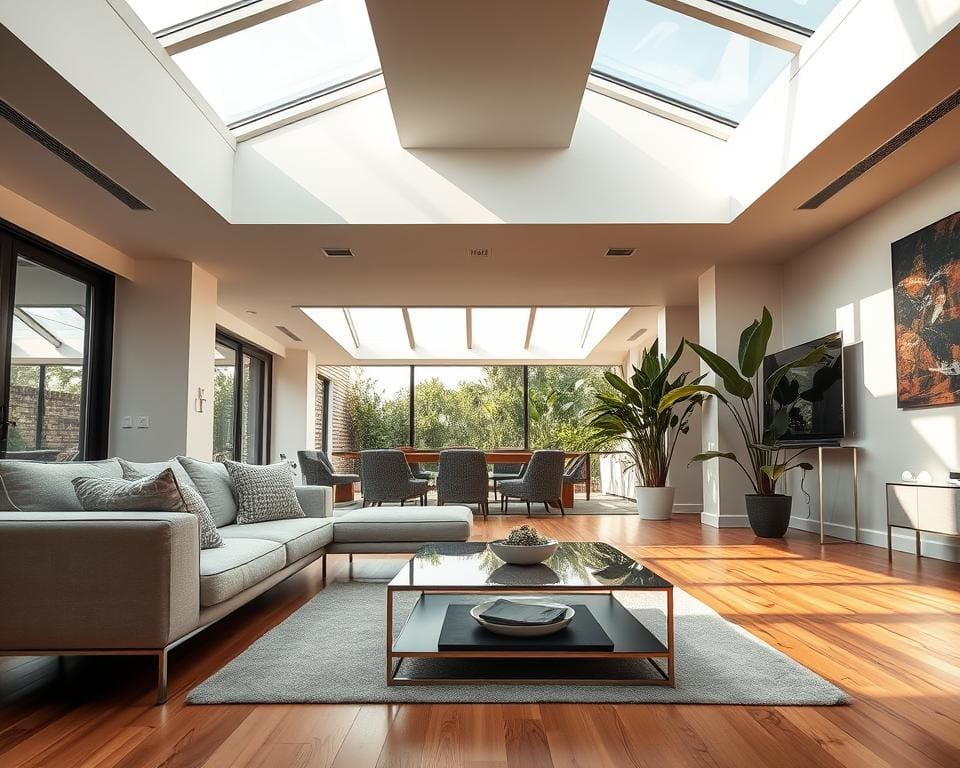

Skylights are glazed openings in roofs or ceilings that bring controlled daylight into a space. They create visual drama, connect interiors to the sky and help shape mood in contemporary homes. In the UK they are often specified to introduce softer, well-distributed light and to frame views of changing weather and daylight.
Contemporary homes favour clean lines, open plans and natural materials. Skylights complement that aesthetic by adding sculptural light, reducing reliance on artificial lighting and emphasising uncluttered surfaces. Leading practices and manufacturers, from RIBA-referenced designers to VELUX and Fakro, increasingly use roof glazing to achieve natural light modern interiors with a calm, refined quality.
At a glance, the skylight benefits UK homeowners most include increased daylight and improved ambience, a sense of expanded space, ventilation with vented units, potential energy savings and uplift in market appeal. Correct specification helps maximise daylight during short winter days while managing glare and summer heat.
Evidence for these claims draws on performance data from manufacturers and guidance from professional bodies such as the Chartered Institute of Building and RIBA on daylighting standards. Subsequent sections will explore how skylights transform interiors, the types and technical choices available, and practical installation and styling tips to bring contemporary skylight design into UK homes.
How do skylights enhance contemporary home design?
Skylights transform interiors by bringing considered daylight into every room. Thoughtful placement turns simple roof openings into dramatic features that shape mood, highlight textures and connect occupants to the sky. This section explores three ways skylights lift modern living: as visible design elements, as tools to alter spatial perception, and as contributors to sustainable performance.
Transforming natural light into architectural focal points
Carefully sized and sited rooflights become skylights architectural focal points. Linear rooflights cast bold bands of light that trace circulation routes. Pyramid or domed rooflights read as sculptural centrepieces on flat roofs. Narrow slot skylights emphasise geometry and produce crisp light lines that enhance minimal palettes.
Daylight models surface detail and material warmth. Timber grain, textured masonry and lime plaster gain depth under changing natural light. VELUX modular rooflight installations and bespoke fabricator projects show how daylight can be planned, not left to chance, so light plays a deliberate role in spatial composition.
Improving spatial perception and flow
Skylights extend perceived room size and ease movement through open-plan homes. They reduce reliance on vertical glazing and push light deep into living zones, corridors and stairwells. This improves wayfinding and psychological comfort in day-to-day life.
Lower-ground rooms and loft conversions benefit from tubular skylights and light tunnels. These systems channel daylight into compact or internal spaces that lack external walls. Designers use daylight factor and useful daylight illuminance (UDI) to measure gains and ensure even, usable light across interior planes.
Energy efficiency and sustainable design benefits
Modern glazing, thermally broken frames and warm-edge spacers make energy-efficient skylights part of sustainable skylight design. High-performance rooflights lower the need for artificial lighting and provide passive solar gain in cooler months, reducing heating demand.
Solar control glazing, low-e coatings and external shading prevent summer overheating in the UK. Ventilation-capable skylights offer stack-effect airflow, remove excess heat and support compliance with Part F and Part L when specified correctly. Manufacturer energy-performance data and guidance from the UK Green Building Council inform daylighting strategies UK that cut energy use while enhancing occupant wellbeing.
Design considerations and types of skylights for modern living
Choosing the right rooflight shapes the feel and function of a contemporary home. Consider daylight, ventilation and thermal performance together. Below are practical pointers to help specify the best solution for each space.
Fixed, vented and tubular skylights: which to choose
There are three primary choices. Fixed rooflights are non‑opening. They deliver uninterrupted daylight and high levels of insulation, ideal where watertightness matters.
Vented or openable rooflights provide airflow and safe egress. They suit kitchens, bathrooms and habitable rooms where passive ventilation is useful. Electric models from VELUX and Fakro offer remote control and rain sensors.
Tubular skylights use reflective tubes to bring light into compact or internal zones. Luxlight and Roofglaze systems are neat where architectural intrusion must be minimal, such as hallways, utility rooms and internal bathrooms.
When selecting between fixed vented tubular skylights, match function to location. Consult BBA‑ or Certass‑registered installers for compliance and warranty protection.
Glazing, frames and thermal performance
Glazing options include double and triple glazing, laminated safety glass, low‑emissivity coatings and solar‑control glass. Warm‑edge spacers reduce thermal bridging.
Aim for low U‑values. Targets such as 1.2 W/m²K or lower work well for modern new‑builds, subject to regulation and retrofit limits. Choose g‑values to balance passive heat gain with overheating risk.
Frame materials vary. Aluminium with thermal breaks offers durability, hardwood brings natural warmth and PVCu gives low maintenance. Each has trade‑offs in thermal bridging and upkeep.
Airtight detailing and certified installation prevent condensation and heat loss. Consider integrated blinds, external shading and trickle ventilation to manage glare, privacy and air quality.
Positioning, orientation and daylight modelling
Siting influences light quality. North‑facing rooflights give soft, even illumination. South‑facing units provide more daylight and passive solar gain but raise overheating risk and need solar control.
Use daylight modelling UK tools such as Radiance and DIALux or manufacturer calculators to predict light distribution, glare and thermal effects. Photometric analysis helps meet daylight factor and UDI targets for occupant comfort and regulation.
Combine rooflights with vertical glazing, internal glazing and reflective finishes to carry light deeper into a plan. Account for roof pitch, surrounding trees and neighbouring buildings when deciding size and placement.
For complex schemes, engage designers who can run photometric studies and advise on skylight positioning orientation to optimise comfort, energy and aesthetic impact.
Practical benefits, installation and styling tips to enhance contemporary homes
Well‑specified rooflights bring clear, practical benefits: daily daylight supports circadian rhythms and wellbeing, reduces reliance on electric lighting and can lower energy use. Vented units add useful airflow, helping control humidity and reducing the risk of damp and mould in poorly lit spaces. At night, well‑placed skylights offer appealing sky views that boost occupant satisfaction in both urban terraces and rural cottages.
For a successful project start with professional advice and follow UK regulations. Use accredited installers and check product certification such as CE or UKCA marking. Proper flashing, upstands and weatherproofing are essential, as are structural checks for large or structural rooflights; this is the heart of reliable skylight installation tips. Be aware of planning permission and party‑wall considerations — conservation areas, listed buildings or changes that alter the roofline may need consent.
Styling skylights contemporary means pairing linear or continuous rooflights with clean joinery and neutral palettes to emphasise light and rhythm. Combine rooflights with blackout or diffusing blinds for bedrooms and media rooms, and integrate adaptive controls and daylight or occupancy sensors to manage artificial lighting and save energy. For retrofit projects, follow skylight retrofit guidance and commission daylight modelling early to set clear targets for light levels, privacy and ventilation.
Keep upkeep simple: schedule external glass cleaning, annual checks on seals and flashing, and servicing of electric opening mechanisms. Use specialist equipment or professionals for high or inaccessible rooflights and tackle condensation promptly — these are core skylight maintenance UK tasks. Balance design ambition with technical detail, consult manufacturers’ performance data, and work with a certified installer so your scheme delivers beauty, comfort and sustainability. Done well, skylights transform ordinary rooms into uplifting, light‑filled spaces that define contemporary British living.