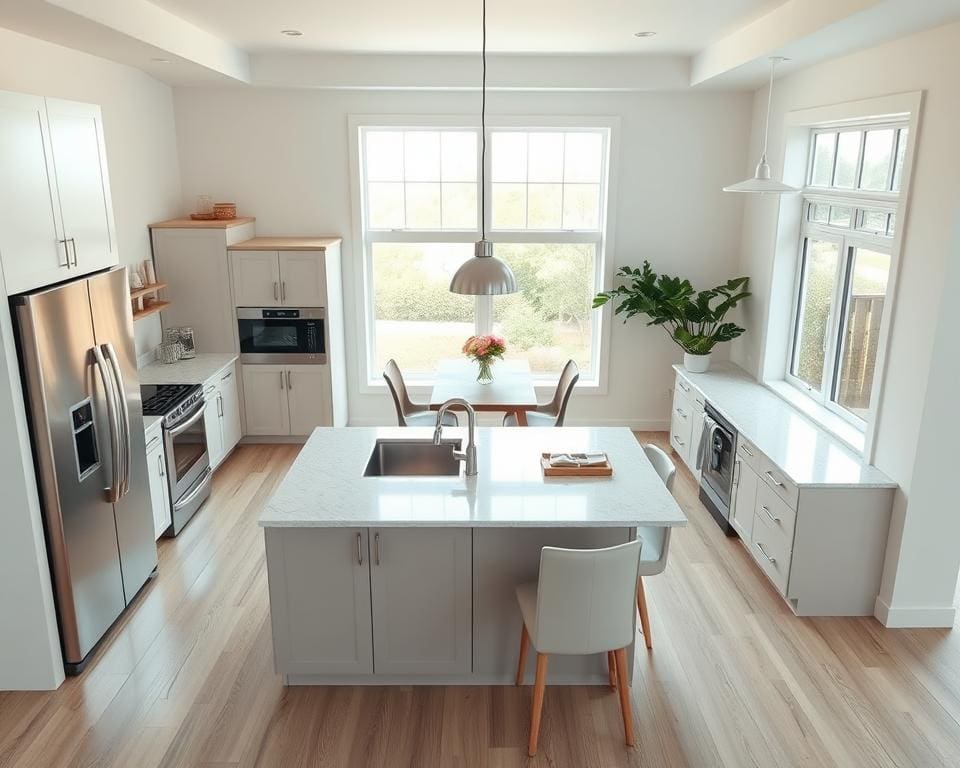

Creating a functional kitchen layout is about more than looks; it balances efficiency, safety, comfort and style to support everyday cooking, family life and entertaining. A well-planned kitchen design UK minimises unnecessary movement, sets safe and comfortable work zones, provides ample storage and clear sightlines, and integrates appliances and services effectively.
Begin by defining the primary objectives: reduce wasted steps, locate heavy-use appliances for easy access, reserve clear prep surfaces and ensure good lighting and ventilation. An efficient kitchen layout organises the kitchen workflow so that tasks flow naturally between food storage, preparation and cooking.
Practical kitchen planning starts with assessing the existing space and structural constraints, then establishing priority uses such as serious cooking, baking or socialising. Set a realistic budget and timeline, and bring in professionals when needed — architects, kitchen designers, electricians, Gas Safe-registered engineers and Chartered Surveyors can save time and cost during a kitchen renovation.
Local considerations matter in the UK. Many homeowners work within period terraces, flats and cottages, where planning permission or listed-building consent may be required for structural changes. Follow UK appliance sizes and regulations, including BS 7671 wiring regulations and the Gas Safety (Installation and Use) Regulations, to ensure compliance and safety.
This introduction sets the scene for the topics ahead: the traditional kitchen work triangle and modern alternatives, ergonomic and accessible design, layouts tuned to room shape and family needs, small kitchen solutions and how finishes, appliances and lighting shape both function and style. For further guidance, consult trusted UK resources such as RIBA, Which? appliance reviews, the Gas Safe Register and your local council planning department.
How do you create a functional kitchen layout?
A well-planned kitchen balances form with purpose. Start by picturing how people move, cook and clean each day. That approach keeps the focus on good kitchen workflow and an ergonomic kitchen design that suits real life.
Understanding the classic kitchen work triangle helps when you plan distances between sink, cooker and refrigerator. The traditional rule sets each leg roughly between 1.2 and 2.7 metres and a total perimeter near 4–8 metres. This guideline aims to cut unnecessary steps when preparing meals.
Understanding the kitchen work triangle and modern alternatives
Many homes now need more than a simple triangle. Open-plan living, islands and multiple cooks often call for multi-zone layouts. The kitchen zones model divides space into cooking, preparation, cleaning, storage and social areas. That shift creates practical links between tasks and storage.
Islands can form secondary triangles or support a cook-prep-clean layout. Galley kitchens work with two parallel runs to keep motion tight. L-shaped and U-shaped kitchens allow several workstations so two people can work without bumping into one another.
Keep sightlines clear and traffic routes unobstructed. Avoid running main walkways through primary work zones. Store pots beside the hob and food close to the fridge to reduce wasted motion.
Assessing your space and workflow
Begin with careful measuring. Note room dimensions, window and door positions, plumbing and electrical points, ceiling height and radiators. Mark waste outlets and any structural elements that cannot move. A scaled sketch or digital planner such as IKEA Kitchen Planner, SketchUp or Chief Architect helps to test ideas.
Map household routines next. Count cooks, note how often you entertain and list meal types. Think about baking gear, slow cookers and whether the kitchen doubles as a homework or multigenerational space. Prioritise must-haves like a full-size fridge, dishwasher and hob, and separate nice-to-haves such as a wine fridge.
Plan bin placement for UK recycling habits. Integrated bins near the prep or sink help keep the area tidy. Allow space for kerbside recycling boxes if you need temporary storage before collection.
Balancing ergonomics and accessibility
Design for comfort to reduce strain. Standard worktop height sits at about 900 mm but you should vary heights where possible to suit different users. Primary reach zones fall within 300–600 mm, with secondary reach up to 1,200 mm. Put heavy items between waist and hip height to avoid lifting from the floor.
An accessible kitchen follows inclusive design and relevant British Standards. Provide circulation aisles of 900–1,200 mm, with 1,200–1,500 mm where passing is frequent. Include knee clearance for seated tasks, lever taps and D-shaped or pull handles for easier grip.
Choose fittings that aid usability. Blum soft-close runners and Blumotion hinges give smooth operation. Legrabox runners help with heavy drawers and Quooker taps add convenience for busy cooks. Fit mechanical extract hoods that meet UK Building Regulations and choose non-slip flooring for safety.
Planning layouts by kitchen type and household needs
Choosing the right plan shapes everyday use into joy. Consider how different kitchen layout types match your space, family routines and entertaining style. Small tweaks in layout can improve flow, storage and social life without a full refit.
Layouts for different kitchen shapes
Galley kitchens suit narrow flats and conversions. Two parallel runs give a fast, linear workflow. Keep a clear walkway of 900–1,200 mm and stagger appliances to avoid bottlenecks. Fit one run with full-height storage to create pantry space and reduce clutter.
L-shaped kitchen plans work well in corner rooms and open-plan homes. Place the main work triangle along the L legs and use corner carousels or pull-out LeMans units to exploit blind corners. An island kitchen can slot into the centre when space allows, offering extra prep and seating.
U-shaped kitchens deliver generous countertop and storage options for medium to large rooms. Ensure good entrance clearance so the layout feels open. Partial open shelving softens the bulk of tall units without losing function.
Island and peninsula kitchens add prep area and sociable seating. Allow at least 1,200 mm circulation around the island to accommodate passage and appliance doors. Islands can host a secondary sink or hob where plumbing and ventilation permit, turning the kitchen into a hub for guests.
Single-wall kitchens are common in studio flats and smaller homes. Rely on tall units, vertical storage and clever appliance stacking to maximise capacity. Integrated appliances keep the look tidy and free up work surface.
Designing for family life and entertaining
For family kitchen design, combine durable surfaces with flexible seating. Choose quartz, granite or high-quality laminates for heavy-use zones that still look refined. Introduce breakfast bars or banquette seating facing the cook to keep conversation flowing while preparing meals.
Create clear service zones for serving and clearing. Add a homework nook with nearby charging points so children can work in view. Position plate and cutlery storage at child-friendly heights where suitable to encourage independence.
Entertaining needs multiple cook zones and ample refrigeration. Consider a double oven or an oven with warming drawers for staggered cooking. A scullery or prep kitchen behind the main area keeps mess out of sight when hosting larger gatherings.
Choose trusted UK brands for family needs. Neff’s Slide&Hide ovens and Bosch flexible ovens offer dependable performance for busy households. Fisher & Paykel dishdrawer dishwashers provide easy access for active family life.
Small kitchen solutions and clever storage
Small kitchen ideas rely on vertical thinking and multifunctional fittings. Full-height cabinetry, integrated appliances and pull-out larders squeeze extra capacity into tight footprints. Over-the-sink chopping boards and pan drawers make daily tasks smoother.
Invest in kitchen storage solutions such as deep drawers for pots, bespoke organisers and vertical plate racks from Häfele or Blum. Use corner solutions sparingly to keep pull-outs accessible and clutter minimal.
Lighting and colour strategies help small rooms feel larger. Reflective surfaces, under-cabinet lighting and continuous flooring create visual flow. Choose slimline handles to reduce visual noise and keep sightlines calm.
For compact homes, pick practical appliances: compact integrated fridge-freezers, combination microwave-ovens and induction hobs reduce ventilation needs. Washer-dryer combos free up space in many UK flats while preserving function.
Choosing finishes, appliances and lighting to enhance function and style
Select kitchen finishes that marry durability with the look you want. For kitchen worktops, quartz, granite and Dekton resist scratches and stains and cope well with Britain’s variable climate. Laminate and solid-surface options offer cost-effective alternatives. Choose kitchen splashbacks of ceramic tile, quarried stone, glass panels or stainless steel behind cooking zones for easy cleaning, and consider large-format porcelain or grout-free systems to cut maintenance.
Flooring should be water-resistant and hardwearing; porcelain tile, engineered oak sealed against moisture, or luxury vinyl plank are sensible for UK homes and pair well with underfloor heating. Cabinet finishes influence light and feel: matt doors hide marks while gloss reflects light. Decide between handleless systems for a sleek aesthetic or tactile handles for everyday ease. For reliable warranties and service, look to established cabinet makers and manufacturers available in the UK market.
Choose appliances to suit your layout and household needs. Induction hobs are fast and safe, ovens can be single, double or steam depending on cooking habits, and integrated dishwashers keep lines tidy. Think about fridge/freezer capacity and any specialist units such as wine fridges or warming drawers. Prioritise energy-efficient models under the current UK Energy Label scheme; brands like Bosch, Neff, Siemens, AEG, Miele, Samsung and Smeg offer strong options for reliability and service.
Layer kitchen lighting for function and atmosphere. Combine ambient ceiling fittings with task lights under cabinets and pendants over islands, then add accent lighting in plinths or cabinet interiors. Aim for 300–500 lux at preparation zones, colour temperatures between 2700–4000K and CRI 90+ for true colour rendering. Use dimmers and zone controls, plus motion sensors in cupboards, to tailor scenes. Finally, coordinate finishes, appliance zones and lighting early in the design stage, trial mock-ups of working heights and book a showroom consultation to ensure the finished scheme performs as beautifully as it looks.