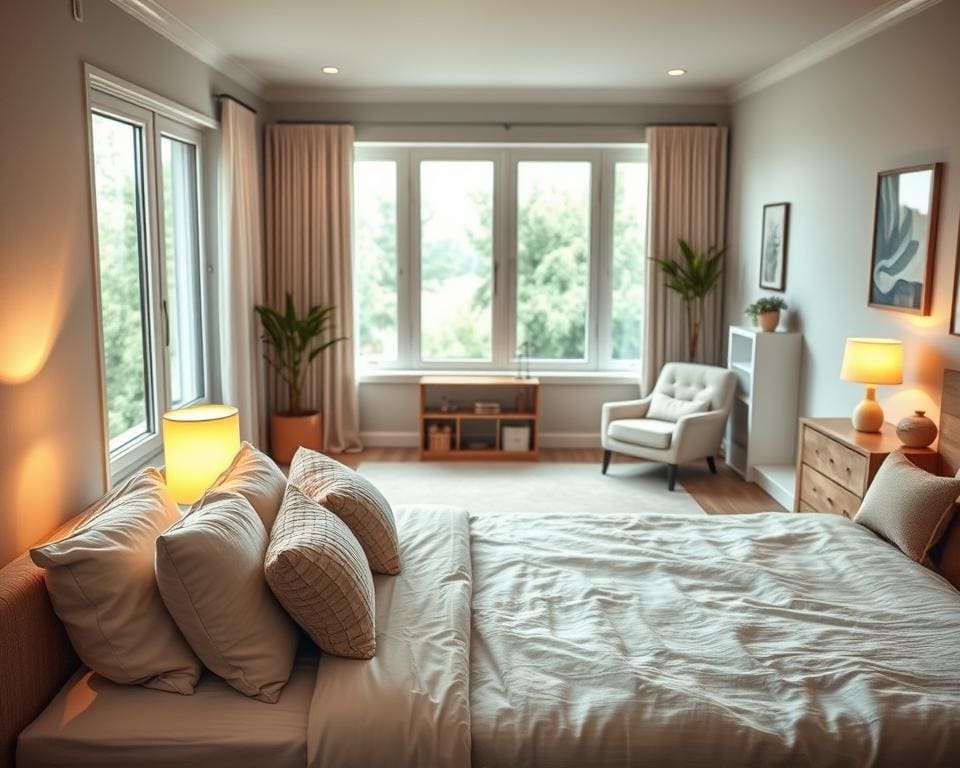

Designing a restful room asks a clear question: what makes bedroom design relaxing and practical? It means creating a serene bedroom that soothes at night and supports daily life by balancing psychology, ergonomics, aesthetics and storage.
For homeowners and renters across the United Kingdom, from Victorian terraces to modern flats, relaxing bedroom design must work within real constraints. Small rooms, limited light in north‑facing spaces, listed‑building rules and tight budgets all shape choices.
Practical bedroom ideas range from simple actions, like decluttering and a fresh coat of paint, to mid‑range steps such as upgraded lighting and bespoke storage. Higher‑end solutions include custom joinery and a new mattress to boost sleep onset and quality.
The measurable outcomes are clear: improved sleep, lower bedroom‑related stress, easier morning routines and longer‑lasting furniture and finishes. This article draws on sleep research, guidance from retailers such as John Lewis and Habitat, and advice from the Sleep Council to offer evidence‑led recommendations.
Read on to explore the psychological and organisational foundations, the key design elements, colour and lighting choices for bedroom tranquillity UK, and practical layout, storage and furniture solutions that marry comfort with everyday usability.
Understanding the foundations of a calming bedroom
Create a bedroom that soothes the senses and supports daily routines. Thoughtful design links visual cues, storage and comfort to better sleep and easier mornings. The ideas below draw on research and practical British interiors to help you craft a restful, usable room.
Psychology of restful spaces
Simple sensory choices shape the nervous system. Soft textures, muted colours and gentle lighting encourage parasympathetic activation and calm. Bright lights, loud patterns and excessive stimuli trigger arousal and make it harder to settle.
Research links bedroom environment to sleep quality. Night-time blue light delays melatonin, noise fragments sleep cycles and cooler temperatures around 16–19°C help deeper rest. Beds that signal sleep work best; bedrooms used for work or TV can create conditioned wakefulness that undermines sleep hygiene.
In the UK, understated, comfort-led schemes often feel familiar and restorative. That cultural preference supports designs that combine modest colour, tactile fabrics and layered light to promote the psychology of restful spaces.
How clutter and organisation affect sleep quality
Clutter increases stress and rumination. Several studies find that tidy environments link to lower anxiety and faster sleep onset. Visual calm reduces cognitive load and prepares the mind for rest.
Adopt bedroom organisation tips that hide everyday items behind doors or drawers. Keep surfaces clear and use baskets or labelled storage to cut decision fatigue. A simple nightly reset — clear the bedside, fold clothes and set out essentials — signals the brain that the day is ending.
Small British bedrooms benefit from vertical storage, under-bed solutions and multifunctional furniture. These approaches limit visible mess and make restorative bedroom design UK practical in compact spaces.
Balancing comfort and functionality for everyday life
Functional needs are practical and easy to list: a supportive mattress, accessible lighting and charging points, and storage for clothing. Comfort elements include mattress type, breathable cotton or linen bedding and layered textiles for seasonal change.
Weigh comfort versus function by positioning furniture to keep clear paths and support morning routines. Choose calming, hard-wearing fabrics such as performance linen or cotton blends that stand up to daily use.
Discreet tech like built-in USB sockets and dimmable lights keeps convenience without dominating style. Adjustable bed heights and durable finishes suit family homes or rental properties and extend the life of the room.
What makes bedroom design relaxing and practical?
Create a restful room that works for daily life by focusing on a few key principles. Start with core items that support sleep and simple routines. Think about sound, scent and temperature in small ways that add up to calm.
Key elements that create a serene atmosphere
A supportive mattress and breathable bedding set the foundation for bedroom relaxation and function. Choose a soft headboard and low-stimulation colour palette to keep the eye at ease. Limit decorative clutter so the space reads as restful rather than busy.
Control daylight with blackout curtains or light-filtering blinds. Thick curtains, rugs and soft furnishings will help with sound management. For city flats, consider double-glazing or acoustic panels to reduce traffic noise.
Scent and tactile cues signal down-time. A hint of lavender or chamomile, plus linen throws and wool cushions, help create calm bedroom features UK homeowners value. Layer duvets and use thermostatic radiator valves for reliable temperature control throughout the year.
Design decisions that improve daily usability
Place the bed for easy access and clear sightlines to the door. Keep radiators and windows unobstructed to maintain comfort and airflow. A defined dressing area or a simple bench at the foot of the bed speeds morning routines.
Install dimmable switches and separate bedside lamps to support flexible lighting. Add task lighting by the dressing table and position sockets and USB outlets within easy reach of the bed.
Built-in wardrobes maximise floor space while shallow closets suit smaller rooms. Storage benches and under-bed drawers store linens and seasonal clothes without disrupting the calm.
Opt for washable fabrics and stain-resistant finishes. Choose easy-to-clean flooring such as engineered wood with rugs, or a low-pile carpet suited to the UK climate to keep maintenance straightforward.
Integrating relaxation and practicality without compromise
Use dual-purpose furniture to keep the visual field restful. Hide workstations behind sliding doors or in cabinetry when not in use. Foldaway desks and Murphy beds help small rooms stay serene while remaining useful.
Match storage finishes and soft furnishings to the calming palette so practical items blend in rather than stand out. Smart bulbs and thermostats can be scheduled to support wind-down routines, operating quietly in the background.
Look to retailers such as John Lewis, IKEA and Made.com for modular storage and soft furnishings designed for British bedrooms. Their ranges show how practical bedroom design decisions can sit comfortably with serene bedroom elements to deliver both function and tranquillity.
Colour, lighting and materials for tranquillity
A restful bedroom starts with thoughtful choices in colour, light and materials. Small shifts in paint finish, light layering and fabric selection create calm. These details shape a soothing room that feels both welcoming and durable.
Choosing a calming colour palette for British homes
Muted neutrals, soft blues and sage greens lower visual noise and help the mind unwind. Warm greys and earthy tones add a cosy depth that suits south-facing rooms, while lighter palettes brighten north-facing spaces.
Pick eggshell or matt paints to avoid glare and choose trusted trade ranges such as Farrow & Ball or Dulux for long-lasting coverage. A painted feature wall or subtle textured wallpaper behind the bed introduces character without overpowering the space.
Layered lighting: ambient, task and accent
Design bedroom layered lighting so each layer works on its own. Start with ambient overhead fittings that are dimmable. Add task lights for reading and dressing. Finish with accent lamps to highlight art or architectural details.
Use warm LEDs at about 2700–3000K for bedside lamps and consider LED downlights with dimmers for a crisp, energy-efficient base. Install window treatments that combine blackout blinds with sheer curtains to control daylight and privacy.
Material choices that promote comfort and longevity
Choose breathable natural fibres such as cotton and linen for bedding and wool throws for added insulation. For family homes, look to performance options from reputable retailers like John Lewis for stain-resistant, easy-care options.
Prefer solid wood or quality veneered plywood for furniture to ensure durability. Select engineered oak or good laminate with underlay for floors and layer with low-pile wool or jute rugs to reduce dust retention and ease cleaning.
- Use mattress protectors and removable cushion covers to simplify maintenance.
- Rotate mattresses and book professional cleaning at sensible intervals.
- Choose FSC-certified timber and energy-efficient LEDs for a sustainable bedroom approach.
Balancing a calming colour palette UK with practical bedroom layered lighting and the best materials for bedroom finishes results in tranquil bedroom finishes that feel intentional. Select durable bedroom fabrics where needed to keep the room looking fresh for years.
Layout, storage and furniture for practical living
Efficient bedroom layout ideas start with clear circulation and simple zoning. Aim for 60–75cm of space around the bed where possible and place the headboard against a solid wall to reduce draughts and light disturbance. In very small rooms, a single-sided access or sliding door can preserve floor area while keeping movement easy.
Built-in bedroom storage makes the most of awkward spaces in British homes. Use alcoves, eaves and bespoke shelving to add hanging and shelving without intruding on the room. Under-bed drawers, lift-up ottoman bases and shallow divans provide seasonal storage, while wall-mounted shelving above the headboard keeps bedside surfaces uncluttered.
Practical bedroom furniture should be multi-functional and resilient. Choose supportive mattresses from UK brands such as Silentnight, Simba or Eve with trial periods and warranties, and prefer frames with integrated storage where space is tight. Modular systems like IKEA PAX, John Lewis bespoke ranges or Made.com options let storage grow with changing needs and suit both bespoke joinery and ready-made pieces.
Small bedroom layout solutions favour vertical and wall-hung items. Narrow chests, floating vanities and wall-mounted bedside shelves save floor space; freestanding wardrobes and over-door hooks work well for rental flats. Finish with organisational accessories—drawer dividers, shoe racks and vacuum bags—and consult chartered surveyors or TrustMark-approved installers for structural or electrical changes to ensure safety and longevity.