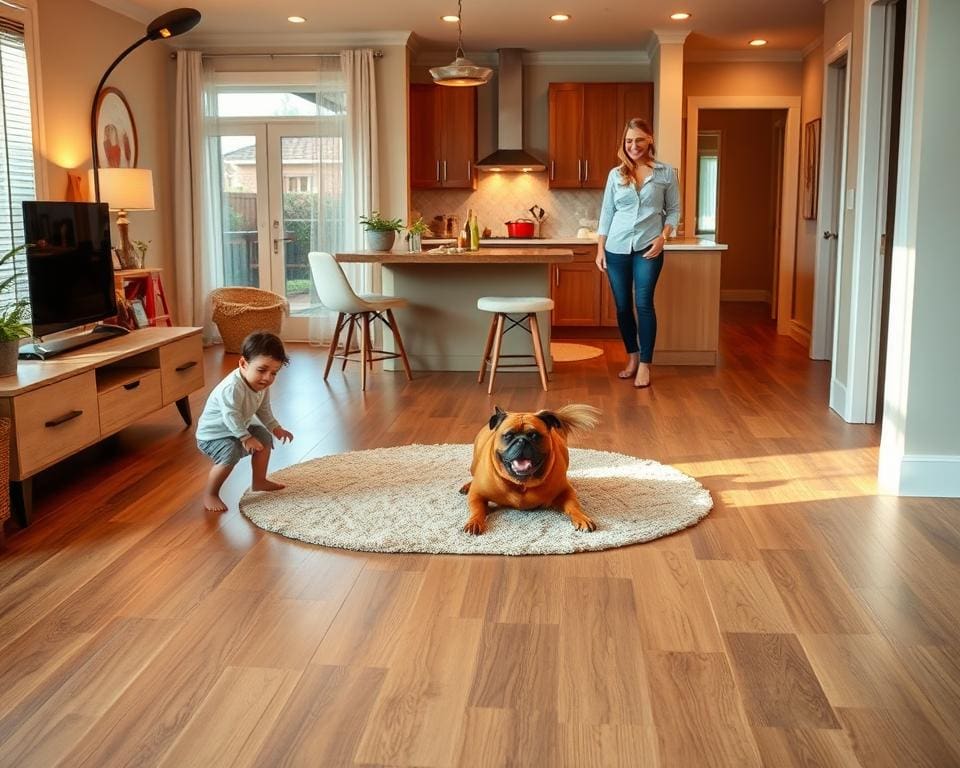

Choosing the best floors for busy homes means balancing toughness with style. In the UK many families face wet winters, muddy shoes and high footfall. A busy household commonly includes children, pets and frequent spills, so the right flooring must be resilient, safe and simple to clean.
When we talk about durable flooring for families, key performance points matter: wear resistance, scratch and dent resistance, waterproofing and slip resistance. Stain resistance and ease of cleaning are crucial, as are acoustic comfort, thermal feel underfoot, and the long‑term cost including lifespan and replacement expenses.
Some options stand out as low-maintenance flooring UK buyers favour. Vinyl and luxury vinyl tile and porcelain tile often win for durability and ease of care. Engineered wood and higher-quality laminates deliver warmth and a real‑wood look, but need more careful upkeep. Carpet still has a place for comfort, yet it usually requires specialised stain‑resistant fibres or carpet tiles to suit active homes.
This article aims to guide you from practical needs to design choices, helping match flooring types to room use, family habits and budget. The goal is to help homeowners make a confident choice that reduces hassle, protects investment and fits modern UK lifestyles.
What flooring options are best for busy households?
Busy homes need floors that balance style with real-world performance. This short guide explores key factors to weigh when choosing between hard and soft surfaces, highlighting how flooring durability and lifecycle cost of flooring UK affect long-term satisfaction.
Durability and wear resistance
Look for AC ratings on laminate and LVT. AC4–AC5 or high-wear LVT make sense in halls and kitchens where traffic is heavy. Porcelain and ceramic tile offer extreme wear resistance and high Mohs hardness, so they suit wet zones and busy corridors. Engineered wood performs by veneer species and thickness. European oak veneers with thicker top layers resist wear better than softer species. For carpet, pile density and twist determine life; low-pile and looped constructions last longer in high-use areas.
Scratch and dent performance for active families
LVT and quality vinyl use a protective wear layer to shield against scuffs. Aim for wear layers of 0.3mm or more for longer protection. Laminate benefits from a dense HDF core that resists dents, though edges and joints can chip under impact. Solid and engineered wood dent more easily when softer species are used. Choose hard species and durable finishes such as UV-cured polyurethane to cut visible marks.
Suitability for pets and children
Pet-friendly flooring will be waterproof and scratch-resistant. LVT, porcelain and some laminates handle muddy paws and spills with ease. Textured finishes and tiles with suitable R-ratings reduce slips for energetic children and pets. Hard floors are easier to keep hypoallergenic and limit dust mite build-up compared with soft furnishings. For carpeted zones, choose stain-resistant treatments and solution-dyed fibres or modular carpet tiles for simple spot replacement.
Long-term cost and replacement considerations
Total cost of ownership combines purchase, installation, upkeep and lifespan. Typical lifespans vary: porcelain/ceramic often exceed 30 years, good LVT lasts 15–25 years, laminate 10–25 years, engineered wood 20–50 years and carpet 5–15 years. Replacement needs differ: tiles and LVT may allow spot repairs but matching can be tricky. Engineered wood can be sanded if the veneer is thick; laminate normally needs full replacement when badly damaged. Factor in lifecycle cost of flooring UK when planning budgets.
- Protective steps: use felt pads, heavy-duty mats and rugs in impact zones to boost family-proof flooring performance.
- Sustainability: seek FSC timber and low-VOC finishes to lower environmental and health costs over a floor’s life.
Practical flooring types for busy homes: comparison and care
Choosing flooring for a lively household means balancing looks, resilience and upkeep. This short guide compares common options and gives clear care tips so you can pick a practical surface that still feels like home.
Laminate flooring offers great value and a wide range of wood and stone visuals. It scores high on AC wear ratings and many DIYers favour click-fit installation from brands such as Quick-Step and Pergo.
Be mindful that laminate joints can swell if water sits on them. Wipe spills immediately, use manufacturer-approved cleaners and fit a quality underlay to reduce impact noise. For kitchens and wet zones, consider LVT waterproof flooring or tile instead.
Vinyl and LVT bring true waterproof performance paired with realistic finishes. Luxury vinyl tile with a 0.3–0.5mm wear layer withstands heavy domestic use and resists scratches and stains well.
Keep seams sealed in wet areas and clean with a damp mop using a neutral pH cleaner. Watch for low-VOC, phthalate-free options when evaluating environmental claims. LVT waterproof flooring suits busy family rooms and utility spaces.
Engineered wood gives authentic timber character while handling humidity changes better than solid planks. Prefinished UV-cured lacquers add surface protection preferred by many households.
Thicker veneers, around 3–6mm, allow future sanding and re-finishing. Use soft-bristle vacuums and damp mops with recommended cleaners. For those seeking engineered wood for families, pick boards with robust finishes and solid warranties.
Ceramic and porcelain tiles are highly durable. Porcelain is denser and less porous, so it excels in busy or wet zones and on external thresholds where frost can be an issue.
Protect grout with periodic sealing or choose epoxy grout where heavy cleaning is common. Select textured tiles or those with a suitable PTV rating to reduce slip risk. Regular sweeping and pH-neutral cleaning support long-term porcelain tile care.
Carpet alternatives and stain-resistant options include modular carpet tiles for easy patching, natural fibres like sisal for texture and rubber flooring for utility areas.
For soft floors that cope with spills, solution-dyed nylon or polyester with stain protection performs best. Use low-pile, high-density constructions and entry mats to limit soil. Regular vacuuming and prompt spot treatment extend life in line with flooring maintenance UK practices.
- For wet zones: choose LVT waterproof flooring or porcelain.
- For budgets: laminate offers design variety but watch moisture risks.
- For longevity and repairability: pick engineered wood with thicker veneers.
- For low fuss: stain-resistant carpet and modular tiles ease future upkeep.
Choosing the right floor: installation, lifestyle and style guidance
When choosing flooring for busy households, match material to how each room is used. High-traffic zones such as hallways, kitchens and living rooms do best with waterproof, scratch-resistant surfaces like LVT, porcelain tile or hard-wearing laminate. Bedrooms and playrooms can favour warmer options—carpet or engineered wood with washable area rugs—while keeping allergy needs in mind.
Practical installation matters. For complex patterns, wet-area sealing or seamless transitions, hire experienced fitters and follow flooring installation tips UK to protect warranties. Ensure subfloors are level, dry and sound; moisture barriers, screed or levelling compound are often required. Plan transitions and thresholds to avoid trip hazards and to allow prams or wheelchairs to pass smoothly.
Consider underfloor heating flooring choices early in the design. Engineered wood and many porcelain tiles work well with underfloor systems, but always check manufacturer guidance on thermal expansion and adhesives. Choose mid-tone colours or patterned finishes and textured surfaces to hide dirt and scuffs; embossed or wire-brushed boards add grip and disguise wear without sacrificing style.
Budget for quality underlay, fitting and seals—these extend life more than the cheapest board. Review warranties for wear and water damage and get installer guarantees in writing. Use this final checklist when matching floor to lifestyle: is it water-tolerant where needed, scratch-resistant, slip-safe for children, easy to clean and aligned with your aesthetic? The best floors for family homes balance durability and design so your house remains practical and inviting.