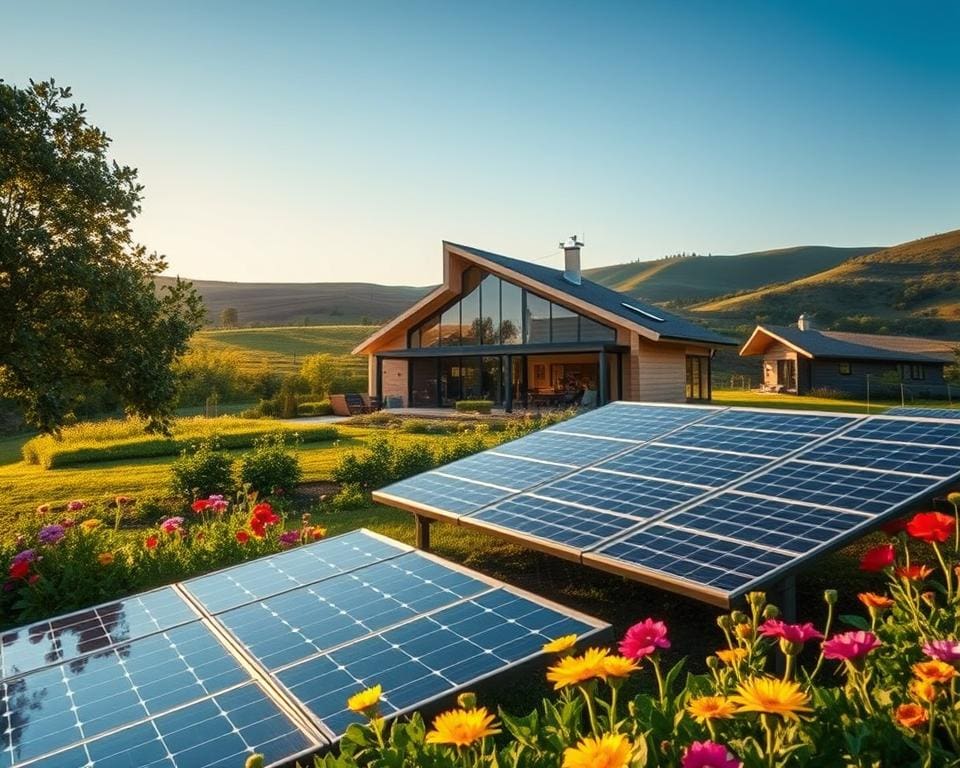

What makes a home truly sustainable? For readers across the UK, that question blends practical choices with big-picture goals. A sustainable home balances low environmental impact, resilience to changing weather, good indoor health and long-term affordability. This is the foundation of sustainable homes UK and a useful way into green homes and eco-friendly houses.
National targets such as Net Zero by 2050 and the pressure of rising energy bills are reshaping how we think about low-carbon homes. Households account for a significant share of the country’s emissions, so improving insulation, heating and ventilation can cut bills and carbon at once. Demand for healthier indoor spaces has also risen, pushing sustainable living UK from niche into mainstream.
Sustainability is holistic. It covers embodied carbon in materials and construction, operational carbon from energy and water use, circularity through reuse and recycling, and site impact on biodiversity and drainage. Equally important is the lived experience: thermal comfort, daylight and indoor air quality that make a home pleasant to live in.
This article promises practical outcomes. Expect clear design principles, material choices, and certification to aim for, alongside lifestyle changes that reduce running costs and shrink your carbon footprint. Small steps—from draught-proofing and better loft insulation to adding solar panels—can transform any home into a more efficient, low-carbon home while also improving wellbeing.
What makes a home truly sustainable?
To build or retrofit a home that lasts, we need a clear, practical definition rooted in UK realities. A sustainable home minimises environmental impact across its whole life-cycle while providing safe, comfortable, affordable living and supporting local ecosystems. Regional factors such as a cool temperate climate, planning rules and conservation areas shape the choices we make.
Defining sustainability for modern UK homes
Start with lifecycle thinking: consider construction, operation, maintenance, adaptation and eventual deconstruction or reuse. That shift keeps decisions focused on long-term carbon and cost, not quick fixes.
For older or listed buildings, sensitive retrofit is key. Works should preserve character while improving performance. That approach helps meet local planning constraints without sacrificing energy or comfort gains.
Core principles: energy, water, materials and health
Energy must be the first priority. A fabric-first strategy — high-quality insulation, airtightness and passive solar measures — cuts heat loss before adding low-carbon systems like heat pumps or solar PV. Whole-house heat loss calculations and smart controls reduce operational carbon and bills.
Water use is another pillar. Rainwater harvesting, low-flow fittings and greywater reuse reduce mains demand. Sustainable drainage systems lower flood risk and help create water-efficient homes that suit urban and rural sites.
Material choices shape embodied carbon. Favoured options include responsibly sourced timber, hempcrete and low-carbon concrete. Use FSC-certified timber, recycled content and low-VOC finishes. Life-cycle assessment guides robust decisions that limit harm and boost durability.
Health and wellbeing must be integrated. Good ventilation, low-emission materials, daylight and stable thermal conditions reduce damp and mould risks. These measures create healthy homes that support occupants’ comfort and long-term wellbeing.
Measurable standards and certifications to look for
Seek proven standards to verify performance. Passivhaus UK and EnerPHit set strict targets for airtightness and low-energy use, useful for both new builds and retrofits. BREEAM Domestic Refurbishment evaluates wider sustainability factors such as materials and ecology.
Regulatory tools like SAP and EPCs provide baseline energy ratings but have limits. Use them alongside more rigorous assessments. Home Quality Mark, NHBC and TrustMark offer consumer protection and build-quality assurance.
Design teams should reference LETI targets and RIBA guidance when setting low-carbon and embodied-carbon goals. Aligning with these frameworks helps projects meet ambitious energy efficiency standards and delivers measurable improvement over time.
Design and orientation for energy efficiency
Good design turns a house into a low-energy home. Thoughtful orientation, careful window placement and robust fabric performance work together to cut bills and improve comfort. The following points outline practical strategies for new builds and sensitive retrofits in the UK.
Passive design strategies: insulation, glazing and thermal mass
Adopt a fabric-first approach by prioritising high levels of insulation in walls, roofs and floors. Continuous insulation helps avoid thermal bridging and meets rising insulation standards preferred by practitioners.
Choose high-performance windows with low-energy glazing, such as argon-filled double or triple glazed units and low-E coatings. Size and place glazing to balance heat loss against useful solar gain.
Use thermal mass where appropriate. Concrete or masonry elements can smooth temperature swings in well-insulated homes. Be cautious in retrofits where added mass may be limited and plan internal stores carefully.
Solar orientation and natural daylighting
Orient living spaces to maximise passive solar gain in winter, with larger glazing to the south and smaller openings to the north. Combine this with shading tactics to avoid summer overheating.
Employ natural daylighting measures such as top-lighting, light shelves and room zoning to reduce reliance on artificial lights and to boost wellbeing. Manage window-to-wall ratios to limit excess heat in a warming climate.
Simple summer controls include external shading, brise-soleil and deciduous planting. Pair these with ventilation and thermal mass to reduce peak indoor temperatures.
Ventilation and airtightness balanced for health
Airtight construction reduces heat loss but demands planned ventilation to protect indoor air quality. Aim for airtightness UK targets that push beyond basic compliance for best results.
Choose ventilation suited to the building’s tightness. Natural ventilation can work for moderate airtightness levels. For highly airtight homes, mechanical ventilation with heat recovery, MVHR, retains warmth while supplying fresh air.
Decentralised MVHR systems offer a route for phased retrofit projects. All systems require correct installation, thorough commissioning and regular filter changes to deliver health and performance benefits.
- Follow best-practice U-value guidance and aim below minimum regulations where feasible.
- Combine low-energy glazing with shading and thermal mass to moderate seasons.
- Prioritise commissioning of MVHR and test airtightness to secure intended savings.
Eco-friendly materials and circular building practices
Choosing the right materials reshapes a building’s future. This short guide highlights low-impact options, ways to keep structures in use, and steps to make supply chains cleaner and fairer for UK projects.
Low embodied carbon materials matter from the first foundations to the final coat of paint. Embodied carbon is the greenhouse gas emitted during manufacture, transport and demolition. RIBA and LETI recommend setting clear carbon budgets for major works and using LCAs and EPDs to compare products.
Choose responsibly sourced timber frames, insulated timber panels, straw bale or hempcrete where appropriate. Low‑carbon concrete alternatives cut emissions for loadbearing elements. For finishes, pick paints and adhesives with low VOCs and natural insulation such as sheep’s wool or cellulose to reduce replacement and maintenance over time.
Low‑impact materials and embodied carbon considerations
- Use quantified LCAs and EPDs to benchmark materials.
- Prioritise durable finishes to reduce lifecycle replacement.
- Specify chain-of-custody certification, for example FSC for timber.
Reuse, retrofit and adaptive reuse of buildings
Retaining existing fabric keeps embodied carbon in place and preserves local character in towns and cities. Retrofit UK projects can be phased to spread cost and disruption. Start with fabric upgrades such as insulation and draught‑proofing before replacing heating systems with heat pumps.
Adaptive reuse transforms redundant offices, barns or factories into homes and community spaces. Structural surveys and heritage-sensitive design are central when working with listed buildings. Funding from local authority schemes and energy-efficiency incentives can help close finance gaps for deep retrofit work.
Local sourcing and supply‑chain transparency
Local materials and labour cut transport emissions, support regional businesses and improve traceability. Ask suppliers for clear reporting on recycled materials content, EPDs and social impacts. Emerging digital tools help compare embodied carbon and social performance across options.
- Prioritise recycled materials where performance allows.
- Demand supply‑chain transparency when tendering for works.
- Work with local mills and manufacturers to shorten lead times.
Operational sustainability: systems, maintenance and lifestyle
Low operational carbon starts with well-chosen systems and careful installation. In the UK, prioritise decarbonised heating such as air-source and ground-source heat pumps UK, paired with low-temperature distribution like underfloor heating or oversized radiators. Rooftop solar PV and battery storage work together to raise self-consumption, and solar thermal can still play a role for supplementary hot water where suitable.
Smart home controls and energy management help turn good hardware into great performance. Smart thermostats, zoning, smart meters and simple energy dashboards reduce waste and shift consumption away from peak tariffs. Consider low-carbon electricity tariffs and plan for home EV chargers so the property can support vehicle electrification without costly retrofit.
Longevity depends on proper commissioning and home maintenance for efficiency. Regular MVHR filter changes, insulation checks and heating optimisation preserve comfort and reduce running costs. Choose repairable components and document services so future upgrades are straightforward; higher upfront investment in fabric and sustainable home systems usually reduces lifecycle costs and boosts asset value.
Technical measures succeed when combined with behavioural changes energy saving and community action. Simple habits — efficient appliance use, line-drying, rainwater reuse and installing water-saving appliances — cut demand significantly. Use energy monitoring and post-occupancy evaluation to learn what works, and treat sustainability as an ongoing process of retrofit, upgrade and incremental improvement for healthy, resilient homes.