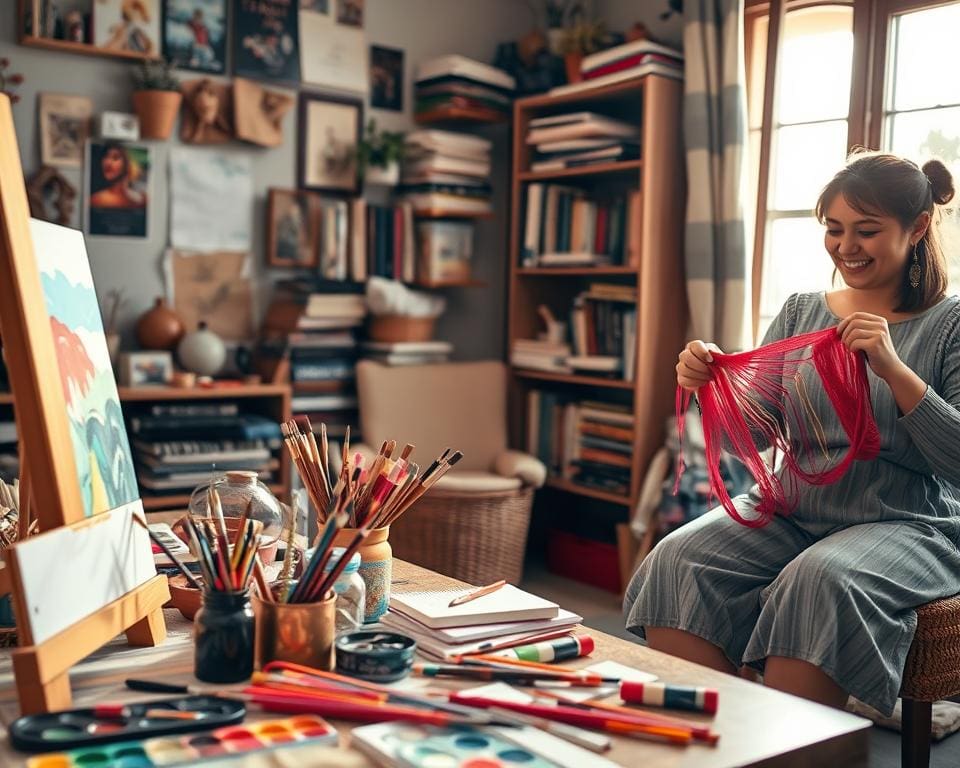

Creative hobbies stretch from painting and pottery to music, dance, creative writing, cooking and gardening. They are simple UK creative pastimes that anyone can adapt to time, budget and skill. Even ten minutes of sketching or a weekly community choir can bring balance to a busy schedule.
Evidence from bodies such as the NHS and Arts Council England links arts participation to lower anxiety, reduced depression and higher life satisfaction. These findings explain why everyday creativity is more than a pastime: it is a practical route to wellbeing through hobbies and lasting purpose.
Creative hobbies benefits include better mood, clearer thinking and a chance to learn new skills. Activities can be solitary, like journalling, or social, like pottery workshops. Free resources such as YouTube tutorials and local libraries make starting easy, while courses on FutureLearn and community centres offer structured learning.
This article will explore mental and emotional benefits, social and cognitive advantages, and practical tips for making creativity a regular habit. For a quick guide to activities and how to begin, see this practical resource on creative hobbies for a balanced life: creative hobbies for a balanced life.
How can creative hobbies enrich daily life?
Short, steady creative sessions can shift the shape of a typical week. A practice of 10–15 minutes each day builds skill and habit, supports neuroplasticity and helps stabilise mood. Arts Council England and NHS guidance recommend creative activity as a useful complement to clinical care, noting benefits such as reduced rumination, better sleep and stronger feelings of purpose.
Enhancing mental wellbeing through regular creative practice
Define regular practice as brief, consistent efforts that add up. Sketching for 15 minutes each morning or ten minutes of songwriting in the evening offers clear returns. Routine activity supports neuroplastic change, improves mood regulation and creates lasting creative practice wellbeing.
Practical outcomes are simple to spot. People report less repetitive negative thinking, steadier sleep patterns and a stronger sense of competence after forming daily creative habits. Tracking short sessions makes progress visible and keeps motivation high.
Building resilience and emotional intelligence with creative outlets
Creative tasks let people explore feelings safely. Making art or joining a drama workshop encourages perspective-taking and helps to externalise emotions. These processes support resilience through hobbies and sharpen emotional intelligence and creativity.
Mastering new skills teaches coping by reframing mistakes as learning. Group settings such as community theatres, library writing groups and programmes run by Mind or ArtsMinds provide feedback and social modelling. Such environments build empathy, self-awareness and stronger coping strategies.
Practical examples of everyday creative habits
Micro-habits fit busy lives. Try morning journalling to set intentions, a lunchtime doodle or a short photography walk, and evening baking to unwind. Weekends can include upcycling, sewing or a simple DIY craft.
- Low-cost options: colouring books, smartphone apps like GarageBand and free tutorials on YouTube.
- Motivation tools: track time spent, set small skill goals and join online communities or local adult learning centres.
- Local context: festivals and UK arts participation schemes often list accessible classes and short courses for beginners.
Mental and emotional benefits of creative hobbies
Creative hobbies offer practical routes to calmer minds and steadier moods. Short, focused sessions of painting, knitting or woodwork can induce meditative states that lower heart rate and reduce cortisol. NHS guidance notes that art-based approaches and structured creative practice can complement therapy and help manage symptoms of anxiety.
Reducing stress and anxiety with mindful creative activities
Activities that combine gentle repetition and attention—watercolour washes, mindful colouring or nature journalling—interrupt anxious rumination. Try twenty minutes of mindful colouring to break a spiral of worry, or a guided painting session to focus on sensation and colour. Research shows that art therapy and mindful creativity support lower anxiety scores and improved emotional regulation.
Local community workshops and green-space sketching encourage grounding through sensory observation. For practical ideas and class listings, see a short guide to creative practice at creative hobbies for a balanced life, which highlights activities that work well for stress reduction hobbies.
Boosting mood and motivation through achievement and flow
Flow state creativity describes a deeply focused condition where time feels altered and effort becomes seamless. When a project matches your skill level, flow appears and intrinsic motivation rises. Completing small creative tasks generates a reliable sense of achievement and reinforces the habit of returning to creative work.
- Finish a simple craft to gain confidence.
- Play a short piece at an open mic to feel accomplished.
- Publish a micro‑story on a personal blog to build momentum.
These steps build self-efficacy and encourage regular engagement with wellbeing hobbies UK offers, creating a loop of reward and renewed interest.
How creative expression aids emotional processing
Creative expression gives a non-verbal route to complex feelings when words fall short. Visual art, music and movement let you externalise emotions, study them at a distance and reframe painful material. Therapists across the UK use art and music therapy to help people process grief and trauma.
For safe exploration, keep a short reflective journal alongside artworks, use prompts such as “paint a colour that represents today”, and work within a supportive group or with a trained facilitator. These practices encourage emotional processing through art without forcing a narrative, making creative activities anxiety relief and emotional care accessible to many.
Social and cognitive advantages to everyday creativity
Creative activities open doors to stronger social ties and sharper thinking. Taking part in choirs run by local churches, joining an am-dram society or attending a pottery class builds belonging and shared purpose. These creative social benefits reduce loneliness and create networks of practical support.
Group settings such as community arts clubs and Meetup listings encourage teamwork, constructive feedback and chances to perform or exhibit work. Arts charities and council-run programmes often reach marginalised groups, which boosts social inclusion and civic engagement. If you want a quick primer on why hobbies matter, visit this overview.
Strengthening social connections via group hobbies and clubs
Group hobbies UK range from photography clubs to community choirs and theatre groups. Regular rehearsals or sessions foster dependable routines and shared goals. Members trade skills, offer feedback and celebrate progress together.
Community arts clubs create safe spaces for expression. They help people from different backgrounds connect through projects and local festivals. These interactions build social capital and expand friendship networks.
Enhancing cognitive function: memory, problem‑solving and focus
Creative practice activates several brain systems at once. Learning an instrument calls on auditory memory; drawing improves visuospatial ability. Planning a play or editing a zine exercises executive function and attention.
Research links musical training and bilingualism to better working memory and slower cognitive ageing. Short daily tasks—crosswords, timed writing prompts or instrument practice—sharpen problem‑solving and sustain neuroplasticity.
Opportunities for lifelong learning and skill development
Creative hobbies offer clear pathways for lifelong learning creative skills. Adult education centres such as City Lit, online courses from FutureLearn and community workshops give structured progression. Short certificates and portfolio work can lead to part‑time roles or volunteer leadership.
Set SMART goals, try a few pursuits, then focus on one or two to deepen skill. Use local libraries, community centres and festivals like the Brighton Festival or Edinburgh Festival Fringe to find mentors and showcase work. Volunteering to run a workshop builds experience that employers value.
Practical ways to introduce creative hobbies into daily routines
Start small and be specific: allocate 10–20 minutes each day or two 45–60 minute sessions each week to introduce creative hobbies into your life. Use habit stacking — for example, sketch for ten minutes after breakfast — and add calendar reminders or alarms to build consistency. These simple steps make it easier to start a hobby daily routine without overwhelming other commitments.
Choose low‑barrier beginner creative activities that fit your budget and space. Sketching needs only pencils and paper; photography can begin with a smartphone; journalling requires a notebook; baking uses your kitchen; knitting needs a starter kit; and upcycling furniture can start with basic tools. Many local libraries, council adult learning classes and community maker spaces offer free or low‑cost resources across the UK.
Create a compact, inviting workspace even in a small flat: a portable art box, a foldaway table or a single drawer for supplies works well. Use natural light and a plant to lift mood. Overcome barriers by embracing micro‑sessions for time constraints, buying second‑hand tools from charity shops such as Oxfam to reduce cost, and following guided tutorials if confidence is low. These creative habit tips UK help make practice practical and affordable.
Build social and accountability structures to sustain progress. Join a local community centre class or Meetup group, find a creativity buddy, or take part in online challenges on Instagram and Facebook groups. Track progress with a simple habit tracker, an analogue notebook or apps like Streaks, and keep a wellbeing log to note mood changes. These measures help you incorporate creativity daily and turn short experiments into lasting, rewarding habits.