How does Werbonia Farm create natural lip balm with beeswax? This article opens by exploring a product that sits at the heart of the Werbonia Farm lip balm collection: a handmade beeswax lip balm designed for everyday use. The brand’s beeswax lip balm is presented on werboniafarm.com as a flagship item, and our review looks beyond the packaging to examine provenance, formulation and sustainable practices.
For many people in the United Kingdom a natural lip balm with beeswax is more than a seasonal fix. A well-made beeswax lip balm forms a long lasting moisture barrier that soothes dry and chapped lips while locking in nourishment. That barrier effect, combined with gentle oils, makes this style of balm useful for sensitive skin and daily protection.
The UK market now expects transparency and small batch natural skincare UK credentials. This introduction sets out the structure of the piece: we will cover Werbonia Farm’s origins and ethos, the source and quality of beeswax, ingredient choices such as coconut and olive oil lip balm formulas, the handmade production steps, testing for sensitivity, and where to buy from the Werbonia Farm lip balm collection.
How does Werbonia Farm create natural lip balm with beeswax?
Werbonia Farm crafts a handmade lip balm from Werbonia Farm with a clear farm-to-skin promise. The team centres artisanal values, traceable ingredients and simple labels so customers know where each component comes from. This approach builds trust and celebrates small-scale British production.
Origins and ethos of Werbonia Farm
The farm sits within a network of small holdings across the UK. It began as a family project with a focus on biodiversity and local sourcing. Every batch reflects an ethic of restraint: minimal ingredients chosen for efficacy and gentleness.
Source and quality of beeswax used
Beeswax is sourced from trusted British beekeepers who practise ethical hive management. Wax is filtered and kept as close to its natural state as possible to avoid residues. High-quality beeswax adds emollient, skin-friendly properties and forms a breathable protective layer.
Ingredient selection: coconut and olive oil lip balm formula and other botanicals
The coconut and olive oil lip balm formula pairs extra-virgin olive oil with a gentle coconut oil variant for balanced care. Olive oil brings rich fatty acids, coconut oil aids quick absorption and beeswax seals moisture in. Small additions such as vitamin E, calendula or chamomile infusions support soothing and repair.
Small batch natural skincare UK approach and sustainability practices
Production runs are deliberately small to keep each tin fresh and quality controlled. Werbonia Farm prefers local suppliers when possible to cut transport and support regional growers. Packaging choices aim for recyclable or compostable materials and reduced plastic use to appeal to eco-conscious shoppers.
How the formula addresses dry and chapped lips with a long lasting moisture barrier for lips
The recipe is balanced so the balm glides on and melts at skin temperature while staying put during daily activities. Beeswax builds a breathable occlusive layer, oils replenish lip lipids and botanicals calm irritation. The result is a protective balm for dry and chapped lips that works in the face of wind and cold.
Handmade process and formulation details for gentle lip care
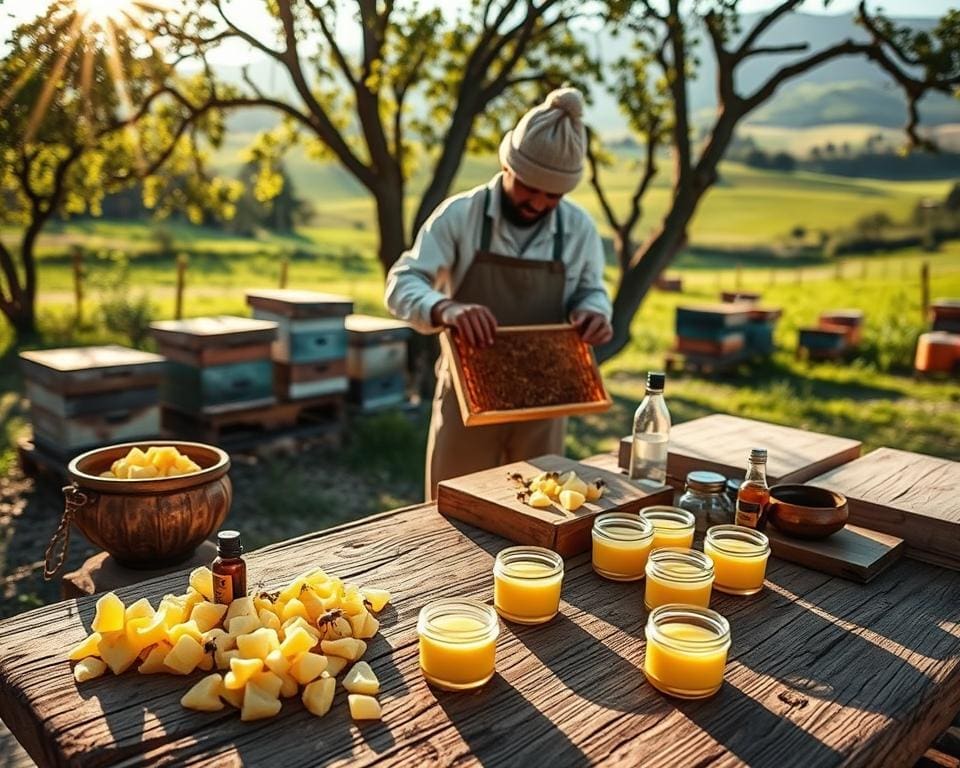
Making a nourishing balm begins with a tidy workspace and precise weighing. At Werbonia Farm the team warms beeswax slowly in a bain-marie to protect its antioxidants. Carrier oils such as olive and coconut are heated gently and folded in once the wax has liquefied. Small-batch pouring reduces oxygen exposure and helps keep quality consistent across the Werbonia Farm lip balm collection.
Step-by-step production: melting, mixing and pouring
Clear procedures guide each run. Utensils and tins are sanitised, ingredients are weighed, and the beeswax is melted at a controlled pace. Oils and botanical infusions are added off heat to preserve delicate compounds. The mixture is stirred gently until homogeneous, then poured warm into pre-prepared tins or tubes for an even finish.
Temperatures, ratios and texture control for a nourishing balm for everyday use
Formulators aim for balanced ratios. A typical profile uses roughly 20–30% beeswax, 60–70% carrier oils and 1–5% butters or additives. Beeswax melts around 62–65°C, so oils are warmed to similar temperatures without scorching. Pouring at a slightly lower temperature avoids sinkage and yields a smooth surface.
Adjusting those proportions changes texture. More wax yields a firmer beeswax lip balm suited to cold weather. More oil produces a softer, glide-rich balm that works well as a nourishing balm for everyday use throughout UK seasons.
Testing for sensitivity and creating gentle lip care for sensitive skin
Every formula goes through patch testing on a small panel of volunteers or staff. Reactions are monitored for 24–72 hours. The brand selects hypoallergenic oils and keeps essential oil levels low to limit sensitisation. Chamomile or calendula-infused oils are used where soothing is needed.
Labels list allergens clearly, and guidance is provided for customers with nut sensitivities. This careful approach supports a product line that aims to be gentle lip care for sensitive skin.
Packing, labelling and producing the Werbonia Farm lip balm collection in small batches
Packing choices favour sustainability: recyclable aluminium tins, paperboard push-up tubes and zero-plastic options. Each item carries an ingredient list, batch number and best-before date for traceability. Small-batch production allows close quality control and fresh, seasonal runs within the Werbonia Farm lip balm collection.
Compliance with UK cosmetic basics is observed, with INCI names where required and accessible safety information for consumers. This craft-led process keeps the focus on a reliable, handmade lip balm from Werbonia Farm that combines care, clarity and provenance.
Sustainability, benefits and where to buy beeswax lip balm
Werbonia Farm’s approach to sustainable lip care products centres on local sourcing and ethical beekeeping. By using beeswax harvested close to the farm where possible, the brand supports biodiversity and reduces transport emissions. Small-batch production lowers waste and avoids excess inventory, while recyclable packaging and clear ingredient lists reflect a commitment to transparency that resonates with UK shoppers seeking natural lip care.
Beeswax offers clear ecological advantages over petroleum-derived alternatives: it is biodegradable and a natural by-product of managed beekeeping when done responsibly. The beeswax lip balm on werboniafarm.com combines this protective balm for dry and chapped lips with coconut and olive oils to create a long‑lasting moisture barrier. Gentle botanicals soothe irritation, making the balm suitable for sensitive skin and everyday use for commuters, outdoor workers and anyone exposed to wind or central heating.
The sensory experience is deliberately simple and refined — a subtle natural scent, smooth application and a non‑greasy finish when ratios are optimised. Customers can find the full Werbonia Farm lip balm collection on werboniafarm.com, and the product also appears at independent UK farm shops, local farmers’ markets and ethical e‑commerce platforms. Look for product pages that show full ingredient lists, batch information and customer reviews, and check postage options and returns when ordering within the United Kingdom.
Trying a pot from Werbonia Farm illustrates how small batch natural skincare UK can combine effectiveness with environmental care. Choose fragrance‑free options for very sensitive lips and favour clear sourcing details to support artisanal brands that prioritise ingredient integrity and stewardship of the countryside.