
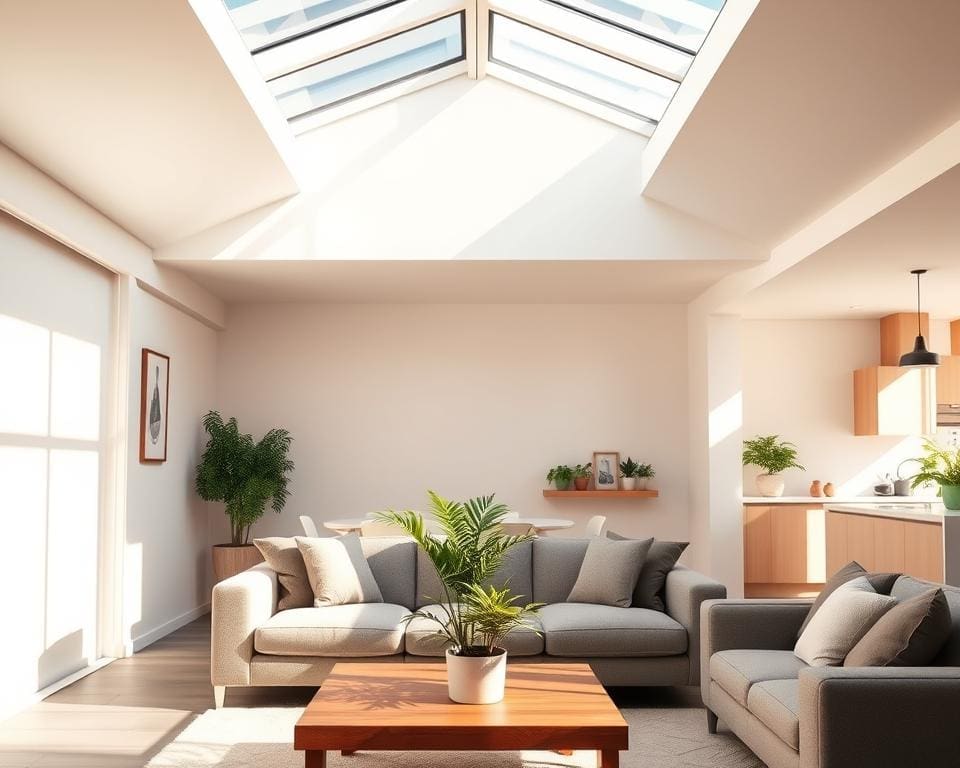
Skylights are roof openings fitted with glazing that bring daylight into rooms from above. Their core purpose is simple: to admit skylights natural light where wall windows cannot, improving atmosphere, reducing artificial lighting and lifting mood in living spaces and loft conversions.
At a basic level, skylights capture two kinds of light — direct solar radiation and sky-diffuse light — acting like vertical windows to the sky. The form of a skylight, whether flat, pitched, domed or tubular, shapes how much light enters and the quality of that light across a room.
Measured impacts are clear and practical. Daylighting skylights can raise indoor illuminance by several hundred lux in central rooms, cutting daytime reliance on electric lights and delivering tangible benefits of skylights for energy use. Performance varies with size, glazing and orientation, so a well-placed unit makes a big difference.
In the UK, with its lower sun angles and changeable weather, careful design matters. Even in autumn and winter, thoughtful skylight lighting UK choices—correct glazing and placement—can deliver useful daylight gains for north-facing rooms, deep-plan houses and attic conversions.
This article will explain how skylights affect light quality, compare types and glazing options, offer design guidance to maximise daylighting skylights, and cover practical considerations for installation and maintenance across British homes.
How do skylights enhance natural lighting indoors?
Skylights transform interiors by bringing daylight deeper into a home. They change the mood, reveal textures and lower reliance on electric lights. Thoughtful placement and glazing turn simple roof openings into a controlled source of comfortable light.
Direct daylighting: bringing the sun into interior spaces
Direct daylight from a well-sited opening creates bright pools that highlight architectural details and boost contrast for tasks. A direct sunlight skylight produces dynamic patterns that shift with time and season, making kitchens and living rooms feel lively.
To manage heat and glare, designers use orientated positioning, overhangs and selective glazing. South-facing installs catch winter light while limiting summer gains when shaded correctly.
Diffuse light and glare control: glazing and diffusers
Sky-diffuse radiation yields soft, even illumination that reduces harsh shadows and improves comfort in work and living zones. Diffuse skylight glazing such as frosted, opal or prismatic panels spreads light gently across a room.
Brands like VELUX, Fakro and Rooflite offer options with solar control and anti-glare finishes. Combine internal blinds, external shades or smart glazing to enhance skylight glare control for south- or west-facing façades.
Light distribution: improving illumination for deeper rooms
Skylights help solve the problem of dark, deep-plan spaces by introducing light from above. Multiple openings, larger glazing areas and tubular skylights extend usable daylight further into corridors and interior rooms.
Reflective ceiling finishes and light tunnels boost daylight distribution and uniformity. Better spatial uniformity reduces the need for artificial lighting and creates more visually comfortable interiors.
Psychological and health benefits of increased daylight
Regular exposure to natural light supports circadian rhythms and lifts mood. Daylight benefits mental health by improving sleep patterns and reducing symptoms of seasonal affective disorder in dim winter months.
Homes with good skylight daylighting often report higher productivity and appeal. Bright, naturally lit spaces feel larger and attract buyers, increasing a property’s market value in the UK.
Types of skylights and their lighting effects
Choosing among the various types of skylights shapes how daylight enters and performs in a room. This short guide explains the main options so you can match light quality to use, comfort and energy goals while meeting UK Building Regulations.
Fixed skylights
Fixed skylights lighting gives steady, uninterrupted daylight with very low maintenance. Non-opening glazed units avoid drafts and suit living rooms, stairwells and loft conversions where ventilation comes from other sources.
For thermal performance, choose double- or triple-glazed units with argon fill and warm-edge spacers. Trusted brands such as VELUX and Fakro supply certified energy-efficient fixed units for the UK market.
Ventilating skylights
Ventilating skylights bring the same daylight gains as fixed units while adding natural airflow. They are ideal for kitchens, bathrooms and loft bedrooms where warm air, humidity and odours need removing.
Options include manual or electric opening, remote control, rain sensors and solar power. Integrated blinds and automated dampers help maintain comfort throughout the day.
Tubular skylights
Tubular skylight benefits are most obvious in compact or windowless spaces. Also called light tubes or sun tunnels, they channel light through a reflective tube from a small rooftop dome into bathrooms, corridors and cupboards.
They deliver focused, evenly diffused light while limiting heat gain and loss. Tubular units are often cheaper to install in retrofit projects than full-size rooflights.
Glazing options
Skylight glazing options affect light quantity, glare and thermal behaviour. Clear glass maximises transmission and a crisp view of the sky but can increase glare and solar gain.
Frosted or opal glazing diffuses light and reduces direct glare, useful in bathrooms and creative studios. A low-iron glass skylight removes the greenish tint of ordinary glass, giving truer colour rendition for galleries and art rooms.
Coated glass, such as low-emissivity or spectrally selective coatings, balances daylight with thermal control. Double- and triple-glazed units with low-E coatings improve U-values and help meet energy standards.
Selecting the right combination of types of skylights and glazing should reflect room use, orientation and budget. Thoughtful specification delivers bright, comfortable interiors with long-term savings and clear visual benefits.
Design considerations to maximise natural light from skylights
Good design makes skylights feel like a natural part of a room. Thoughtful choices on placement, proportion and interior details help control glare, limit heat loss and send daylight into deeper spaces. The notes below offer practical steps to lift brightness while keeping comfort and efficiency in balance.
Placement and orientation
Align skylight placement with sun paths to capture the right light for the season. In the UK, south-facing rooflights catch more winter sun, while north-facing units give soft, even daylight and reduce glare. Check roof pitch, neighbouring buildings and trees on site before final siting.
Skylight size and proportion
Decide skylight size and proportion by room use and desired daylight levels. As a rule, aim for a modest percentage of floor area to keep heat loss in check; larger glazed areas need better glazing specs. Linear rooflights spread light across corridors and open-plan zones while domed shapes focus it in one place.
Light shelves and reflectors
Fit light shelves skylights and reflective baffles to bounce daylight deeper into interiors. Horizontal shelves near the opening reduce contrast and channel light across ceilings. Choose pale, semi-matte finishes on walls and ceilings to improve distribution without creating glare.
Integration with daylighting strategies
Combine skylights with windows, clerestory glazing and open plans for a balanced scheme. Daylight integration windows clerestory work well with rooflights to admit low-angle sun and preserve views while skylights brighten central zones. Use sensors and dimmable LEDs so artificial lighting blends smoothly with natural light.
Practical checks and compliance
Survey site obstructions and model sun paths with tools such as SketchUp or IESVE to refine placement. Specify glazing for thermal performance and condensation control. Remember to meet UK building regulations on energy and ventilation when choosing opening units and detailing for long-term comfort.
Practical benefits, maintenance and planning for UK homeowners
Skylights offer clear skylight benefits homeowners will notice straight away: brighter rooms, reduced need for daytime electric lighting and a sense of spaciousness that helps loft conversions and attic bedrooms sell faster. With the right glazing and insulation, rooflight installation UK can form part of an energy-efficient retrofit that cuts heating and lighting costs, while south-facing fits can contribute modest passive solar gains in winter.
Routine upkeep is straightforward but essential for long life. Regular cleaning of external glass or domes, checking seals and flashings, and clearing debris from upstands and gutters are key parts of skylight maintenance UK. Established manufacturers such as VELUX, Fakro and Rooflite supply warranties and spare parts; electrically operated units may need occasional motor or battery servicing to stay reliable.
Condensation and ventilation are common concerns that are solved by correct specification. Choosing venting rooflights or units with thermal breaks and warm-edge spacers reduces damp and mould risk, and ventilating rooflights aid humidity control in kitchens and bathrooms. Consider automated blinds and rain sensors to protect interiors and improve comfort through the seasons.
Planning and compliance deserve attention up front. Many installations fall under permitted development, but skylight planning permission may be required in conservation areas or for larger changes, so check local planning authority guidance. Adhere to skylight regulations and Building Regulations such as Document L, F and K, and use accredited tradespeople or members of the Federation of Master Builders or FENSA for a rooflight installation UK that delivers performance, warranty protection and a Building Control compliance certificate where needed.