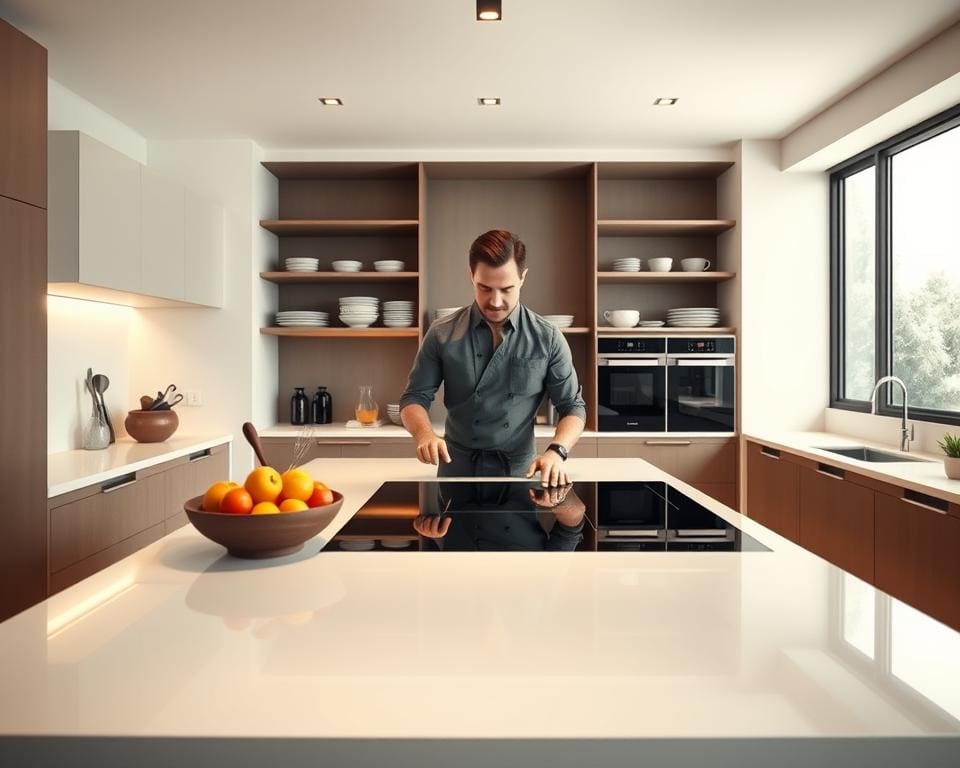

Why are modern kitchens designed for functionality? In the UK market the answer is practical: homeowners and renovators want spaces that work hard and look good. This short introduction sets the scene for a product-review-style, inspirational guide that examines modern kitchen design with clear, buyer-focused advice.
Functional kitchens combine layout, storage, appliances, materials and user experience to make cooking, cleaning and socialising more efficient and enjoyable. Throughout this article we will assess real brands such as Bosch, Neff, and Silestone alongside proven design principles to show how kitchen functionality UK varies from compact London flats to larger suburban homes.
The piece will blend a historical perspective with analysis of key features and benefits, then finish with practical product recommendations. Readers will gain clarity on kitchen design reasons and learn how to choose components that deliver long-term value and low-maintenance performance.
Why are modern kitchens designed for functionality?
The journey from ornate back-kitchens to open-plan hubs reflects a wider social shift. The history of kitchen design charts how spaces once hidden for servants became central to family life. Architects and manufacturers reshaped layouts to serve changing needs, sparking the modern kitchen evolution we see today.
Historical shift from form to function in kitchen design
In the 19th century, Georgian and Victorian houses kept kitchens separate to preserve formality. A radical change came with innovators such as Margarete Schütte-Lihotzky and her Frankfurt kitchen, which introduced the idea of a form to function kitchen. Mid-20th-century brands like Bosch and Siemens pushed built-in appliances, while IKEA made modular solutions widely available.
Influence of lifestyle changes and cooking habits
People now cook more at home and try varied techniques, from baking to sous-vide. This drives choices in appliance mix and storage. The link between lifestyle and kitchen design means islands, seating and robust surfaces must support entertaining, homework and work-from-home tasks.
Impact on daily routines and household efficiency
Design that prioritises kitchen efficiency UK cuts wasted steps and saves time. Zoning, the work-triangle and pull-out storage keep worktops clear and speed routine tasks. Smart ovens and connected fridges automate chores, letting busy households run more smoothly.
Key functional features that define modern kitchens
Modern kitchens marry form with purpose to make daily life easier and more enjoyable. Thoughtful kitchen layout optimisation, clever storage and resilient materials create spaces that work for cooking, entertaining and family life. Designers use proven principles and trusted brands to deliver lasting value and ease of use.
Layout optimisations: work triangle and workflow zones
The classic work triangle links sink, hob and fridge to reduce unnecessary steps. Contemporary practice expands that idea into workflow zones: prep, cook, clean, store and serve. Islands and peninsula units help define those zones in open-plan homes, improving circulation and sightlines.
Practical dimensions matter. Aim for 900–1,200 mm aisle widths and 1,200–1,500 mm around islands for clear movement. Standard worktop height is 900 mm, with adjustable options for accessibility. Designers and trade bodies such as CIAT and RIBA emphasise ergonomics and safety when planning layouts.
Storage solutions: pull-out units, carousel cupboards and deep drawers
Good kitchen storage solutions turn clutter into calm. Full-extension soft‑close drawers from Blum or Grass make pots and pans easy to access. Deep drawers suit heavy cookware better than traditional base cabinets.
Corner carousels like Le Mans reclaim wasted space. Pull‑out larders, vertical plate racks and integrated waste sorting bins keep workflow smooth. UK systems from IKEA Metod, Howdens and Second Nature pair well with hardware from Häfele and Blum for reliable fittings.
Integrated appliances and smart home connectivity
Integrated kitchen appliances offer a seamless look and save space. Panel-ready dishwashers, built-in ovens and combi-steam models from Miele or NEFF create a clean elevation. Induction hobs and integrated extraction systems, including downdraft units, support a sleek aesthetic.
Smart kitchen UK trends lean on Wi‑Fi ovens, fridges with inventory features and app-controlled coffee machines. Systems that work with Google Home, Amazon Alexa or Apple HomeKit provide convenience. Choose established makers such as Miele, Bosch or Siemens for dependable support and parts availability.
Durable surfaces and materials chosen for practicality
Durable kitchen surfaces must resist scratches, heat and stains while remaining attractive. Quartz brands like Silestone and Caesarstone offer low maintenance and toughness. Granite and stainless steel suit heavy use, while toughened laminate delivers a cost-effective option.
Flooring choices include porcelain tiles, engineered wood and luxury vinyl tiles for water resistance and longevity. Cabinet finishes such as matt lacquer, melamine and anti-fingerprint coatings keep cleaning simple. Solid-core doors and quality finishes extend lifespan and save money over time.
How functionality improves user experience and resale value
Well-designed kitchens shape daily life and influence future sale prospects. Thoughtful choices that focus on usability and efficiency make kitchens more enjoyable to use and more attractive to buyers. Practical upgrades often deliver the best return for money spent.
Ergonomics and accessibility for all ages
Simple adjustments make kitchens safer and easier for everyone. Adjustable-height worktops, pull-out shelves positioned within reach, lever taps and controls at 900–1,200 mm above floor level reduce strain and fall risk. These measures follow universal design ideas and align with guidance from the Building Research Establishment and obligations under the Equality Act for public-facing spaces.
Accessible kitchen design suits ageing homeowners, families with young children and guests with mobility needs. Easy-reach storage, clear sightlines and intuitive appliance placement cut daily effort and broaden market appeal.
Energy efficiency and cost savings over time
Energy-conscious kitchens lower bills and carbon footprints. Modern appliances carrying top energy ratings and Smart Meter compatibility use less power. Induction hobs and efficient combi ovens are often more economical than older electric or gas units.
Insulation, LED task lighting, effective extraction and water-saving taps all contribute to long-term savings. Durable surfaces reduce replacement frequency, improving lifetime value. Brands such as Bosch, Siemens, Miele and NEFF are widely available in the UK and offer models focused on efficiency.
Homeowners may find government grants and wider retrofit schemes useful when planning broader energy upgrades alongside kitchen work.
Appeal to buyers: market trends in the United Kingdom
Estate agents report that buyers prize functional kitchens above cosmetic flair. Neutral, hard-wearing finishes, integrated appliances, multifunctional islands and clever built-in storage show up frequently in recent listings. These features align with current kitchen market trends UK and help boost kitchen resale value.
When renovating, prioritise storage, lighting, quality worktops and efficient appliances over purely decorative items. Practical investments tend to influence offers more strongly than short-lived styling choices.
- Focus on kitchen ergonomics to improve daily use and safety.
- Adopt accessible kitchen design to widen appeal and reduce future work.
- Choose energy efficient kitchens UK options to cut running costs and attract eco-aware buyers.
Designing a functional kitchen: practical tips and product recommendations
Start by measuring carefully and mapping routines to create clear workflow zones. Use trusted planning services such as IKEA planning service, Howdens design team or Second Nature consultations to refine layouts. Prioritise the work triangle by positioning the fridge, sink and hob to cut unnecessary steps and leave a dedicated prep area between hob and sink.
Plan lighting in layers: general lighting, task illumination and subtle accent lights. Fit LED under-cabinet strips with warm white 2,700–3,000K for ambience and cooler 3,500–4,000K for task areas, and use dimmable circuits where possible. Choose easy‑clean surfaces and rounded edges for safety, and favour antibacterial technologies for high‑use zones.
For appliances and fittings, consider reliable models that balance performance and longevity. Miele H 7860 BP or Bosch Series 8 built‑in ovens and combi‑steam variants suit keen cooks; NEFF or Bosch induction hobs or a BORA integrated extractor work well in open‑plan spaces. Bosch Serie 6 or Miele G 7000 dishwashers offer quiet, efficient operation, while Samsung or Bosch integrated fridge‑freezers provide flexible storage. These kitchen product recommendations UK reflect strong reviews and energy ratings.
Invest in functional storage solutions such as Blum or Häfele drawer runners, Howdens pull‑out larders or Second Nature bespoke units, and corner carousels like Le Mans to make the most of awkward spaces. For surfaces, quartz from Caesarstone or Silestone is durable; Formica laminate offers cost‑effective options. Consider Amtico LVT or Porcelanosa tiles for resilient flooring. Add smart touches—Quooker taps, Sage coffee machines, Kenwood mixers and appliances compatible with Google Home or Amazon Alexa—to lift daily life. Finally, phase your budget: lock in layout and storage first, then appliances and finishes, register warranties and use Gas Safe or NICEIC‑accredited installers for peace of mind when implementing these kitchen design tips and choosing the best kitchen appliances UK.