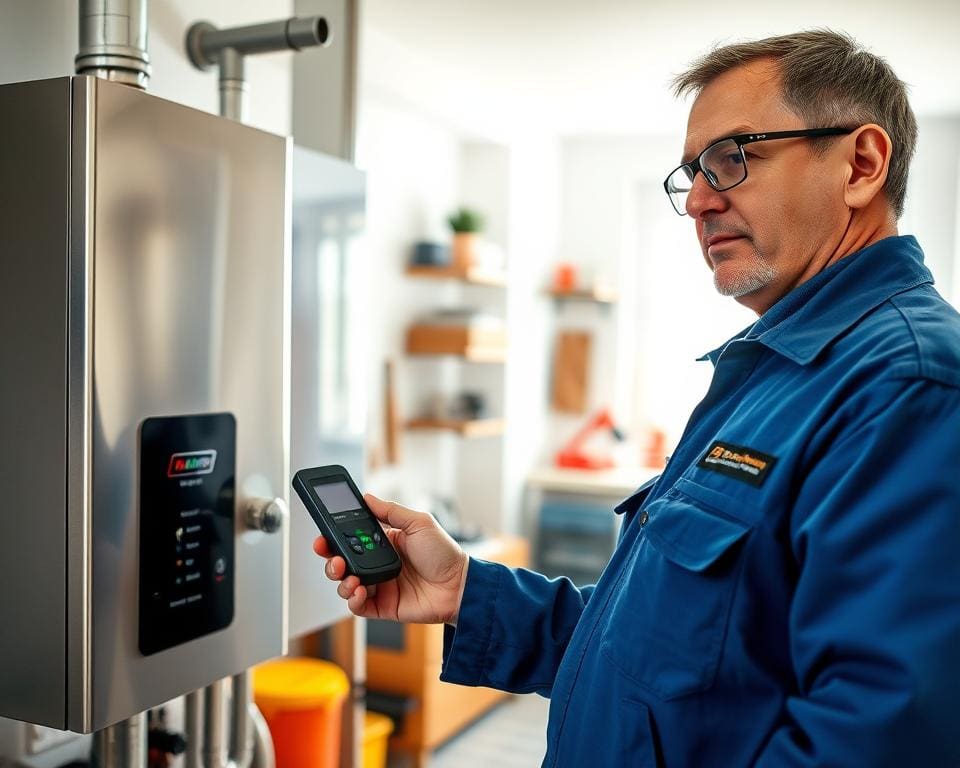

Choosing a certified heating engineer is the single most important decision a homeowner, landlord or property manager can make when it comes to boiler safety and performance. A certified tradesperson has completed recognised gas and heating qualifications, passed competency checks and, where relevant, is listed on the Gas Safe Register. That formal recognition gives legal permission to work on regulated appliances and marks a clear difference from an unqualified boiler engineer.
Certification covers the full scope of boiler work: boiler installation UK projects, commissioning, annual boiler servicing, repairs and safety inspections for combi, system and heat-only boilers in domestic and light-commercial settings. Manufacturers such as Worcester Bosch and Vaillant require work by a certified engineer to maintain warranties, and insurers increasingly expect proof of a Gas Safe engineer or equivalent certification for cover to remain valid.
Viewed as a product review, hiring a certified heating engineer delivers measurable benefits: fewer call-backs, safer installations, upheld warranties and better long-term value compared with unqualified labour. For readers deciding who to appoint, this section sets out why certification matters, what it guarantees in practice and the practical steps to verify a boiler repair certified professional before you commit.
Why is a certified heating engineer essential for boilers?
Choosing a certified heating engineer brings clarity and confidence. Certification proves an engineer meets strict standards for safe installation, servicing and repairs. That assurance affects safety, compliance and the long-term running of your boiler.
Understanding certification and qualifications
Typical routes include City & Guilds or NVQ/SVQ qualifications in plumbing and heating or gas engineering. Many engineers take ACS (Accredited Certification Scheme) assessments to validate competence for gas work. Oil-fired boilers need Oil Firing Technical Qualifications and renewable systems often require Microgeneration Certification Scheme (MCS) accreditation.
Assessment is practical and theory-based. ACS modules test tasks such as safe gas handling, flue and ventilation work, condensate management for condensing boilers, commissioning and spillage testing. These modules must be renewed periodically to keep heating engineer certification current.
Some engineers work through approved companies while others are self-employed. In every case, up-to-date boiler qualifications show employers and customers that the operative can meet manufacturer requirements and deliver correct commissioning.
Legal and regulatory responsibilities in the UK
Anyone working on gas appliances in the UK must be on the Gas Safe Register. This legal duty replaced the former CORGI scheme. Working without registration is an offence and can lead to prosecution.
Engineers must follow standards from the British Standards Institution, Building Regulations such as Part L for efficiency and Part J for combustion appliances, and guidance from Ofgem when applicable. Those rules guide safe installation and energy performance.
Private landlords face specific duties. Landlords must keep gas appliances and flues serviced and must obtain an annual gas safety record from a Gas Safe registered engineer. This paperwork protects tenants and supports insurance compliance.
How certification impacts warranty and insurance
Manufacturers such as Worcester Bosch, Vaillant and Baxi attach conditions to their warranties. Many require installation and annual servicing by a qualified, registered engineer to keep a boiler warranty valid. Following manufacturer requirements preserves cover for parts and repairs.
Household and landlord insurance policies often require that work is carried out by competent, registered operatives. Insurers may refuse claims after incidents linked to unregistered or negligent work. Keeping heating engineer certification current helps maintain insurance compliance.
Certified engineers provide essential documentation: commissioning certificates, CP12 gas safety records and detailed service reports. These documents create traceability for future warranty claims and when properties are sold or let.
Safety benefits of hiring a certified heating engineer for boilers
Hiring a certified heating engineer brings clear safety advantages for every household and landlord. Trained professionals reduce risk through proven checks, calibrated tools and strict adherence to standards. Their work protects occupants from hidden hazards and gives verifiable records for insurers and future owners.
Risk reduction for carbon monoxide and gas leaks
Carbon monoxide is odourless and colourless, so it can build up without warning. At high concentrations it is fatal; at lower levels it causes persistent health problems. Certified engineers carry out combustion analysis, flue integrity tests and spillage checks to confirm safe venting and to spot faulty burners or blocked flues early.
Preventative measures include correct flue installation, adequate ventilation and sealing of combustion chambers. Engineers set gas pressures and gas rates to manufacturer specifications to prevent incomplete combustion. These steps improve carbon monoxide safety and support effective gas leak detection.
Adherence to Gas Safe Register and British Standards
Compliance means registered engineers operate within legal competence and recognised technical benchmarks. Gas Safe registration proves statutory competence, while British Standards such as BS EN 15502 for boilers and BS 5440 for flues guide installers and service technicians.
Certified professionals provide CP12 gas safety certificates and detailed service reports that demonstrate compliance for landlords and insurers. They use calibrated flue gas analysers and gas pressure gauges, follow systematic checklists and maintain records that back up safe practice and gas appliance testing.
Emergency response and reliable fault diagnosis
Trained engineers distinguish between minor symptoms and critical failures. They use diagnostic tools and manufacturer technical bulletins to reach accurate conclusions quickly. This reduces the chance of misdiagnosis and unsafe remedial actions.
In a Gas Safe engineer emergency the authorised technician can isolate gas supplies safely, apply temporary measures and arrange urgent repairs. Rapid, evidence-based diagnosis and speedy action limit risk and restore safe operation during boiler safety checks.
Efficiency, performance and long-term savings for boilers
Certified heating engineers turn technical know-how into real savings. A clear focus on boiler efficiency and condensing boiler optimisation delivers tangible fuel bills reduction and steadier performance. Small adjustments at commissioning and correct annual boiler service routines can change how a system behaves across a season.
Optimising boiler performance and fuel efficiency
When engineers from Worcester Bosch or Vaillant commission a new boiler, they set flow and return temperatures to the maker’s guidance. They balance radiators, fit thermostatic radiator valves and configure smart controls to match household patterns. These steps improve boiler efficiency and cut excess consumption.
Checking return temperatures keeps condensing boilers in condensing mode. Technicians spot scale, sludge and recommend magnetic filters or a system flush where needed. Measurable outcomes from manufacturers show that correct commissioning plus an annual boiler service reduces fuel use and emissions.
Planned maintenance versus reactive repairs
Planned maintenance prevents minor faults becoming costly failures. A scheduled visit reduces the chance of an emergency call-out in cold weather and helps manage maintenance budgets.
Typical service checks include a visual inspection, flue test, combustion analysis and component checks for pump function, expansion vessel and pressure relief valve. Regular attention from a certified engineer preserves warranty cover and supports long-term property value.
Extending boiler lifespan through professional servicing
Skilled engineers detect early wear such as corroded heat exchangers or failing seals and replace parts before they fail. Advice on inhibitor dosing, magnet traps and correct water quality reduces corrosion and blockages.
With consistent care, modern condensing boilers frequently reach their expected boiler lifespan of 10–15 years or more. Professional servicing keeps systems efficient, extends usable life and sustains the fuel bills reduction that homeowners expect.
Choosing the right certified heating engineer for your boiler needs
Start by checking the Gas Safe Register to find Gas Safe engineer details and confirm the permitted scope for your boiler’s fuel type. Ask to see ACS cards, company accreditation and any oil or MCS certification if you have a specialist system. Confirm public liability insurance and membership of bodies such as the Chartered Institute of Plumbing and Heating Engineering to verify engineer credentials.
When you choose heating engineer, request recent references and examples of similar work. Obtain a written quote that breaks down labour, parts, call‑out fees and any follow‑up charges. Clarify warranties on workmanship and parts, and make sure you will receive a full service report or CP12 certificate where relevant as part of the boiler installation checklist.
Decide whether a single‑visit repair meets your needs or whether a service contract offers better long‑term value. Landlords should prioritise landlord gas safety with documented annual checks. Consider manufacturer‑accredited installers, such as Worcester Accredited Installer schemes, for smoother warranty handling and genuine parts supply.
Before you confirm work, run a short practical checklist: verify Gas Safe registration and permitted scope, request proof of qualifications and insurance, obtain written quotations and confirm warranty conditions, and ask for a full service report. Choosing an engineer with strong local reputation, clear communication and reliable aftercare will safeguard performance and give lasting peace of mind.