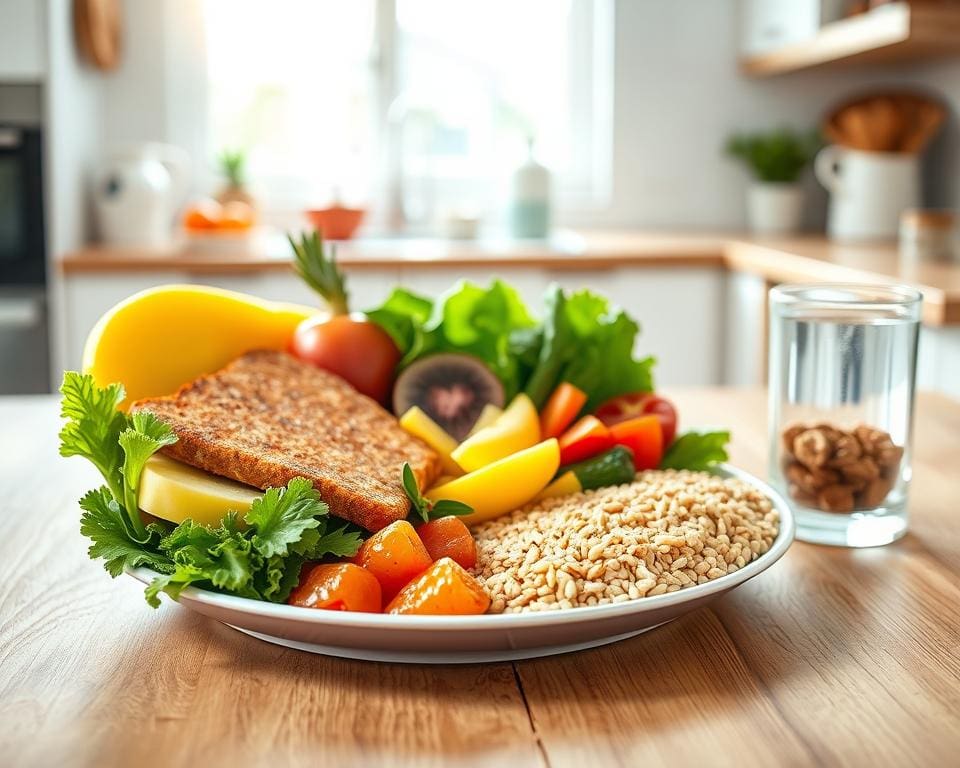

A balanced daily diet is an eating pattern that gives your body the energy and nutrients needed to feel well and stay active. It combines variety, sensible portion sizes and foods chosen to match age, sex, activity level and any medical needs.
In the UK, official guidance from the NHS and Public Health England, including the Eatwell Guide, recommends meals based on fruit and vegetables, starchy carbohydrates, protein sources, dairy or alternatives and unsaturated oils. This national advice shapes a clear definition of balanced diet for practical use.
A true balance includes macronutrients — carbohydrates, protein and fats — plus micronutrients like vitamins and minerals, fibre, water and beneficial phytochemicals from wholefoods. Choosing wholefoods over highly processed options boosts nutrient density and supports long‑term health.
The intended outcomes are straightforward: steady energy, stable mood, good digestion, immune support and a lower risk of chronic illnesses such as type 2 diabetes and cardiovascular disease. Think of this daily nutrition guide as a flexible, sustainable approach rather than a restrictive regime.
For healthy eating UK readers, small consistent changes — varied plates, mindful portions and simple swaps — make a balanced daily diet achievable. Start with one practical step today and build a pattern that fits your life.
Understanding the fundamentals of a balanced daily diet
Building a steady daily diet starts with clear basics. A balanced approach blends energy sources, essential micronutrients and enough fluid to keep the body working at its best. Use simple food choices and routine habits to make lasting changes that support mood, stamina and recovery.
Macronutrients explained means looking at carbohydrates, protein and fats and their main jobs. Carbohydrates are the body’s primary fuel. Choose complex carbs and fibre-rich options such as wholemeal bread, oats and potatoes to steady energy and support digestion. Protein repairs tissue, builds enzymes and supports the immune system. Good sources include lean meats, oily fish like salmon, pulses, tofu, eggs and dairy. Fats provide concentrated energy, form cell membranes and help absorb fat‑soluble vitamins. Prefer unsaturated fats from olive oil, rapeseed oil, avocados and nuts and limit saturated fats from processed items.
Typical recommendations vary with goals and activity. Public Health England guidance used in the Eatwell Guide macronutrients suggests a balance across carbs, protein and fats, though exact percentages change for weight loss or athletics. Prioritise wholefood sources over refined options for lasting health.
Micronutrients and their role
Vitamins and minerals roles cover many vital tasks. Vitamin D and calcium support strong bones. Iron transports oxygen in the blood. B vitamins help energy metabolism. Vitamin C boosts immune defence and improves iron absorption. Minerals such as magnesium, iodine and zinc each play distinct parts in nerves, thyroid function and wound healing.
Fibre and phytonutrients add extra protection. Soluble fibre helps cholesterol control and glycaemic regulation. Insoluble fibre aids bowel transit. Colourful fruit and vegetables supply antioxidants and phytochemicals that reduce oxidative stress and support health. Watch for common gaps in the UK, such as low vitamin D in winter, especially for older adults, pregnant women and those on restricted diets.
Hydration and its impact
Hydration benefits reach digestion, nutrient transport, temperature control and mental sharpness. Mild dehydration can reduce concentration and limit physical performance. Learn to spot true thirst and watch urine colour as a simple guide. Water, tea and low‑sugar drinks count towards fluid needs. Requirements change with exercise, heat and illness, so adjust intake accordingly.
- Combine varied macronutrients at each meal to sustain energy.
- Choose micronutrient‑rich wholefoods to cover vitamins and minerals roles.
- Keep fluids handy so hydration benefits support daily function.
Small, steady choices build a balanced daily diet that fits real life. Use the Eatwell Guide macronutrients as a flexible map, focus on nutrient density and stay mindful of fluid intake for a practical, sustainable routine.
How can you find balance in daily life?
Finding balance between work, family and health is a practical challenge many face each day. This section offers clear, manageable steps to align eating habits, activity and rest so you can sustain a healthy rhythm without adding stress.
Practical meal planning to support overall wellbeing
Plan one week at a time and use theme nights such as Meat-free Monday to ease decision fatigue. Start with an NHS Eatwell-style plate: fill half with vegetables, a quarter with wholegrains and a quarter with lean protein.
Batch-cook staples like brown rice, roasted vegetables and pulses on a weekend. Save three reliable recipes for busy evenings and keep a shopping list to reduce impulse buys. For UK-specific support, consult NHS recipes or British Dietetic Association advice for balanced, everyday meals.
Mindful eating habits to maintain consistency
Mindful eating means noticing hunger and fullness, savouring flavour and avoiding screens at meals. Eat slowly, put cutlery down between bites and pay attention to texture and aroma.
Pause before going for seconds. These small habits reduce overeating and increase enjoyment, helping you keep a routine that lasts.
Balancing diet with physical activity and sleep routines
Adequate nutrition fuels exercise and supports recovery. Aim to pair carbohydrates with protein after workouts to rebuild muscle and restore energy. Regular activity helps appetite regulation and lifts mood.
Prioritise 7–9 hours’ sleep for most adults to support hormone balance and recovery. Avoid heavy late-night meals that can disrupt rest. For shift workers and parents, build flexible windows for meals and naps and use portable snacks to maintain stability.
- Batch-prep snacks like hummus and chopped veg or portioned nuts.
- Keep frozen vegetables handy to save time and cut waste.
- Use visible fruit bowls and set hydration reminders on your phone.
- Enlist family members for shared meal prep to spread effort and create variety.
Small behavioural nudges and simple time management make diet and exercise balance realistic. Celebrate small wins and refine routines as life changes so sustainable habits fit your stage of life.
Portion sizes and plate composition for a balanced meal
Getting plate composition right makes healthy eating simple and visual. The Eatwell Guide plate suggests roughly half vegetables and fruit, a quarter starchy carbohydrate and a quarter protein, with small amounts of dairy or alternatives and unsaturated oils. Choosing fibre-rich, colourful veg boosts nutrient density and keeps meals satisfying.
Use clear visual guides to practice portion control UK at home. Start with measuring tools, then move to everyday cues that fit busy lives.
- Fist = a portion of starchy carbs such as rice, pasta or porridge.
- Palm = a protein portion, like fish, poultry or beans.
- Cupped hand = snacks or extra carbs.
- Thumb = fats, including olive oil or nut butter.
Adapt portions for age and activity. Children need smaller serves, adolescents require more energy during growth, and older adults benefit from a bit more protein per meal to preserve muscle mass. Athletes and very active people need larger starchy portions and higher overall calories.
Think in terms of portion sizes by activity level when planning meals. A sedentary office worker will need smaller servings of starchy foods than a cyclist training for two hours.
Sample plate models make the guidance practical.
- Breakfast: bowl of porridge (starchy fibre) topped with berries, a spoon of nut butter or seeds and a splash of milk or yoghurt for calcium.
- Lunch: salad with mixed leaves and roasted vegetables (half plate), quinoa or wholemeal bread (quarter) and grilled salmon or chickpeas (quarter) with a drizzle of olive oil.
- Dinner: roasted chicken or a lentil casserole for protein, new potatoes or brown rice as the starch, and steamed greens plus mixed veg filling half the plate.
For snacks, choose nutrient-dense options such as fruit, plain yoghurt or a small handful of nuts. If you drink alcohol, follow UK guidance and keep portions moderate.
Practical tools speed progress. Portion-controlled containers and simple kitchen scales work well for precise tracking, then you can rely on visual cues once you know your needs.
Choosing whole foods versus processed options
Choosing the right foods shapes daily health. Whole ingredients tend to give more nutrients per bite, steady energy and better satiety than many ultra-processed snacks. Practical swaps and label know-how help people move towards healthier habits without losing convenience.
Benefits of wholefoods for nutrient density
Wholefoods such as wholegrains, fresh fruit and vegetables, legumes, lean fish, eggs, nuts and seeds deliver vitamins, minerals and fibre in balanced forms. The nutrient density of these items supports long-term wellbeing and weight management by keeping you full for longer and stabilising blood sugar.
UK public health guidance highlights wholegrains and legumes as staples for fibre and micronutrients. Choosing minimally processed items like tinned beans or frozen veg keeps practical convenience while preserving many wholefoods benefits.
How to read food labels and avoid hidden additives
Start with serving size and calories per portion. Check the ingredient list next; long lists often signal high processing and added extras. Ingredients are listed by weight, so if sugar or salt appears near the top, the product likely contains a lot of it.
Use the front-of-pack traffic light labels common in the UK to compare per-100g levels of fat, saturates, sugars and salt. Watch for claims such as “low-fat” that can hide higher sugar. Look for familiar items like oats, wholegrain flour or plain yogurt rather than flavour-packed versions.
Healthy swaps to reduce sugar, salt and unhealthy fats
Small swaps add up. Replace sugary cereals with porridge topped with fresh berries. Swap crisps or biscuits for a handful of unsalted almonds or a sliced apple. Choose sparkling water with lemon instead of soft drinks to cut liquid sugars.
Pick wholegrain pasta and bread, choose mashed avocado or a drizzle of olive oil in place of butter on toast, and opt for fruit-based puddings rather than cakes. These reduce sugar swaps and lower saturated fat without losing flavour.
Practical tips for convenience and cooking
Batch-cook soups, stews and casseroles using frozen veg and tinned tomatoes to save time. Keep store-cupboard staples like brown rice, lentils and wholegrain pasta for quick meals that beat many processed food alternatives.
Use herbs, spices and lemon to add punch so you rely less on salt and ready-made sauces. Simple seasonings often transform basic ingredients into satisfying dishes that support lasting change.
Special considerations: dietary needs and restrictions
Balanced eating adapts to personal needs. The NHS and the British Dietetic Association offer trusted guidance for people with different diets, allergies and health conditions. Read on for practical, evidence-based steps that keep nutrition steady while meeting unique requirements.
Vegetarian and vegan approaches to a balanced diet
Plant-based plans can supply all essential nutrients with careful choices. Pulses, tofu, tempeh, seitan and Quorn mycoprotein are reliable protein sources. Combine iron-rich lentils or spinach with a vitamin C source, such as orange or red pepper, to improve absorption.
Vegans should take a vitamin B12 supplement and consider fortified foods for calcium and iodine. Flaxseeds, walnuts and algae supplements provide plant omega-3s. Fortified plant milks and calcium-set tofu help meet bone needs while keeping meals varied and enjoyable.
Managing food intolerances and allergies while staying balanced
Food reactions range from lactose intolerance to nut or shellfish allergy. Managing food intolerances begins with clear diagnosis from a GP or a registered dietitian. Allergy UK and NHS advice stress accurate testing and avoidance plans to prevent severe reactions.
Substitutes keep meals nutritious: lactose-free dairy or fortified plant milks for those with lactose issues, quinoa and buckwheat instead of wheat for gluten sensitivity. Read labels carefully and prevent cross-contamination in shared kitchens by using separate utensils and cleaning surfaces thoroughly.
Adjusting for medical conditions and life stages
Diet adjustments for medical conditions require targeted changes. In pregnancy, follow NHS guidance on folate and iron, and use pregnancy nutrition UK advice on safe fish choices. Regular blood tests and antenatal checks help tailor supplementation.
Older adults often need higher protein and vitamin D; the British Dietetic Association recommends screening and supplements when necessary. For cardiovascular disease, reduce saturated fat and increase fibre with wholegrains and pulses. People with diabetes benefit from consistent meal timing and carbohydrate monitoring to stabilise blood glucose.
Coeliac disease demands strict gluten avoidance, with safe alternatives and routine dietetic support. Work closely with registered dietitians and clinicians to create personalised plans and, when needed, prescribed nutritional supplements.
Useful UK resources include NHS pages, the British Dietetic Association, Diabetes UK and the British Heart Foundation for condition-specific guidance. Regular health checks and blood tests ensure diet remains balanced and responsive to changing needs.
Practical tools and products to support a balanced daily diet
Small changes to your kitchen and routine can make healthy eating simple and joyful. Choose a few reliable tools and products that match your habits. Invest in quality rather than clutter and you will save time, reduce waste and eat better.
Meal-prep containers, planners and portioning tools
Pick leakproof, microwave-safe sets such as glass Pyrex or Lock & Lock and try compartmentalised bento boxes for ready portion control. Weekly planners—paper or apps like MyFitnessPal and Eat This Much—help you map meals and build shopping lists with less stress.
Use compact digital kitchen scales from Salter, measuring jugs and portion-control plates to keep servings consistent. Reusable snack pots and a vacuum-sealer extend freshness and make packed lunches easier. These portioning tools reduce food waste and keep meals balanced.
Recommended kitchen gadgets for quick, healthy meals
- Slow cooker or Instant Pot for batch-cooking stews, grains and lean protein with minimal fuss.
- Steamer or air-fryer to cook vegetables and fish quickly while using little added fat.
- Blender or food processor to boost veg intake via smoothies, pestos and hummus.
- Spiraliser for turning courgettes and carrots into pasta-style options that lower carbs.
- Good-quality chef’s knife and a sturdy chopping board to speed up prep and make cooking pleasurable.
Choosing the right kitchen gadgets healthy cooking means focusing on devices you will use weekly. A few versatile items beat a crowded drawer of single-use tools.
Trusted supplements when dietary gaps exist
Supplements can support health when diet alone falls short. The NHS advises adults to consider 10 µg vitamin D daily through autumn and winter. Vegans should check vitamin B12 status. Iron supplements help only when a deficiency is diagnosed by a GP.
Buy reputable brands sold in UK pharmacies and supermarkets. Look for third-party testing such as Informed Sport for athletes. Speak with a GP or a registered dietitian before starting regular supplements to ensure safety and correct dosing.
Practical purchasing and sustainability tips
- Buy seasonal produce or use frozen fruit and veg to save money and time.
- Choose reusable containers and eco-friendly brands to cut single-use plastics.
- Invest in a few high-quality items rather than many cheap gadgets that sit unused.
These choices pair well with meal-prep containers UK, the right kitchen gadgets healthy cooking and sensible portioning tools. They support everyday habits and make balanced eating easier to sustain. Consider trusted supplements UK only when needed and under professional advice.
Benefits of a balanced daily diet for long-term health and lifestyle
Adopting a balanced daily diet brings clear long-term benefits balanced diet studies link to. Public health evidence shows lower risk of cardiovascular disease, type 2 diabetes and some cancers. A steady intake of nutrient-dense foods also supports weight management, preserves bone and muscle mass and strengthens immunity as we age.
The health benefits of balanced eating UK extend beyond disease prevention. People report better focus, steadier energy and improved mood, which helps at work and at home. Good nutrition underpins physical performance and speeds recovery after exercise, while improved sleep and cognitive function support daily productivity and relationships.
There are economic and environmental gains too. Planning meals and batch-cooking can cut spending on convenience foods, and a plant-forward approach often lowers your household carbon footprint. Simple habits — freeze portions, use leftovers creatively and buy seasonal produce — reduce waste and stretch your grocery budget.
For lasting change, aim for flexible approaches rather than strict rules. Allowing occasional treats, making small progressive changes and reviewing goals keeps habits sustainable. Try one action this week: add an extra portion of vegetables each day or plan two batch-cook meals. For tailored guidance, consult NHS resources or a registered dietitian — discovering what defines a balanced daily diet empowers how you can find balance in daily life and supports diet and longevity.