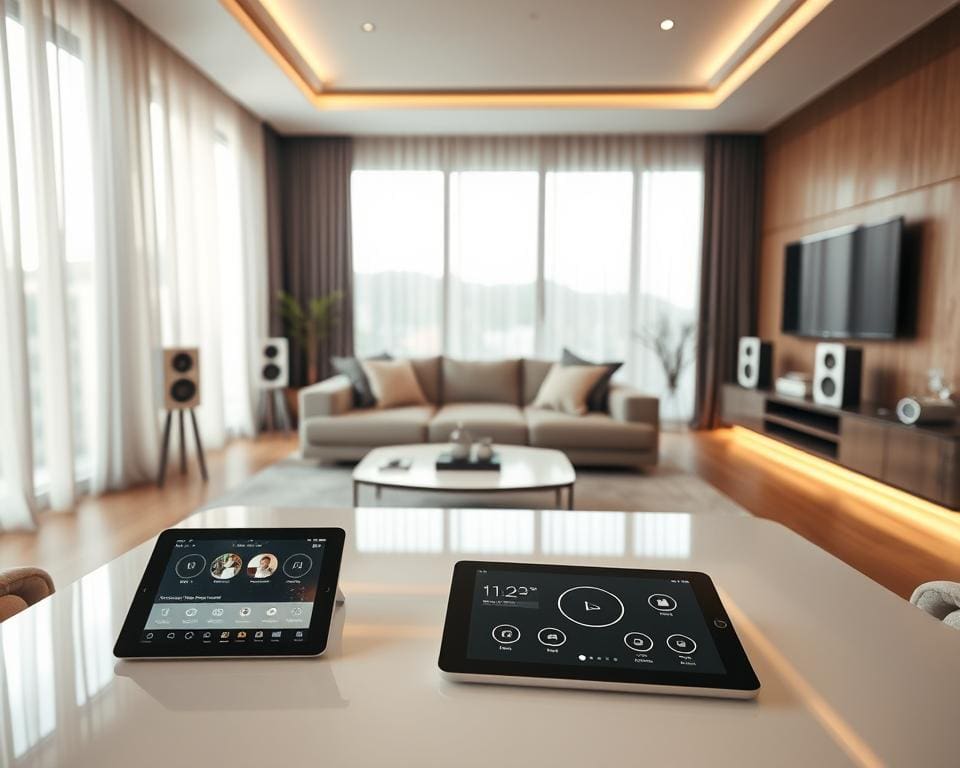

In today’s fast-paced world, the integration of connected home technology has become essential for enhancing our daily lives. Smart home hubs with voice-activated assistance play a pivotal role in this evolution, acting as the central command points that seamlessly connect various smart devices. These hubs enable users to manage their homes with remarkable ease, fostering an environment where convenience and automation come together harmoniously.
Devices like Amazon Echo and Google Nest Hub are exemplary of how smart home automation can transform a living space, allowing homeowners to monitor and control their homes from the palm of their hand. As the demand for intelligent solutions rises, understanding the capabilities and benefits of these hubs is vital for anyone looking to optimise their connected lifestyle. For insights on enhancing your home’s security systems that can work with these hubs, check out best alarm systems to ensure your peace of mind.
What are Smart Home Hubs?
Smart home hubs act as the central control unit within a smart home framework. They connect various connected devices, allowing them to communicate with each other efficiently. Understanding these hubs can enhance your experience with smart home technology, streamlining your daily routines.
Understanding the Basics of Smart Home Technology
Smart home technology epitomises a modern living environment where devices like lights, sensors, and cameras operate seamlessly through internet connectivity. This ecosystem not only promotes convenience but also efficient energy management. Smart home hubs serve a vital role in tying all these integrated components together and ensuring smooth functionality.
The Role of Hubs in Smart Home Automation
In the realm of smart home automation, hubs simplify the management of multiple devices by providing a single platform for control. They enable homeowners to set automation routines that enhance their lifestyle. Popular examples such as the Samsung SmartThings Hub and the Apple HomePod exemplify how these devices facilitate user interaction and control, creating a cohesive and intelligent living environment.
Benefits of Using Smart Home Hubs with Voice-Activated Assistance
Smart home hubs equipped with voice-activated assistance transform everyday tasks, offering unparalleled convenience and control. These devices allow users to manage their homes effortlessly through simple voice commands. The obvious benefit lies in the ability to multitask, thereby enhancing productivity in any household. Individuals of all ages can benefit from this user-friendly interface, ensuring inclusivity and ease of use.
Enhanced Convenience and Control
With smart home hubs, managing various home appliances becomes a seamless process. Voice-activated assistance enables individuals to control lights, security systems, and kitchen appliances with minimal effort. This increases convenience, allowing for a more streamlined lifestyle. Imagine hosting a dinner without having to get up to check the oven; a simple voice command can take care of everything, allowing for a more relaxed experience.
Seamless Integration with Other Devices
One of the standout features of smart home hubs is their ability to integrate various voice-controlled devices into a cohesive whole. By connecting smart speakers to devices such as refrigerators, ovens, and dishwashers, users can create customised routines that make home management more efficient. This creates a smart ecosystem tailored to individual preferences. For those looking to enhance their kitchen experience, investing in the right kitchen appliances can prove beneficial—learn more about essential kitchen appliances here.
Popular Voice-Controlled Devices for Your Smart Home
The landscape of smart home technology becomes increasingly exciting with the rise of voice-controlled devices. These innovations not only simplify everyday tasks but also integrate seamlessly to provide a streamlined experience for users. Many homeowners are exploring the variety of options available, particularly those that excel in audio performance and home automation.
Top Smart Speaker Systems on the Market
When considering smart speaker systems, leading brands such as Amazon Echo, Google Nest Audio, and Apple HomePod emerge as market leaders. These devices enrich the audio experience while serving a crucial role in controlling other elements of the smart home ecosystem. Users can easily access music, get answers to questions, and manage their connected devices through simple voice commands, making everyday tasks more efficient.
Smart Lighting and Thermostat Integration
Integrating smart lighting solutions, like Philips Hue, and advanced smart thermostats, such as Nest, enhances the functionality of voice-controlled devices. These tools allow users to customise their environments based on individual routines and preferences. With options for remote access and scheduling, the result is improved energy savings and personalised comfort. This combination creates a harmonious atmosphere that aligns with modern living.
For those interested in exploring advanced audio options, high-fidelity systems provide excellent examples of how sound quality can enrich home automation. Understanding how these installations work together leads to a more satisfying and richer smart home experience.
Smart Home Hubs with Voice-Activated Assistance
When exploring the world of smart home hubs, a feature comparison of leading brands can provide valuable insights. Each hub brings unique strengths and capabilities to the table, enhancing the smart home experience. By examining popular options like the Amazon Echo Show, Google Nest Hub Max, and Apple HomePod, users can identify the perfect match for their needs. Key aspects such as third-party device compatibility, usability, audio performance, and the diversity of voice commands play significant roles in these comparisons.
Feature Comparison of Leading Hubs
Understanding the differences in features among smart home hubs is essential for making an informed choice. Key factors to consider include:
- Compatibility with Devices: Some hubs support a wider range of third-party devices, which can greatly expand functionality.
- Ease of Use: A user-friendly interface can transform the experience, making control straightforward.
- Sound Quality: High-quality audio enhances not just music playback but also voice interaction.
- Range of Voice Commands: The extent of available voice commands determines how effectively users can control their homes.
How to Choose the Right Hub for Your Needs
Selecting an ideal smart home hub requires careful consideration of personal preferences and existing home ecosystems. Factors to explore include:
- Assess what devices you intend to control.
- Consider if video capabilities are necessary for your lifestyle.
- Evaluate any privacy concerns you might have regarding voice-activated technology.
- Reflect on which brand aligns best with your existing smart home solutions.
By prioritising these questions, users can narrow down options and select a hub that seamlessly integrates into their unique smart home setup.
Setting Up and Customising Your Smart Home Hub
Installing a smart hub can transform your living space into a seamlessly connected environment. The process is designed to be user-friendly, guiding you through each step for a smooth setup. Following a clear setup guide helps ensure a successful installation without unnecessary hassle.
Step-by-Step Installation Process
1. Unbox Your Device: Remove the smart home hub from its packaging, ensuring you have all components.
2. Connect to Wi-Fi: Power up your hub and connect it to your home Wi-Fi network. This integral step enables communication with other smart devices.
3. Download the App: Locate and install the app specific to your smart hub on your smartphone or tablet. This app will become your primary control centre.
4. Follow On-Screen Directions: The app typically offers a user-friendly setup guide, directing you to connect additional devices and configure settings according to your preferences.
5. Test Your Setup: Once everything is connected, conduct a quick test. Ensure that all devices react to commands as expected.
Tips for Personalising Your Voice Assistant Experience
Once the hub is set up, the next enjoyable step is personalising your voice assistant. This enhances usability and tailor-makes your smart home experience.
- Set Up Voice Profiles: Create individual profiles to recognise different users, providing personalised responses based on who is speaking.
- Create Custom Commands: Develop commands that suit your lifestyle, allowing for quick access to frequently used functions.
- Automation Routines: Configure automation routines for everyday tasks, enhancing convenience and efficiency in managing your smart home.
The Future of Connected Home Technology
As the landscape of connected homes evolves, the potential for future technology is increasingly exciting. Advancements in artificial intelligence, machine learning, and the Internet of Things (IoT) are paving the way for smarter innovations that will redefine how we interact with our living spaces. These developments promise not only greater convenience but also enhanced energy efficiency and security within our homes.
Smart home hubs are positioned to play a crucial role in this transformation, enabling seamless integration of devices while adapting to individual user preferences. As we move forward, these hubs will likely incorporate features that enhance user experience, such as predictive analytics that learn from behaviour patterns to automate daily tasks. The willingness to adopt these new technologies will be essential for homeowners seeking a truly smart living environment.
The importance of adaptability cannot be overstated in the journey toward connected homes. As technology progresses, maintaining a flexible approach to integration will ensure long-term satisfaction and functionality. Embracing these smart innovations today will not only enhance daily routines but also lay the groundwork for a future where our homes will work in harmony with our lifestyles.